What Maintenance Does a Subaru Need If You Use It Frequently for Tailgating?
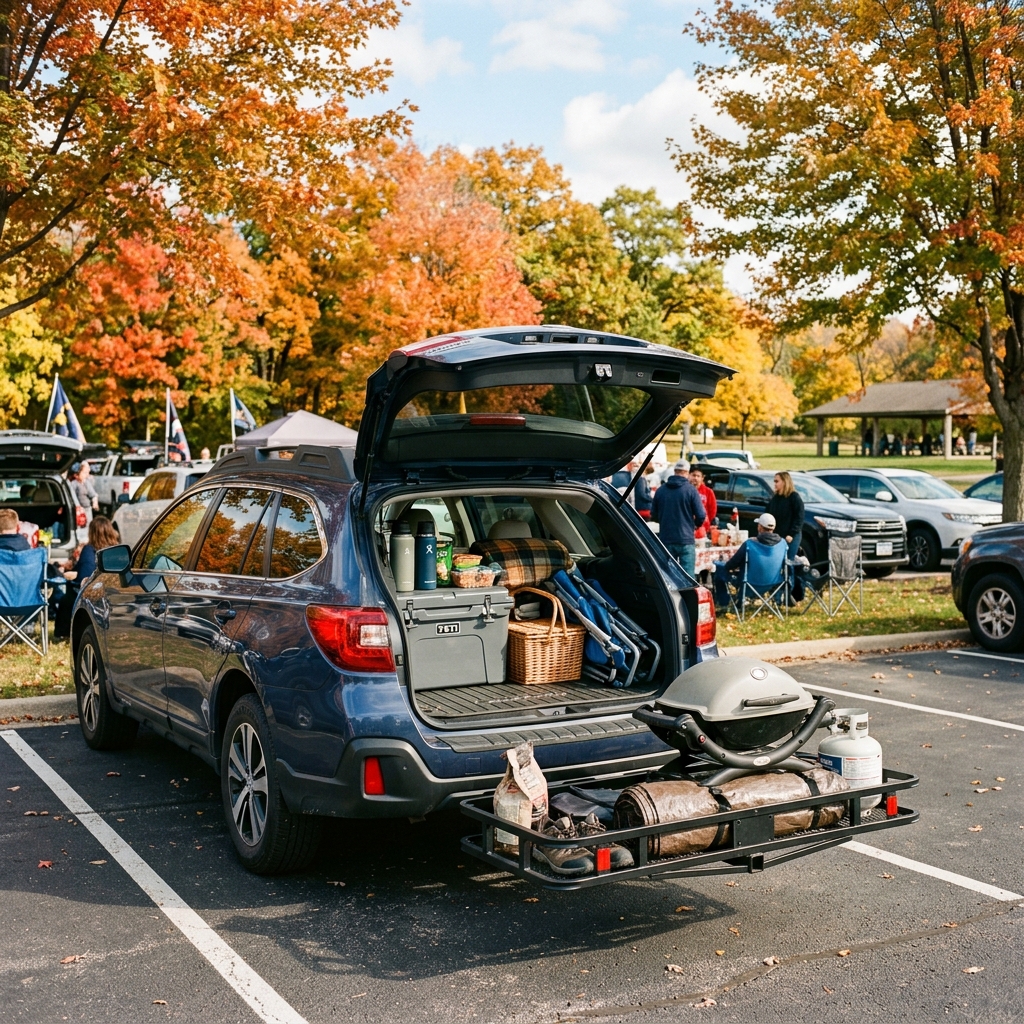
A blue SUV with an open trunk packed with a cooler, picnic basket, and a portable grill on a hitch carrier in autumn. (Representative image for illustration purposes only. Actual vehicle may vary based on trim and configuration.)
Subaru vehicles are universally celebrated across Northern Illinois for their symmetrical all-wheel drive, spacious hatchbacks, and rugged go-anywhere spirit. Whether you are setting up camp outside Soldier Field, tailgating at a Northwestern game, or hosting local high school football pre-game gatherings around Plainfield, Joliet, and Naperville, your Subaru Outback, Forester, or Ascent makes an ideal mobile headquarters. However, using your vehicle for frequent weekend tailgating introduces operating demands that go well beyond standard daily commuting.
The Bottom-Line Answer: Regularly using your Subaru as a power grid and supply rig for tailgating reclassifies its maintenance schedule under Severe Operating Conditions. Prolonged engine idling in stadium parking lots, running heavy electrical loads like electric coolers and Bluetooth sound systems, hauling heavy grills, pop-up tents, and hitch-mounted cargo racks, and keeping power liftgates propped open for 4 to 6 hours at a stretch all put distinct mechanical strain on your vehicle.
To keep your vehicle performing flawlessly throughout the sports season and beyond, key tailgating-specific maintenance includes: routine 12-volt battery load testing and terminal care, accelerated Lineartronic CVT and differential gear oil inspection intervals, rear suspension and trailer hitch structural checks, and preventative power liftgate latch maintenance. Understanding these tailored service needs ensures your vehicle remains dependable every single game day.

Will Running Tailgating Equipment Drain a Subaru's 12-Volt Battery?
Modern tailgating involves far more than just a manual cooler and a lawn chair. Today's tailgaters connect 12-volt thermoelectric portable refrigerators, high-output Bluetooth audio rigs, LED ambient perimeter lighting, and smartphone charging stations into their Subaru's accessory outlets. If your vehicle is equipped with a 120V AC built-in power inverter, plugging in electric grills or slow cookers draws substantial electrical energy.
When the engine is switched off, all electrical accessories pull current directly from your standard flood-cell 12-volt battery. Deep discharges—where the battery capacity drops below 50%—cause sulfation on the internal lead plates, permanently reducing the battery's ability to hold a charge. Even keeping the rear liftgate wide open for hours can keep interior dome lamps, cargo lighting modules, and vehicle proximity sensors active in standby mode, steadily draining current.
To prevent being stranded in a stadium parking lot after the fourth quarter, regular digital battery load testing at Hawk Subaru is essential. Our technicians measure Cold Cranking Amps (CCA) and reserve capacity. For frequent tailgaters, upgrading to an AGM (Absorbent Glass Mat) battery offers significantly superior resistance to repeated deep electrical drains and faster recharge capability. If you are preparing for tailgate season, Call us at (815) 725-3789 to check your battery's current health status.
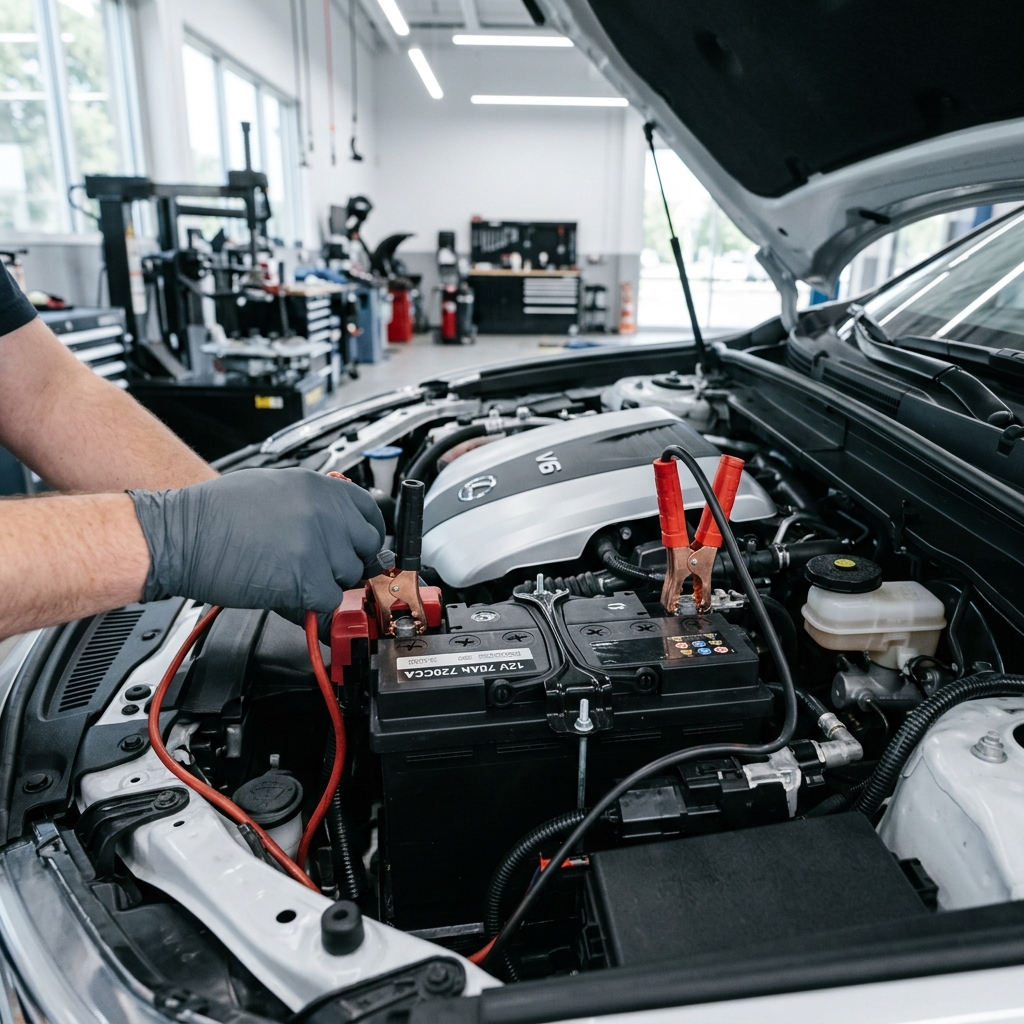
Mechanic wearing gloves attaching jumper cables to a car battery under an open vehicle hood. (Representative image for illustration purposes only. Actual vehicle may vary based on trim and configuration.)

Can I Use a Hitch-Mounted Rack or Small Trailer on My Subaru for Tailgating Gear?

Tongue Weight & Towing Limits

Yes, using genuine Subaru trailer hitches for cargo carriers, heavy steel grills, or small utility trailers is popular among tailgaters. However, paying strict attention to tongue weight ratings is vital. Tongue weight—the downward force exerted on the hitch receiver—typically maxes out between 176 lbs and 500 lbs depending on whether you drive a Crosstrek, Outback, or 5,000-lb capacity Ascent. Overloading a hitch platform lever creates excessive strain on structural mounting points.

Rear Suspension & Bushing Stress

Carrying heavy tailgating accessories extended far behind the rear axle exerts leverage on your rear coil springs and shock absorbers. Over time, repeated heavy loading can cause suspension sag, premature rear strut wear, and uneven tire wear on your rear tires. Routine vehicle multi-point inspections at Hawk Subaru evaluate rear subframe bushings, trailing arm mounts, and suspension alignment to ensure structural integrity and ride comfort.

Safe Loading for Plainfield Drivers

When packing up in Plainfield or heading out along Route 59 toward stadium grounds, place your heaviest equipment—such as full coolers and generator units—inside the vehicle cargo floor between the front and rear axles. Keep lighter items on hitch racks or roof crossbars. This loading strategy maintains a balanced center of gravity and protects your Subaru Symmetrical All-Wheel Drive system's dynamic handling capabilities.

Adjusting Fluid Change Intervals for Heavy Cargo and Extended Engine Idling

Why does tailgating count as severe driving service? Severe service isn't limited to off-road rock crawling; it includes operating conditions characterized by continuous heavy cargo loads, frequent short trips in cold weather, and extensive engine idling. Crawling through congested stadium traffic for an hour, followed by running the engine periodically to operate heaters or high-wattage power inverters, accumulates engine operating hours without adding highway miles.
Extended idling causes combustion byproducts and unburnt fuel to contaminate motor oil more rapidly, breaking down thermal viscosity. Furthermore, carrying full payloads of tailgate gear puts extra thermal stress on your Lineartronic Continuously Variable Transmission (CVT) fluid and front/rear differential gear oils.
Recommended Severe Service Fluid Maintenance Schedule:Synthetic Engine Oil & Filter: Change every 3,000 to 5,000 miles (or every 6 months), rather than the standard 6,000-mile interval. • Lineartronic CVT Fluid: Inspect fluid condition every 15,000 miles; perform fluid replacement around 30,000 to 45,000 miles if frequently towing or hauling heavy tailgating setups. • Differential Gear Oils (Front & Rear): Inspect for moisture contamination and breakdown every 15,000 miles; replace every 30,000 miles under severe cargo use.

Which Subaru Model Is Best Suited for Tailgating?
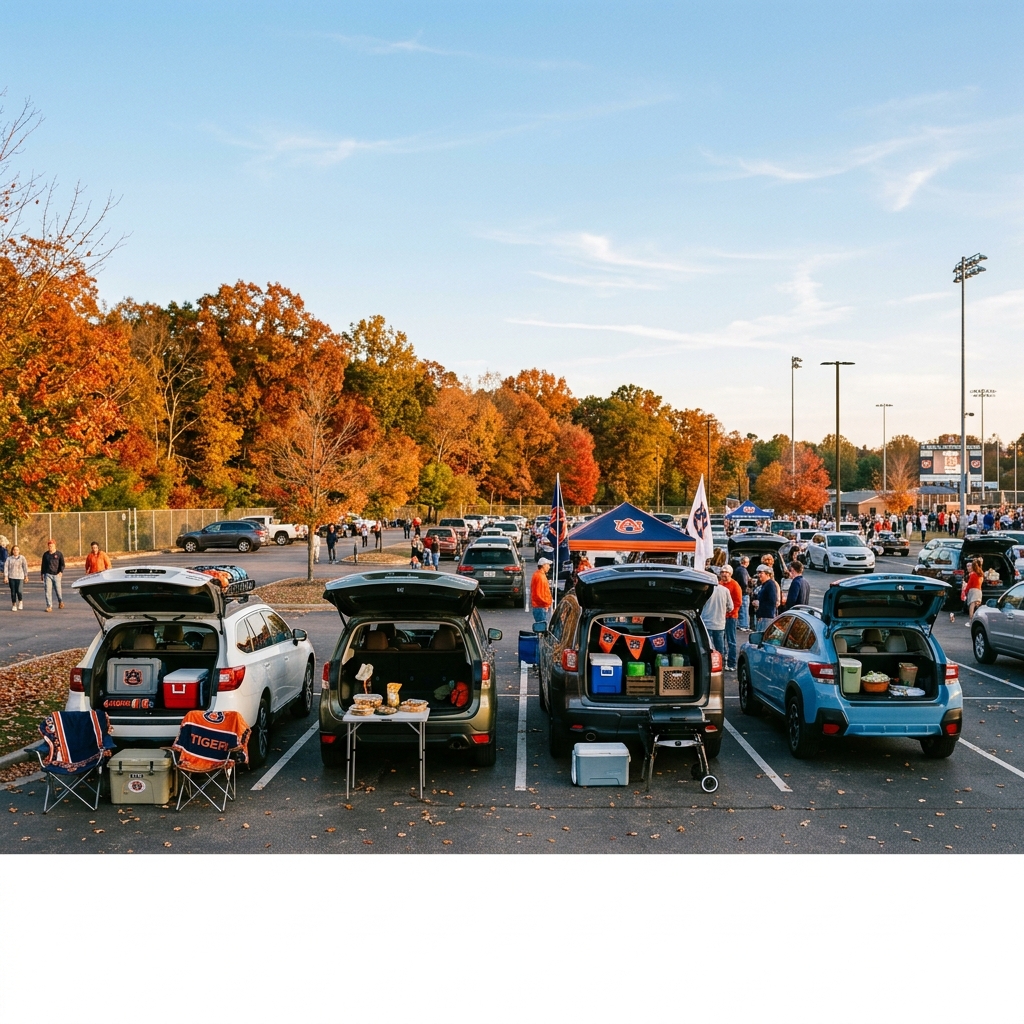
Four cars with open hatchbacks set up with food, coolers, and chairs for a fall tailgate under vibrant autumn trees. (Representative image for illustration purposes only. Actual vehicle may vary based on trim and configuration.)
Every crossover in the Subaru lineup brings unique tailgating advantages. Selecting the best model comes down to your group size, cargo dimensions, and towing needs. Compare key tailgating specifications across popular models below:

Subaru Model

Max Cargo Volume (cu ft)

Max Towing Capacity

Ground Clearance

Tailgating Highlight

Outback

75.6

Up to 3,500 lbs

8.7 - 9.5 in

Deep cargo floor depth & low lift-over height

Forester

74.4

Up to 3,000 lbs

8.7 - 9.2 in

Tall vertical clearance & extra-wide rear hatch

Ascent

75.6 - 86.5

Up to 5,000 lbs

8.7 in

19 cup holders & available 120V AC outlet

Crosstrek

54.9

Up to 3,500 lbs

8.7 - 9.3 in

Agile size for tight parking lot navigation

If you are planning to upgrade your game-day vehicle, you can Browse New Inventory or Explore Certified Pre-Owned Vehicles at Hawk Subaru to test fit your tailgating gear in person.

How Does the Subaru Forester Compare to the Outback for Tailgating?

Subaru Forester: Vertical Height Advantage

The Subaru Forester features a boxier rear silhouette and a notably tall ceiling height. This vertical architecture makes it exceptionally easy to pack upright items such as tall propane tanks, stacked storage totes, full-size beverage coolers, and folded canopy tents without lying them flat. The Forester also boasts an ultra-wide rear gate opening (over 50 inches wide), allowing two people to easily load large items side-by-side or sit comfortably together under the tailgate.

Subaru Outback: Deeper Cargo Floor & Seating Comfort

The Subaru Outback offers a wagon-style body with a significantly longer load floor depth from the rear sill to the front seatbacks. This extra floor length accommodates long folding tables, extended canopy poles, and large flat items easily. Additionally, the Outback features a slightly lower step-in and bumper lift-over height, making the rear bumper sill a more comfortable, natural height for seating during prolonged tailgate gatherings.

What Tailgating Accessories Can You Add When Buying a Subaru Outback?
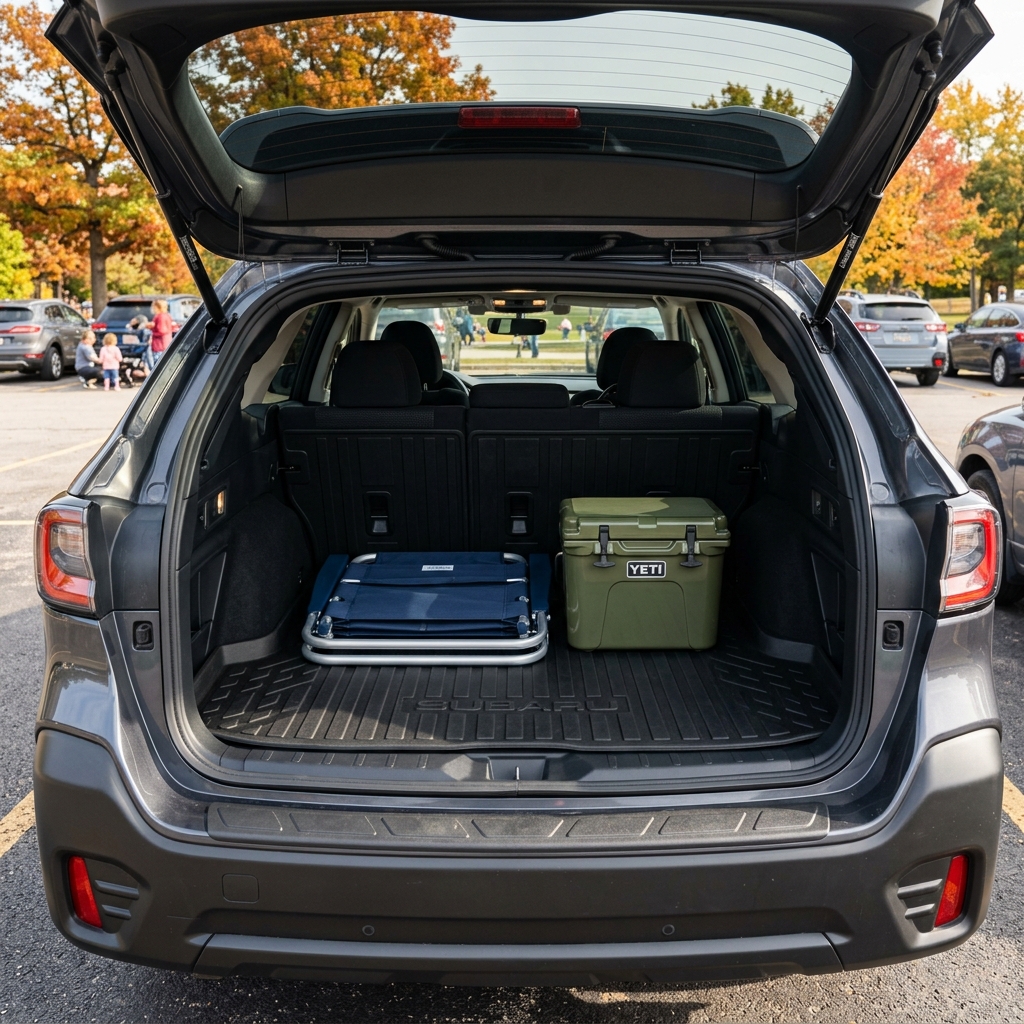
Open trunk of a grey Subaru SUV packed with a folded blue lawn chair and a green YETI cooler in a parking lot. (Representative image for illustration purposes only. Actual vehicle may vary based on trim and configuration.)

Cargo & Bumper Protection

All-Weather Cargo Tray: Waterproof rubber protection against spilled beverages and muddy gear. • Rear Seatback Protectors: Durable plastic backing when rear seats are folded flat. • Rear Bumper Cover Guard: Scuff-resistant protection when sliding heavy coolers or using the bumper as a seat.

Power & Rear Lighting

120V AC Power Inverter Outlets: Genuine factory-installed household power outlets for appliances. • Rear Gate LED Light Upgrade: Bright ceiling-mounted LED lamps illuminating the area directly under the open liftgate after sunset. • Subaru Wireless Device Charging Pads: Keeps phones charged without clutter.

Hitch & Storage Upgrades

Genuine Subaru Trailer Hitch: Engineered to integrate seamlessly into the rear bumper structure. • Thule Roof Cargo Boxes & Awnings: Mount canopy shades directly to factory roof crossbars. • Thule Hitch-Mounted Bike & Cargo Racks: Swing-away designs allow access to tailgate.
You can order genuine OEM accessories directly through our certified Parts Center at Hawk Subaru.

Prepare Your Subaru for Football Season at Hawk Subaru

Don't let a dead 12V battery, sagging suspension, or overdue fluid service spoil your game day experience. The factory-trained master technicians at Hawk Subaru serve drivers across Plainfield, Joliet, Naperville, and surrounding communities. Before you load up the grill and coolers for football season, schedule a comprehensive pre-season vehicle inspection.
Our service department conducts 12V battery conductance testing, inspects CVT and differential fluids, checks tire pressure and suspension alignment, and verifies liftgate latch function. Thinking about upgrading your vehicle before kickoff? Value Your Trade-In online or Get Pre-Approved for Financing today. You can also visit us directly: Get Directions to Hawk Subaru.

Preventing Power Liftgate Wear and Hatch Latch Strain During Long Events

Managing Power Liftgate Battery Draw & Sensors

On modern Subaru models equipped with Power Rear Gate (PRG) systems, leaving the liftgate open continuously for several hours keeps control modules awake. To prevent slow electronic battery drain while tailgating, turn off interior overhead lighting using the main dome light override switch. Additionally, avoid forcing the power liftgate manually against its motor drive, which can misalign height memory sensors and require recalibration.

Weatherstrip Conditioning & Latch Care

Extended open-hatch sessions expose rubber weatherstripping seals to dirt, debris, and UV rays. If grit builds up inside the lower latch mechanism or along perimeter seals, the liftgate may fail to seal tightly, allowing water leaks during rainy commutes around Illinois. Inspect and clean the latch assembly periodically, and apply silicone weatherstrip conditioner to maintain pliable, waterproof rubber seals.

Ready to get your Subaru game-day ready or explore our latest inventory? Visit Hawk Subaru at 2401 Rte 59, Plainfield, IL 60586 or Browse Used Inventory online today!