Subaru Symmetrical All-Wheel Drive: Why Your Tires Matter More Than You Think

Blue Subaru SUV driving on a wet suburban road with an oversized front tire and glowing drivetrain.

When you choose a Subaru, you aren't just buying a car; you're investing in a sophisticated engineering marvel known as Symmetrical All-Wheel Drive. Unlike many 'slip-and-grip' systems found in competitors, Subaru's system is active all the time, sending power to all four wheels simultaneously. This provides the legendary traction that Plainfield drivers rely on during sudden Illinois summer downpours and icy winters. However, this high-performance system creates a unique relationship between your vehicle and its tires. In a front-wheel-drive car, the back tires are mostly along for the ride. In your Outback, Forester, or Crosstrek, every tire is a critical component of the drivetrain. Because the Symmetrical AWD system is designed to distribute power evenly, it assumes that all four tires are the exact same size. If one tire is significantly more worn than the others, it actually has a smaller circumference. To the car's computer, that smaller tire looks like it's spinning faster than the others. This forces the center differential to work overtime, trying to compensate for a 'slip' that isn't actually happening. Over time, this causes heat buildup and mechanical strain that can lead to expensive drivetrain repairs. Maintaining your tires isn't just about safety; it's about protecting the heart of your Subaru. If you're noticing any odd behavior, it's time to Call us at (815) 725-3789 to speak with a specialist.

The Critical 2/32-Inch Rule

In the world of Subaru maintenance, the most important number you need to know is 2/32 of an inch. While many manufacturers suggest replacing tires when they reach 2/32 of remaining tread for safety, Subaru has a much stricter requirement for consistency. All four tires on your vehicle must be within 2/32-inch of each other in terms of remaining tread depth. Why such a tight tolerance? It comes back to the drivetrain. A difference of just 3/32-inch can create enough of a circumference mismatch to cause the center differential to bind or overheat. This is why Subaru technicians are so meticulous when measuring your tread. We don't just look for 'enough' tread; we look for 'equal' tread across the entire set.

Tread Depth

Condition

Action Required

10/32 - 8/32

Excellent

New or like-new condition.

6/32 - 5/32

Good

Monitor closely; consider rotation.

4/32 - 3/32

Caution

Nearing replacement; check AWD matching.

2/32 or less

Dangerous

Immediate replacement required.

Common Signs of Tire Trouble

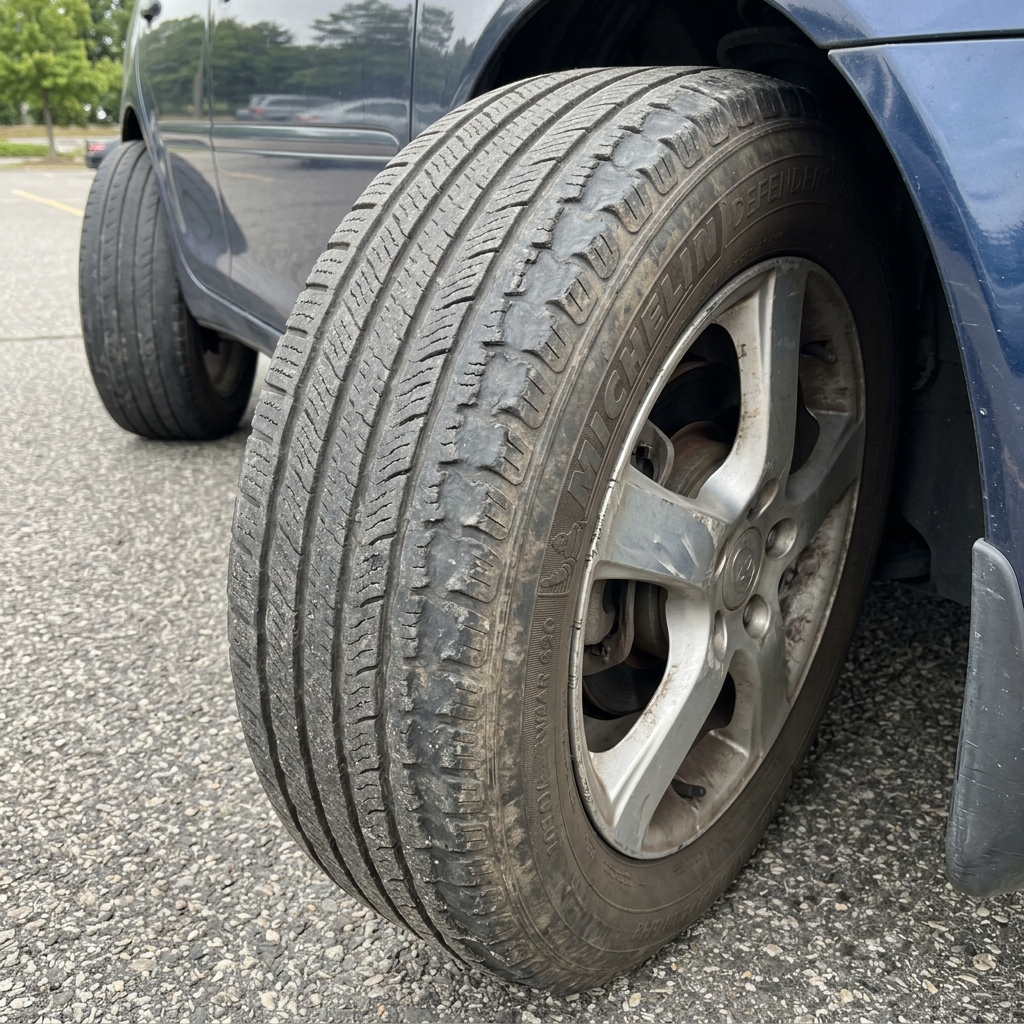
AI generated: uneven wear pattern on tires

Vibration & Noise: If you feel a rhythmic thumping or vibration through the steering wheel while cruising down Route 59, your tires may be out of balance or developing 'cupping' wear. Increased road noise is often the first sign that your tread is wearing unevenly.

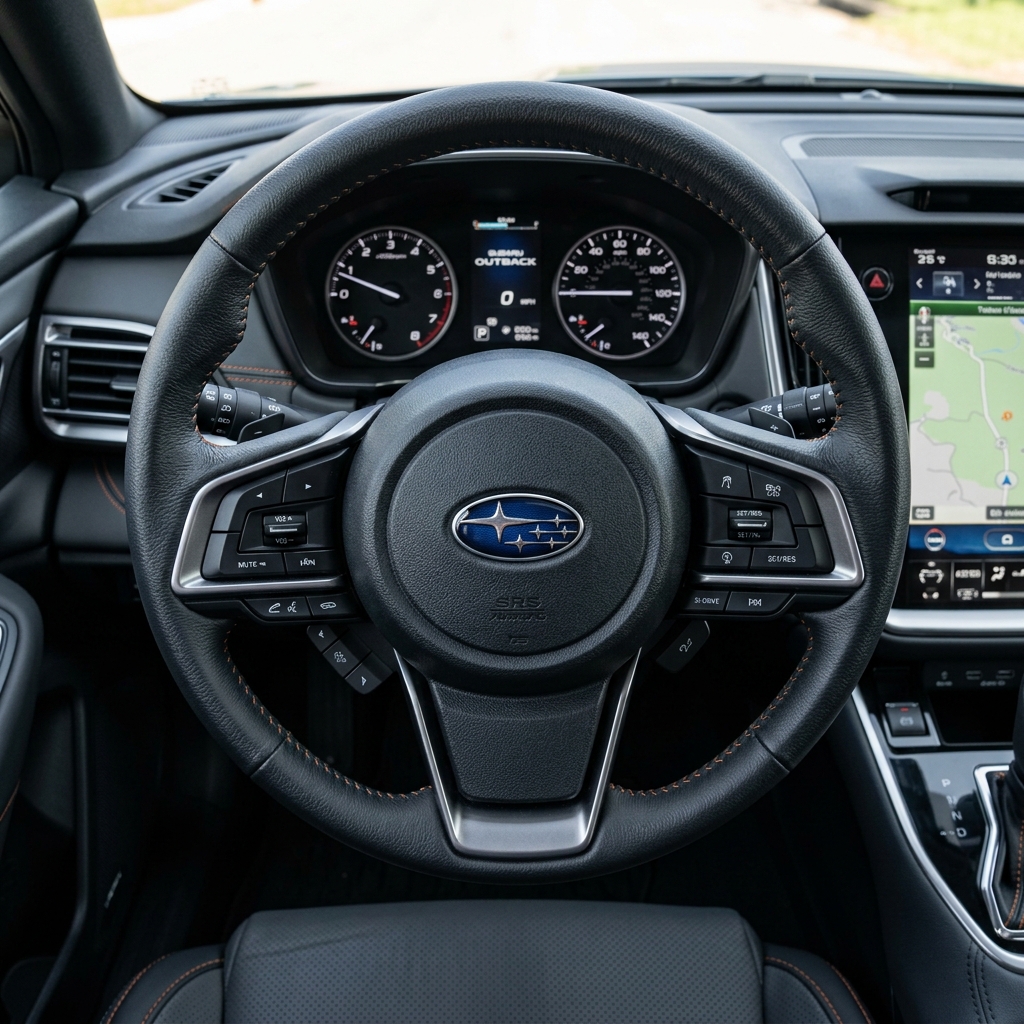
AI generated: subaru steering wheel

Pulling to One Side: Does your Subaru drift toward the shoulder when you let go of the wheel? This usually indicates an alignment issue or uneven tire pressure. In a Subaru, this can also interfere with the calibration of your EyeSight® Driver Assist technology.

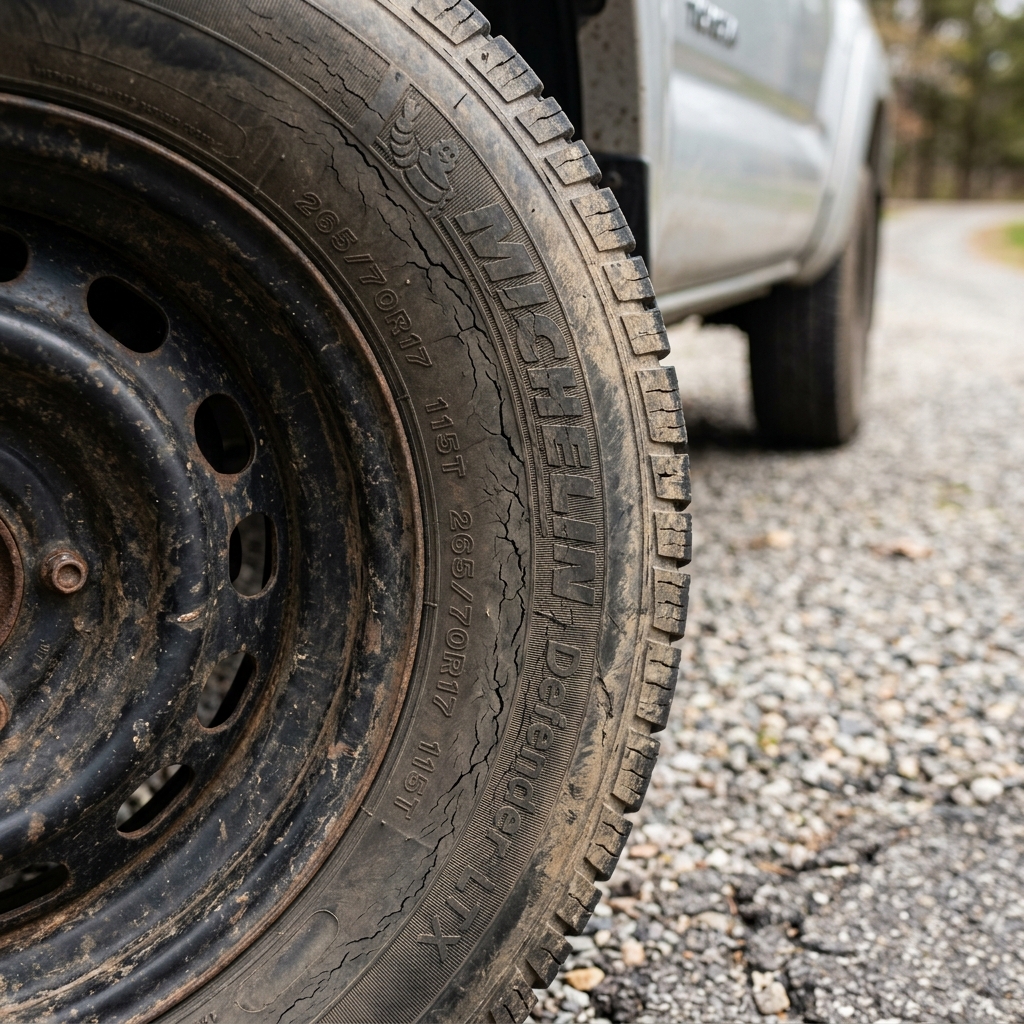
AI generated: cracked sidewall on tire

Visible Damage: Check for 'bubbles' in the sidewall (often caused by hitting a Plainfield pothole) or small cracks. These are structural failures that can lead to a blowout. If you see metal cords, do not drive the vehicle; call for a tow immediately.

Expert Inspection at Hawk Subaru

Don't leave your safety to guesswork. Our factory-trained technicians at Hawk Subaru use specialized diagnostic tools designed specifically for the Symmetrical AWD system. We don't just kick the tires; we perform a multi-point inspection that includes digital tread depth mapping and a check of your suspension components. Whether you're in Joliet or Shorewood, our Plainfield service center is your local authority for Subaru tire health. Get Directions to Hawk Subaru and let us give you peace of mind.

The Impact of Improper Inflation
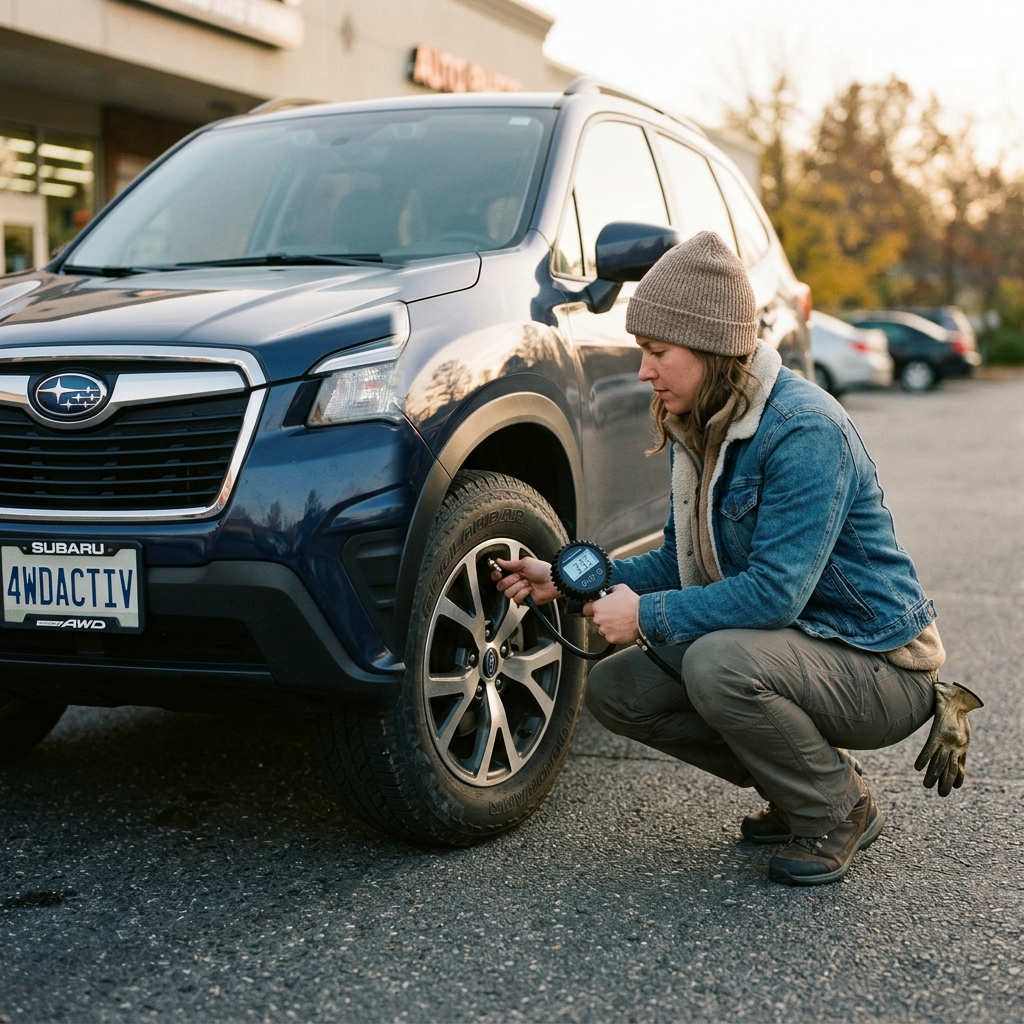
AI generated: checking tire pressure on a subaru

Tire pressure is not a 'set it and forget it' metric. In Illinois, we experience massive temperature swings. For every 10-degree drop in temperature, your tires can lose about 1 PSI. Conversely, on a hot June day, your tire pressure can spike significantly during a long drive. Under-inflated tires increase rolling resistance, which forces your Subaru's Boxer engine to work harder, decreasing your fuel economy. Over-inflated tires, on the other hand, reduce the contact patch with the road, leading to a harsh ride and increased risk of a blowout. Maintaining the precise PSI listed on your driver's side door jamb (not the 'max PSI' on the tire sidewall) ensures that the AWD system distributes torque as intended. If your TPMS light is on, don't ignore it—it's your Subaru's way of protecting its drivetrain.

Rotation Patterns and Frequency

Regular rotation is the single best way to ensure your tires wear evenly and stay within that 2/32-inch tolerance. Because your Subaru is constantly powering all four wheels, the tires will wear differently based on their position and the weight distribution of the vehicle. We recommend a rotation every 6,000 miles, which conveniently aligns with most oil change intervals.

Modified Cross

For most Subaru models, we use a modified cross pattern. The front tires move straight back, while the rear tires cross over to the opposite front positions. This ensures every tire spends time on each corner of the car.

Directional Tires

If you have high-performance directional tires (often found on the WRX), they can only be rotated front-to-back. Crossing them would reverse their tread pattern, which is dangerous in wet conditions.

The Full Set

By rotating every 6,000 miles, you can potentially extend the life of your tire set by up to 10,000 miles, saving you money and keeping your AWD system in peak condition.

When to Replace: Repair vs. Replace

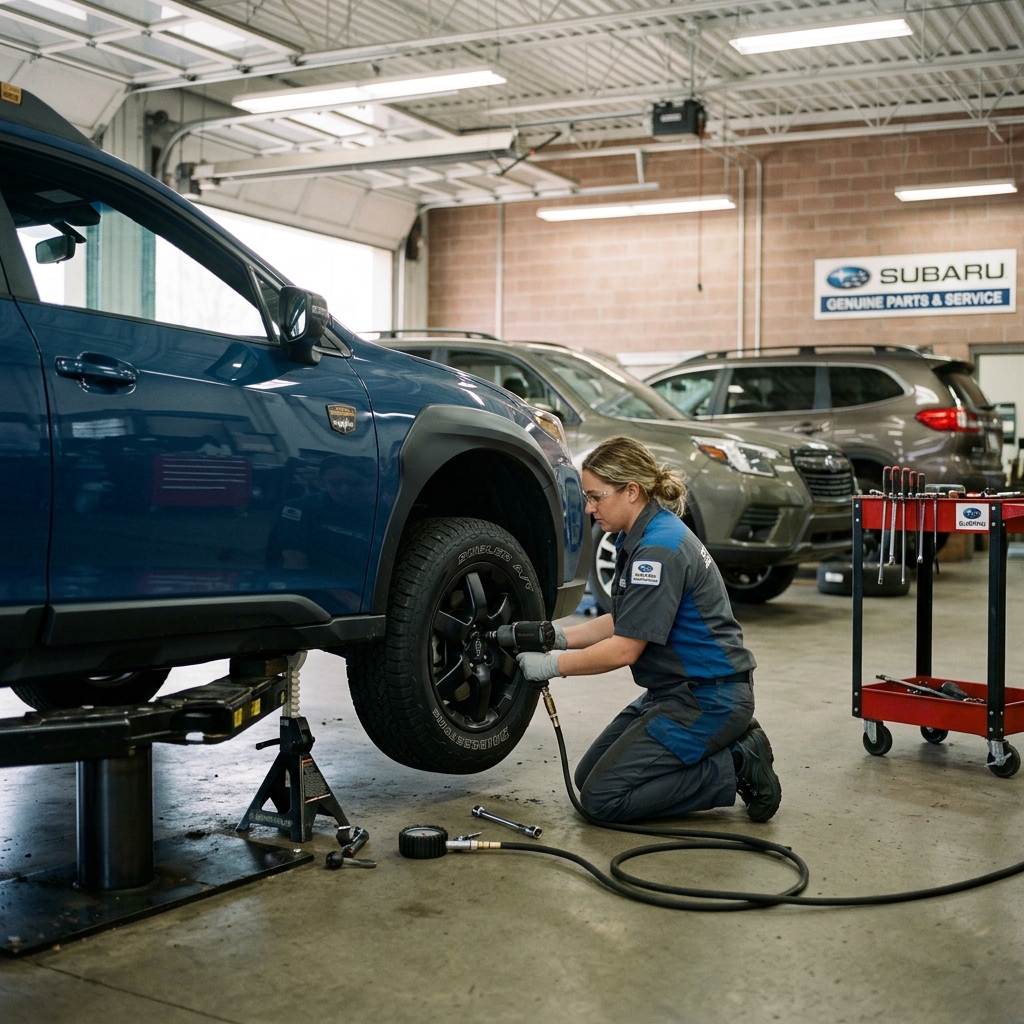
Found a nail in your tire? It's a common headache. Whether we can repair it depends on two things: the location of the puncture and the depth of the tread. If a puncture is in the 'shoulder' or sidewall, it cannot be safely patched. However, if it's in the center tread and the tire is relatively new, a professional plug and patch can save the tire. Here is the Subaru-specific challenge: If one tire is damaged beyond repair and your remaining tires are worn down by more than 2/32-inch, you can't just replace one tire. Putting a brand-new tire on a car with three partially worn tires creates that circumference mismatch we discussed earlier. In this scenario, you may need to replace all four tires to protect your transmission. It's a tough pill to swallow, but it's much cheaper than replacing a center differential. If you find yourself in this spot, our Parts Center can help you find the best value on a matching set.

AI generated: subaru tire repair

Schedule Your Certified Tire Service

Our service department is equipped with the latest technology to handle everything from simple rotations to complex AWD diagnostic work. We offer convenient hours and a comfortable waiting area for our Plainfield neighbors. Don't wait until a small vibration becomes a major repair bill. Schedule your service today and let our experts ensure your Subaru is ready for the road ahead.

Choosing the Right Rubber for Illinois Seasons
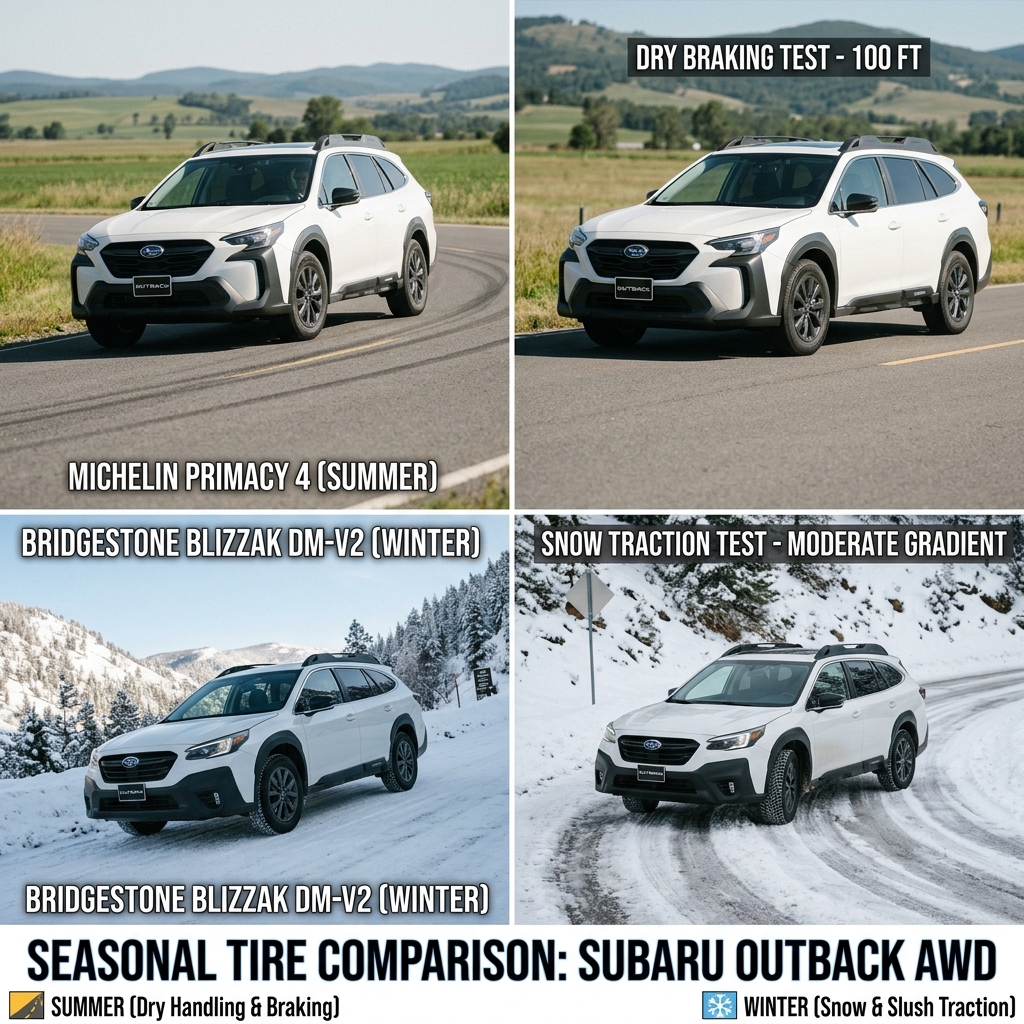
All-Season

The 'Jack of all trades.' These are designed to perform well in a wide range of temperatures and conditions. They are standard on most Subarus and provide a balance of comfort, longevity, and traction for average Illinois drivers.

Summer Performance

Optimized for temperatures above 45°F. These tires use a stickier compound that provides incredible grip on dry and wet pavement. If you drive a BRZ or WRX, these allow you to truly experience the car's handling limits.

Winter/Snow

A game-changer for Chicago-area winters. The rubber stays soft in sub-zero temps, and the tread is designed to bite into ice and snow. Even with AWD, winter tires significantly improve your stopping distance.

AI generated: seasonal tire comparison subaru

The Role of Wheel Alignment

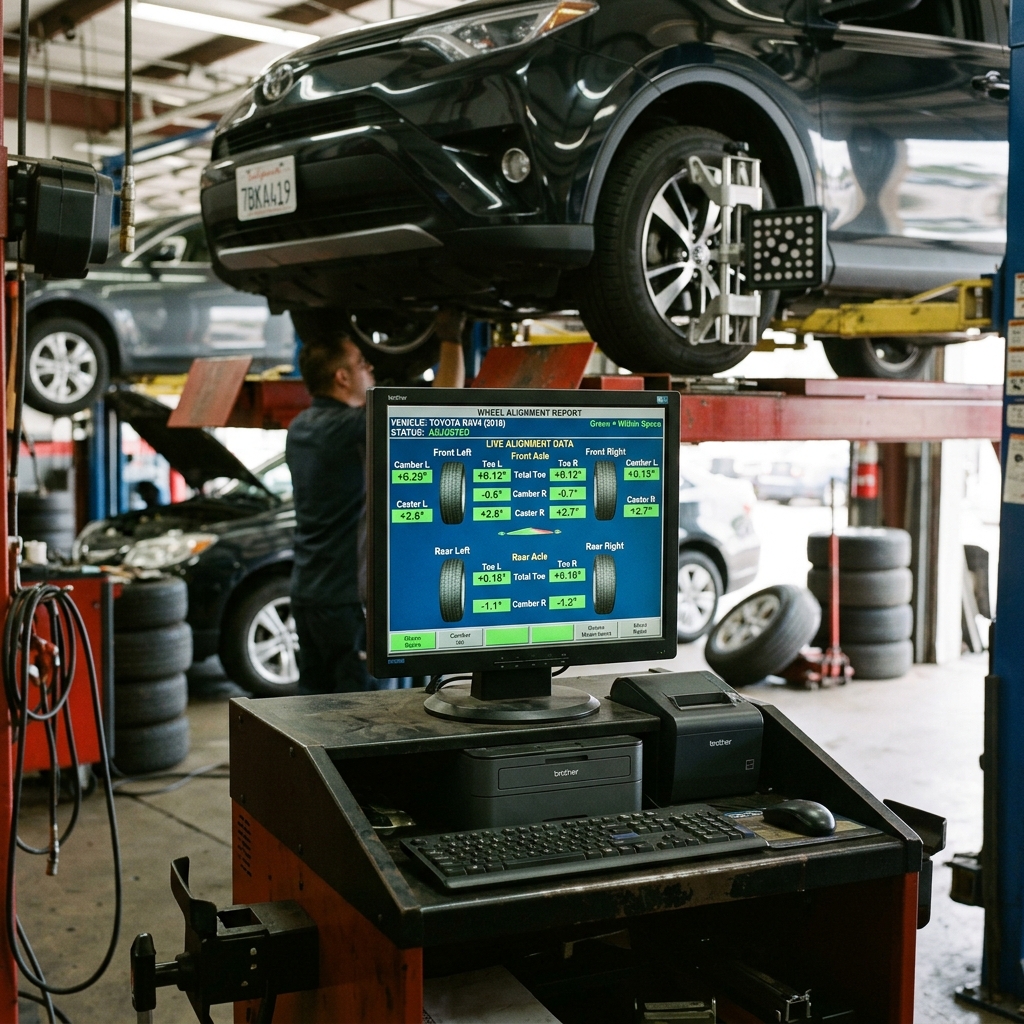
Poor alignment is a silent tire killer. When your wheels aren't perfectly parallel to each other and perpendicular to the ground, they 'scrub' against the road. This creates rapid, uneven wear that can ruin a set of tires in just a few thousand miles. In Plainfield, the combination of winter freeze-thaw cycles and construction on Route 59 leads to potholes that can knock your alignment out of spec in a heartbeat. Furthermore, modern Subarus rely on the EyeSight® Driver Assist system. If your alignment is significantly off, the steering angle sensor may send incorrect data to the computer, potentially affecting the performance of Lane Keep Assist and Pre-Collision Braking. We recommend an alignment check at least once a year or whenever you install new tires.

AI generated: alignment machine readout

Genuine Subaru Parts & Accessories

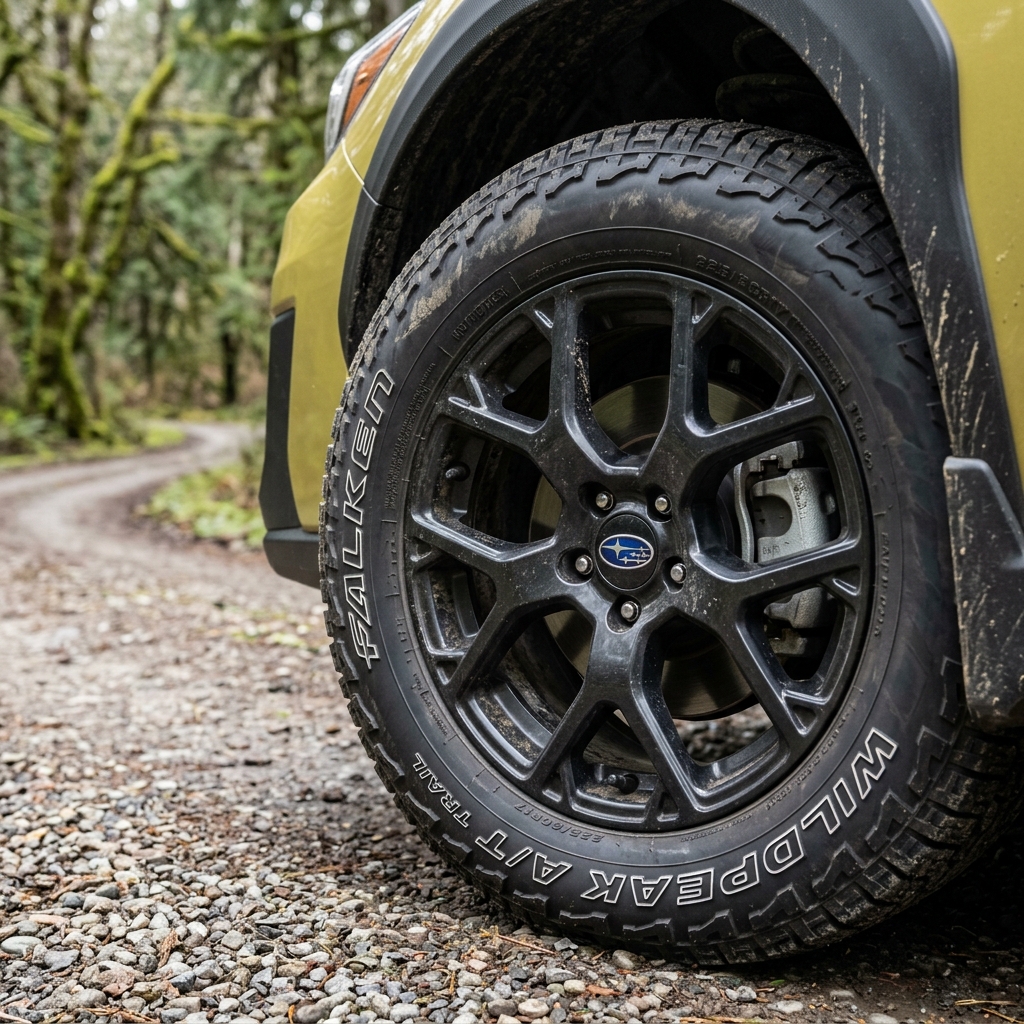
AI generated: subaru tires

When it's time for new tires, why go to a generic tire shop? The Hawk Subaru Parts Center stocks the exact tire brands and models that Subaru engineers selected for your vehicle's specific weight and suspension tuning. Whether it's the quiet-running Yokohama Geolandars on your Forester or the high-traction Bridgestones on your Legacy, we ensure the load rating and speed rating are perfectly matched. Plus, all tires purchased and installed at our dealership come with the assurance of expert installation by technicians who know your AWD system inside and out. Looking to upgrade your ride? We also offer a wide selection of Genuine Subaru wheels to give your car a custom look without sacrificing factory specs.

Tire Aging: The Invisible Danger

Even if you don't drive many miles and your tread looks deep, your tires might still be dangerous. Rubber is an organic compound that breaks down over time due to UV exposure, ozone, and temperature changes. This process is called 'dry rot' or oxidation. Tires generally have a lifespan of about six years. After this point, the structural integrity of the tire becomes questionable, regardless of how much tread is left. You can find the 'birth date' of your tire on the sidewall—it's a four-digit code following the letters 'DOT'. The first two digits are the week, and the last two are the year.

If you're driving a low-mileage Subaru that's more than five years old, it's vital to have your tires inspected for microscopic cracking. At Hawk Subaru, we can help you decode your DOT stamps and determine if your tires are safe for another season of Illinois driving. Safety is our priority, and that includes the parts of the tire you can't see.

Fuel Efficiency and Rolling Resistance
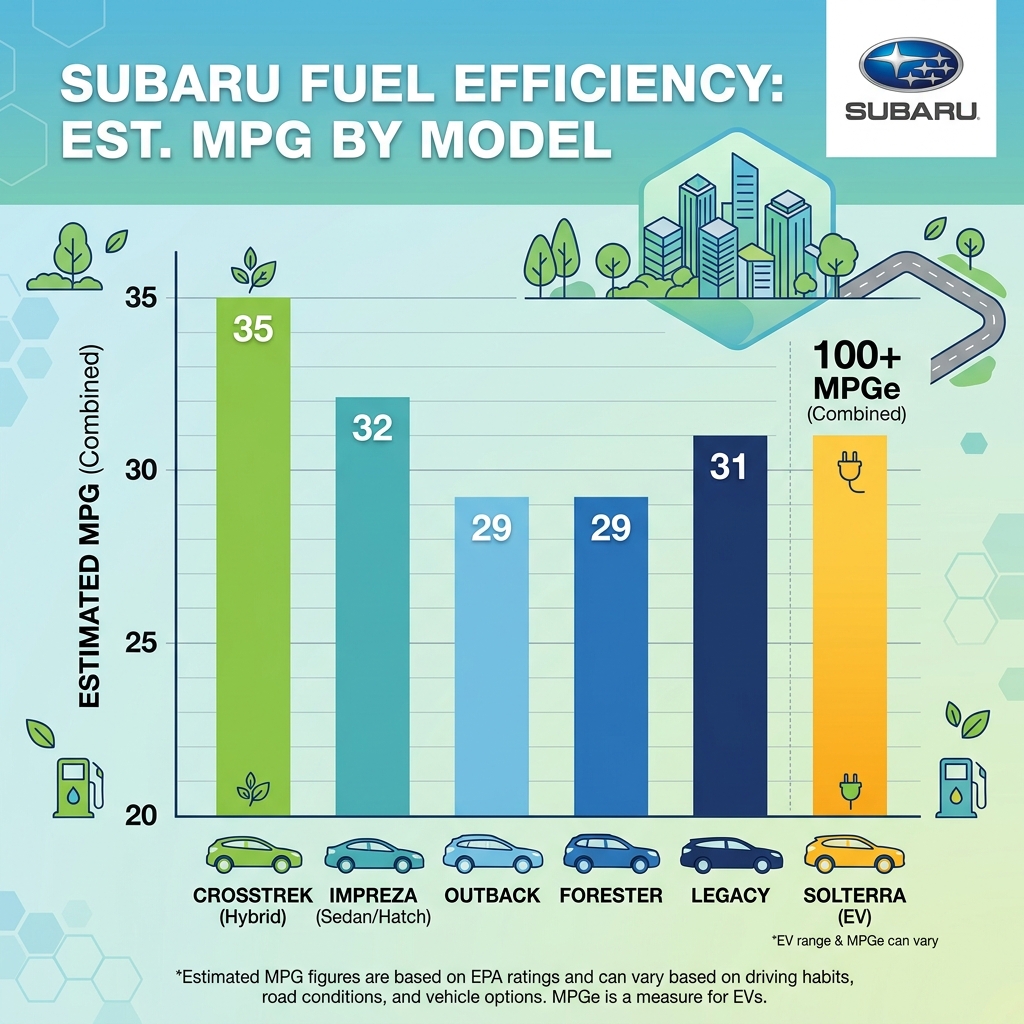
Low Rolling Resistance

Choosing tires designed for fuel efficiency can improve your MPG by up to 4%. Over the life of the tire, this can save you hundreds of dollars at the pump.

AI generated: subaru fuel efficiency graph

Cost vs. Benefit

High-quality tires last longer and stay in balance better, reducing the frequency of replacement and specialized maintenance visits.

Trading Up? Check Your Tread Value

Are you thinking about getting into a new Solterra or a redesigned Forester? The condition of your tires plays a significant role in your vehicle's trade-in valuation. A car with a fresh set of matched, well-maintained tires is worth considerably more than one with mismatched or worn rubber. Before you stop by, use our online tool to value your trade-in and see how your Subaru stacks up. If you're looking to maximize that value, check out our used inventory or browse new inventory to find your next adventure companion.

Summary of Subaru Tire Care Essentials

Monthly: Check your tire pressure when the tires are 'cold' (before driving more than a mile). Ensure they match the PSI listed on your door jamb. Every 6,000 Miles: Schedule a tire rotation. This is also a great time to get pre-approved for financing if you're planning a major service or upgrade.

Annually: Get a professional alignment check and tread depth measurement. Remember the 2/32-inch rule! Every 6 Years: Replace your tires regardless of tread depth to ensure the rubber compound is still safe and reliable.

Drive With Confidence: Visit Hawk Subaru Today

Exterior of Hawk Subaru dealership building with several cars parked in the lot under an overcast sky.

Your tires are the only thing connecting your Subaru to the road. Don't take chances with mismatched tread or improper inflation. Visit the experts who know Symmetrical All-Wheel Drive better than anyone else in the Joliet area. Our team at Hawk Subaru is dedicated to keeping you and your family safe on every journey. Whether you need a quick pressure check or a full set of new tires, we are here to help. Call us at (815) 725-3789 today or visit us at 2401 Rte, 59, Plainfield, IL 60586.