Subaru Recommended Oil Grades: Quick Reference for Outback, Forester, and Crosstrek Engines
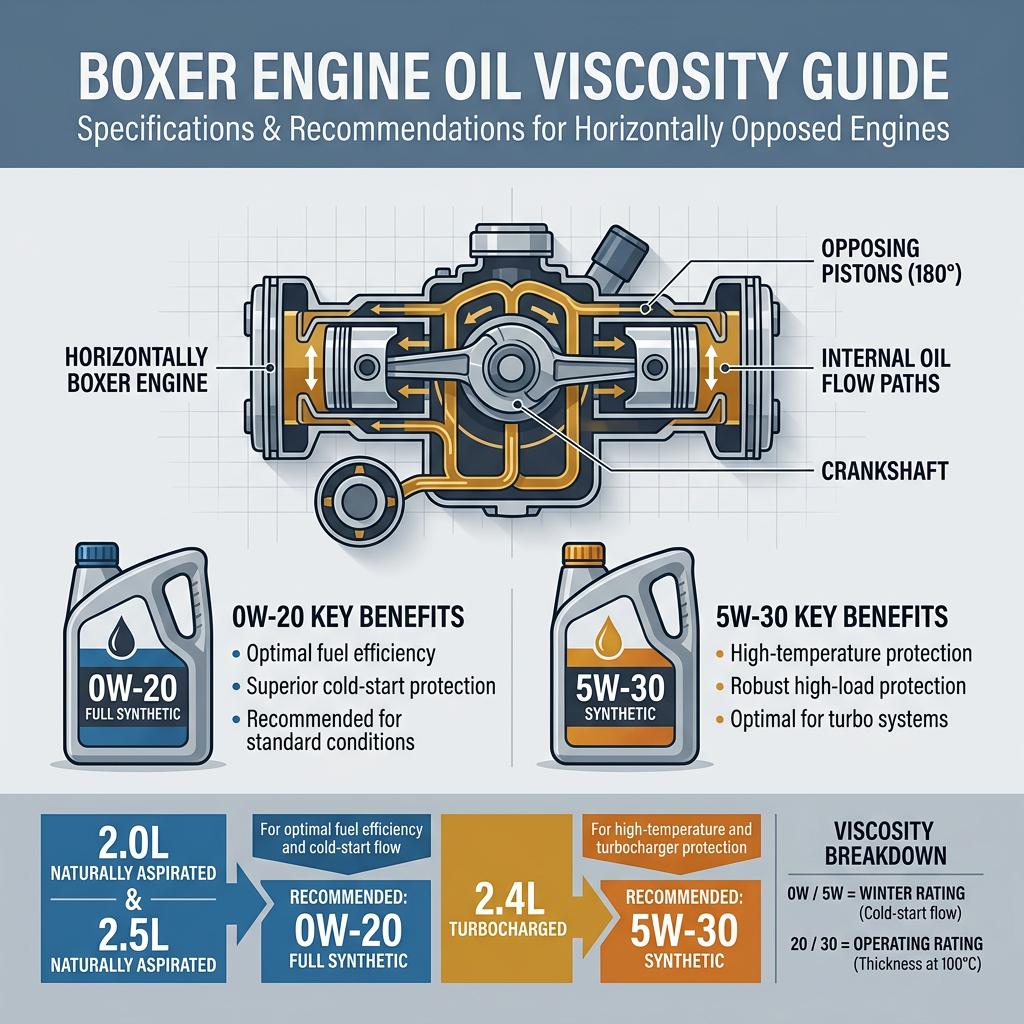
Selecting the exact motor oil specification for your Subaru vehicle is not merely a matter of routine automotive maintenance—it is a foundational requirement for preserving the mechanical integrity, fuel efficiency, and long-term durability of Subaru's unique engine architecture. Modern naturally aspirated 2.0L and 2.5L Subaru BOXER® engines powering the Outback, Forester, and Crosstrek are engineered from the factory to operate exclusively on API-certified 0W-20 Full Synthetic Oil. Conversely, high-output turbocharged engines—such as the 2.4L Subaru BOXER® DIT found in the Outback XT and Outback Wilderness models—demand 5W-30 Synthetic Oil to withstand extreme thermal loads and forced-induction pressures.
|
Subaru Model & Engine
|
Engine Type
|
Recommended Oil Viscosity
|
Oil Capacity (Approx. with Filter)
|
Required Industry Standard
|
|
Subaru Outback 2.5L
|
4-Cyl Naturally Aspirated
|
0W-20 Full Synthetic
|
4.4 to 5.1 Quarts
|
API SP / ILSAC GF-6A
|
|
Subaru Outback 2.4L Turbo (XT / Wilderness)
|
4-Cyl Turbocharged DIT
|
5W-30 Full Synthetic
|
4.8 to 5.1 Quarts
|
API SP / ILSAC GF-6A
|
|
Subaru Forester 2.5L
|
4-Cyl Naturally Aspirated
|
0W-20 Full Synthetic
|
4.4 to 4.8 Quarts
|
API SP / ILSAC GF-6A
|
|
Subaru Crosstrek 2.0L
|
4-Cyl Naturally Aspirated
|
0W-20 Full Synthetic
|
4.4 to 4.7 Quarts
|
API SP / ILSAC GF-6A
|
|
Subaru Crosstrek 2.5L
|
4-Cyl Naturally Aspirated
|
0W-20 Full Synthetic
|
4.4 to 4.8 Quarts
|
API SP / ILSAC GF-6A
|
For vehicle owners navigating the climate shifts of northern Illinois—spanning freezing winter mornings in Plainfield, Joliet, and Naperville to humid summer commuting along I-55—understanding why these exact oil grades are specified is critical. Low-viscosity 0W-20 synthetic fluid flows rapidly during sub-zero cold starts, reducing metallic friction before engine temperatures reach operating levels. Adhering strictly to OEM viscosity ratings, oil capacity figures, and API SP / ILSAC GF-6 standards prevents premature timing chain wear, protects hydraulic active valve control solenoids, and ensures optimal performance throughout the vehicle's operational lifecycle.
Why BOXER Engine Design Demands Specific Synthetic Oil Viscosity Grades
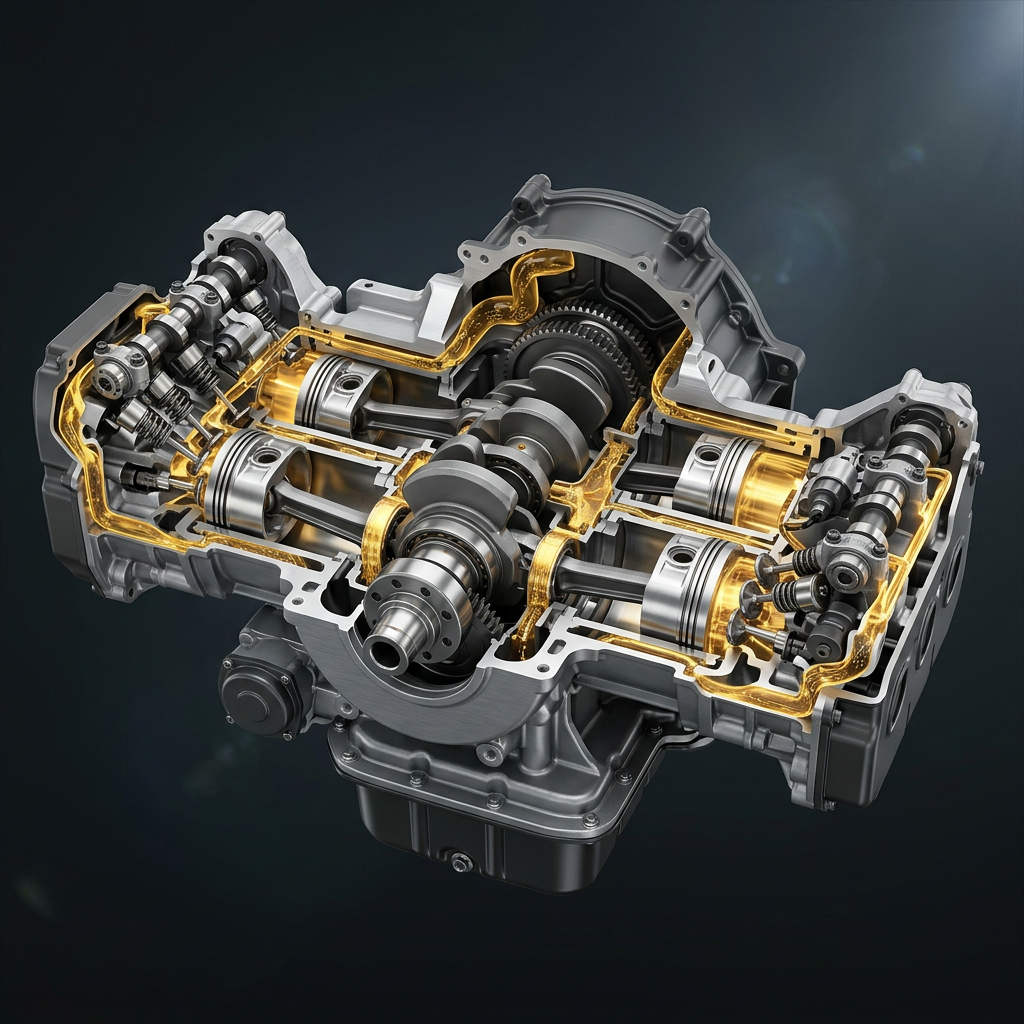
The horizontal orientation of the Subaru BOXER® engine creates unique internal lubrication dynamics that differ fundamentally from traditional inline or V-type engines. Because the pistons move horizontally, oil settles differently across cylinder walls, wrist pins, and lower cylinder banks when the vehicle is parked overnight. During winter cold-starts in Plainfield and Joliet, heavy or conventional motor oil flows slowly through long internal galleries, leaving upper valvetrain components temporarily vulnerable to unlubricated metal-to-metal contact.
Subaru's Advanced Active Valve Control System (AVCS) relies heavily on hydraulic pressure driven by engine oil to adjust intake and exhaust valve timing on the fly. Heavy or out-of-spec oil creates flow resistance within the micro-passages of the AVCS solenoids, resulting in sluggish valve timing response, reduced fuel economy, and potential check-engine lights. Modern 0W-20 synthetic oils maintain steady fluid velocity across extreme temperature swings, delivering instant oil pressure to valve actuators even during frozen morning turn-overs.
In addition to cold-flow advantages, full synthetic formulation resists thermal breakdown and oxidation under high engine operating temperatures. Horizontal engines experience compact heat pockets around exhaust ports; high-grade 0W-20 synthetic oil prevents varnish formation and sludge deposits on critical camshaft bearings and oil control rings.
Subaru Outback Oil Specifications Across 2.5L and 2.4L Turbo Trim Levels
Outback 2.5L Standard Trims
The naturally aspirated 2.5L 4-cylinder BOXER engine found in the Base, Premium, Limited, and Touring trims requires 0W-20 Full Synthetic Oil meeting API SP or ILSAC GF-6A specifications. Oil refill capacity is approximately 4.4 to 4.8 quarts with filter replacement. Using correct viscosity optimizes thermal efficiency and preserves fuel economy ratings during extended highway drives.
Outback 2.4L Turbo (XT & Wilderness)
High-output Outback Onyx Edition XT, Limited XT, Touring XT, and Wilderness models are equipped with the 2.4L Turbocharged DIT engine. This unit requires 5W-30 Full Synthetic Oil (4.8 to 5.1 quarts). Higher oil viscosity is mandatory to cool turbocharger shaft bearings operating at excess of 100,000 RPM under severe thermal stress.
API SP & ILSAC GF-6 Standards
API SP and ILSAC GF-6 standards were specifically introduced to combat Low-Speed Pre-Ignition (LSPI)—a dangerous engine knock phenomenon common in direct-injection engines. Genuine Subaru synthetic lubricants feature precise detergent chemistry that suppresses LSPI while protecting timing chains from severe soot-induced wear.
Forester and Crosstrek Engine Oil Requirements for Daily Commuting and Cold Starts
Daily commuting across Will and DuPage counties involves rigorous stop-and-go driving along major corridors like I-55, Route 59, and Ogden Avenue. For Forester and Crosstrek drivers, short trips in cold winter weather prevent motor oil from reaching full operating temperature (195°F–212°F). When oil stays cold, raw fuel vapor and atmospheric moisture accumulate in the crankcase, causing fuel dilution and accelerated sludge formation.
Both the Forester 2.5L and Crosstrek (2.0L & 2.5L models) require 0W-20 Full Synthetic Oil. Utilizing top-tier synthetic fluid ensures that volatile fuel molecules evaporate efficiently once operating temperature is reached, maintaining film strength on cylinder walls and reducing long-term engine deposit build-ups.
What Is the Recommended Maintenance Schedule for a Subaru Vehicle?
Subaru recommends routine maintenance intervals every 6,000 miles or 6 months, whichever comes first. Following this factory schedule preserves Subaru's Symmetrical All-Wheel Drive powertrain health, maintains fuel economy standards, and keeps your manufacturer warranty fully intact. Under severe driving conditions—such as northern Illinois winters, excessive idling, tow hauling, or dusty unpaved roads—oil change intervals should be monitored closely.
|
Service Interval
|
Primary Maintenance Tasks
|
Fluid & Filter Specifications
|
Inspection Items
|
|
6,000 Miles / 6 Months
|
Engine Oil & Filter Change, Tire Rotation
|
0W-20 or 5W-30 Full Synthetic + OEM Filter
|
Brake pads, fluid levels, tire tread wear
|
|
12,000 Miles / 12 Months
|
Oil Service, Cabin Air Filter Replacement
|
Full Synthetic Oil + Clean Air Filter
|
Suspension, steering linkage, axle boots
|
|
30,000 Miles / 30 Months
|
Major Service: Engine Air Filter, Brake Fluid
|
Synthetic Oil, OEM Air Filter, DOT 3/4 Fluid
|
CVT transmission fluid, front/rear diff gear oil
|
|
60,000 Miles / 60 Months
|
Comprehensive Service: Spark Plugs (2.5L/2.0L)
|
Iridium Spark Plugs, Synthetic Fluids
|
Drive belts, cooling system, fuel line couplings
|
Midwest drivers frequently encounter 'severe driving conditions' without realizing it. Frequent cold starts below freezing, road salt exposure, and prolonged idling during Chicago area traffic jams place heightened strain on engine oil. Adhering strictly to the 6,000-mile benchmark at Hawk Subaru in Plainfield safeguards internal engine surfaces against accelerated wear.
Genuine Subaru Synthetic Oil vs. Aftermarket Conventional and Synthetic Blends
Genuine Subaru Synthetic Formula
Genuine Subaru Synthetic Motor Oil contains a proprietary blend of anti-wear additives, molybdenum friction modifiers, and anti-foaming agents tailored explicitly for horizontal BOXER movement. It protects aluminum block internal surfaces under elevated RPM conditions.
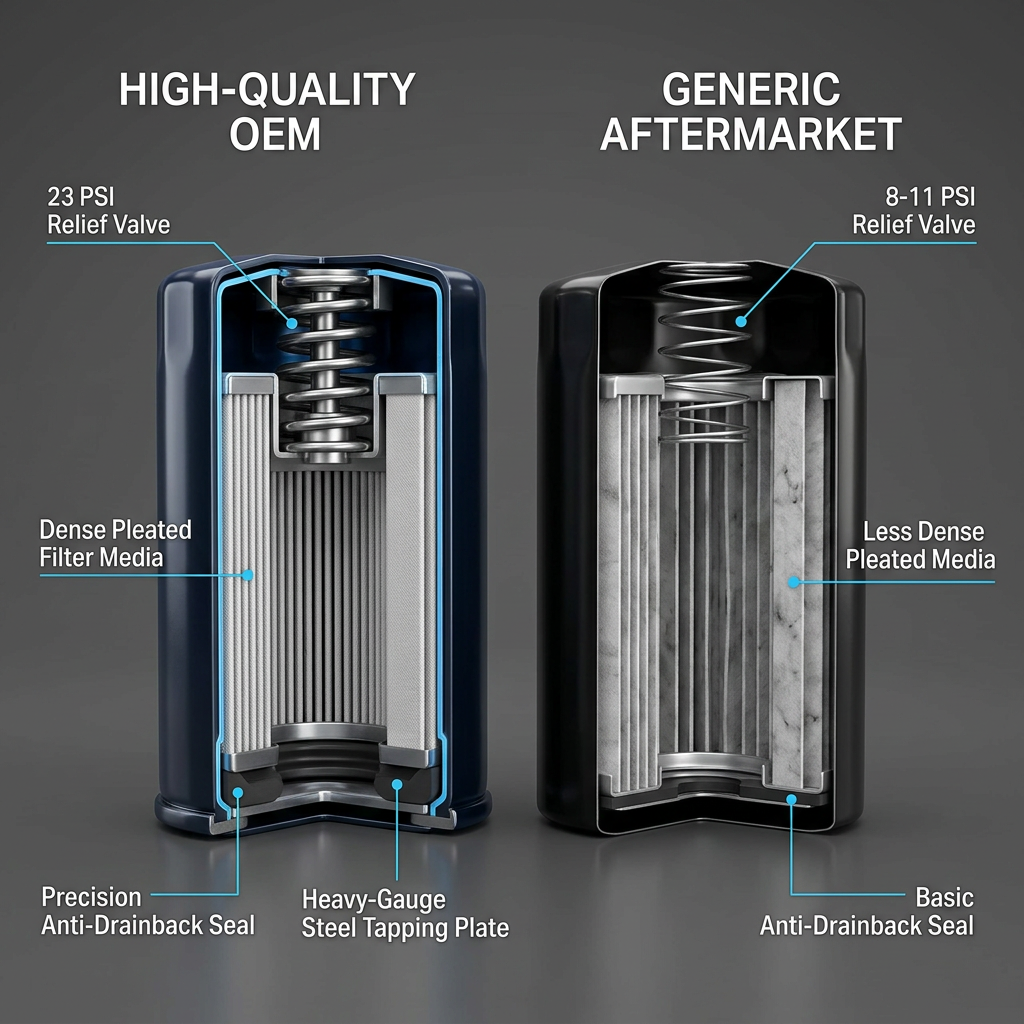
OEM Filter 23 PSI Bypass Valve
Genuine Subaru oil filters feature a precise internal relief valve calibrated to 23 PSI. Generic aftermarket filters often open at 8–11 PSI, allowing unfiltered oil containing debris to continuously circulate through sensitive BOXER bearings during high-RPM acceleration.
What Is the Average Annual Maintenance Cost for Subaru Outback and Forester Models?
On average, routine annual maintenance for a Subaru Outback or Forester ranges between $350 and $650 per year during the first 3 to 5 years of ownership. Routine oil changes and multi-point inspections account for a fraction of this total, making preventative fluid management exceptionally cost-effective compared to major component repairs.
Skipping oil changes or using non-approved oil grades can cause oil control valve sticking, sludge buildup in variable valve timing actuators, and premature timing chain stretch. Repairing internal timing assembly components or replacing turbochargers can cost upwards of $3,500 to $5,000—expenses easily avoided by adhering to scheduled dealership maintenance.
Subaru vehicles regularly earn top honors for total cost of ownership (TCO) and low depreciation rates. Investing in genuine full synthetic fluid changes every 6,000 miles ensures your vehicle reaches 150,000 to 200,000+ miles with core mechanical components remaining in factory condition.
How Does Subaru Express Service Work for Routine Maintenance in Plainfield?
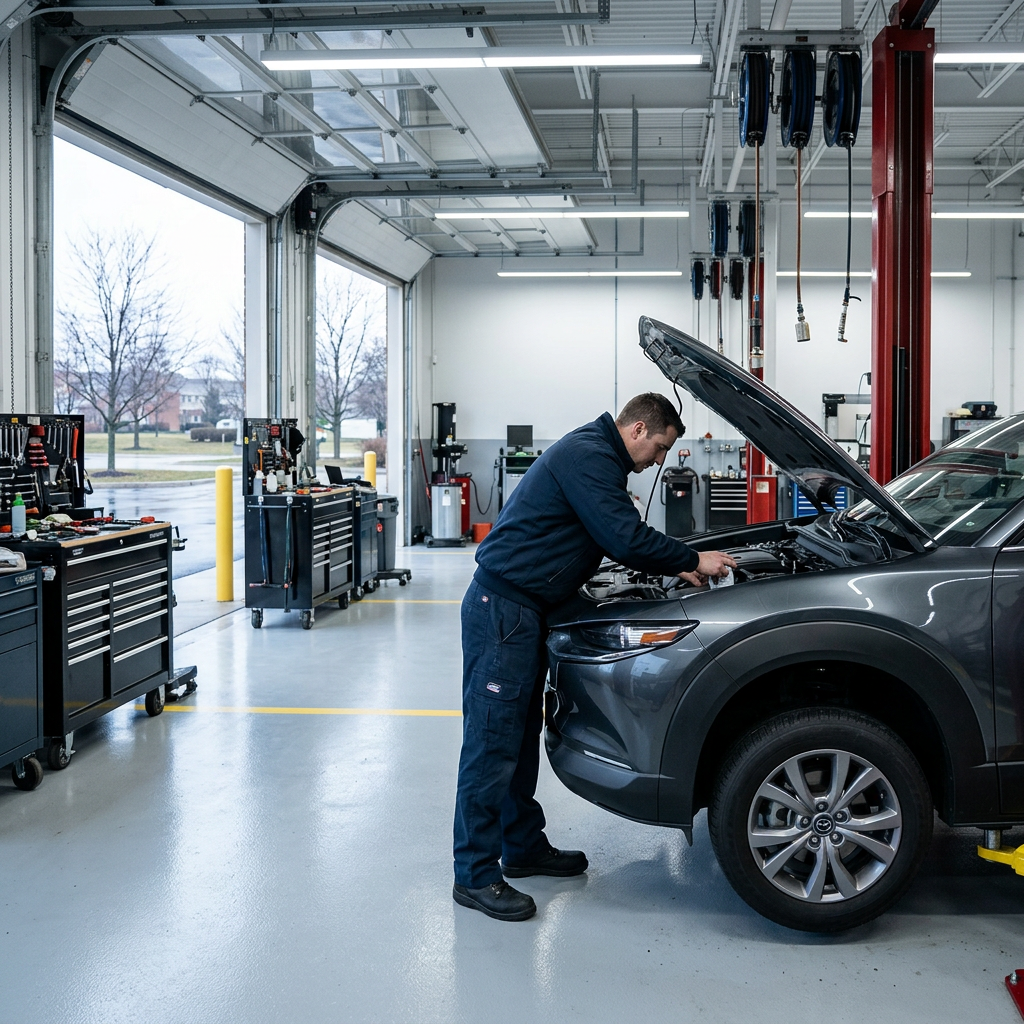
At Hawk Subaru in Plainfield, IL, Subaru Express Service provides fast, convenient maintenance without needing an advance appointment. Tailored for busy drivers from Joliet, Naperville, and surrounding Will County communities, our dedicated Express Service lanes handle routine maintenance swiftly while keeping uncompromising factory standards.
Every Express Service visit includes a Genuine Subaru Synthetic Oil and OEM Filter Change, tire rotation, battery performance test, windshield washer fluid top-off, and a multi-point inspection performed by factory-certified technicians.
Do Independent Mechanics Have Access to Official Subaru Software Updates?
Modern Subaru vehicles are advanced computer networks on wheels. Essential engine performance, oil pressure monitoring, and transmission shifting parameters are governed by the Engine Control Module (ECM) and Transmission Control Module (TCM). Subaru frequently issues ECM software updates and technical service bulletins (TSBs) to optimize cold-start performance, idle stability, and emission controls.
While independent mechanics possess generic OBD-II code readers, only authorized Subaru dealerships utilize the proprietary Subaru Select Monitor (SSM4) diagnostic system linked directly to Subaru factory servers. During routine service at Hawk Subaru, technicians scan for pending ECM updates, recalibrating engine firmware to ensure optimum engine operation alongside fresh motor oil.
Does Regular Dealership Service Increase Subaru Resale and Trade-In Value?
Verified CARFAX History
Every service completed at Hawk Subaru is automatically logged on vehicle history reports such as CARFAX. Detailed records of timely synthetic oil changes prove diligent maintenance to future buyers, yielding higher market valuation.
Powertrain Preservation
Consistent use of factory-specified synthetic oil protects internal mechanical clearances. When trading in your vehicle, a well-maintained engine commands premium trade-in offers. You can also Value Your Trade-In online to explore your vehicle's market worth.
Subaru Recommended Service Value Explained: Protecting Your Symmetrical AWD Investment
Subaru vehicles are engineered for active lifestyles, harsh winter traction, and long-term reliability across Illinois roads. Protecting this investment requires a holistic approach to vehicle care that starts with engine oil but extends across the entire Symmetrical All-Wheel Drive drivetrain.
Engine oil, front and rear differential fluids, and Lineartronic CVT fluid work in concert. Clean engine oil maintains precise crankcase pressures, reducing thermal transfers to nearby transmission casing walls. Certified care ensures all vehicle systems remain synchronized for maximum longevity.
Maintaining recommended oil viscosity protects catalytic converters and PZEV (Partial Zero Emission Vehicle) emissions systems from harmful oil vapor bypass. Proper synthetic lubrication keeps piston rings sealing tightly, eliminating blow-by gases and maintaining factory fuel efficiency performance.
Schedule Certified Subaru Oil Change and Routine Maintenance at Hawk Subaru in Plainfield
Whether you drive a Subaru Outback, Forester, or Crosstrek, trust the factory-trained technicians at Hawk Subaru to keep your engine running at peak efficiency. Visit our service department at 2401 Rte 59, Plainfield, IL 60586 or Call (815) 725-3789 to consult with a service advisor today. Interested in genuine fluids and accessories for home maintenance? Explore options at our OEM Parts Center, or check out our inventory of Browse New Inventory and Explore Certified Pre-Owned Vehicles.