How Does the Subaru WRX Maintenance Cost Compare to the Volkswagen Golf GTI?
When comparing two of the most iconic performance compact vehicles on the market—the rally-bred Subaru WRX and the classic hot-hatch Volkswagen Golf GTI—enthusiasts and practical daily drivers alike frequently ask how long-term upkeep costs compare. On average, the Subaru WRX costs less in annual routine maintenance ($650 to $700 per year) than the Volkswagen Golf GTI ($750 to $850 per year). This difference stems primarily from Japanese engineering philosophy, widespread OEM component availability, and lower average labor rates for standard mechanical services compared to specialized German automotive engineering.
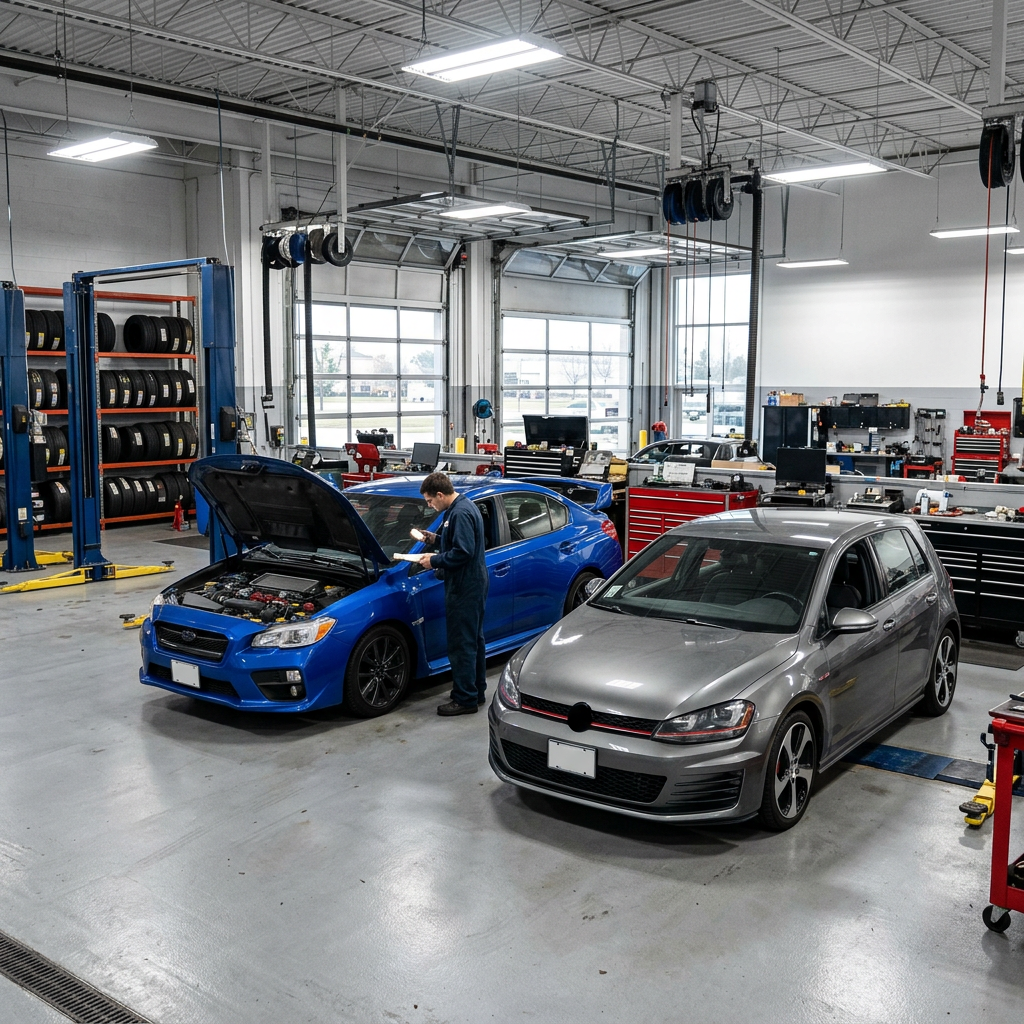
However, calculating the true total cost of vehicle care involves looking deeper into the specific mechanical nuances of both vehicles. The WRX utilizes Subaru's famous Symmetrical All-Wheel Drive (AWD) system, which demands strict tire wear matching across all four corners and regular tire rotations every 6,000 miles. Conversely, the front-wheel-drive (FWD) Golf GTI allows for staggered tire replacement, but imposes major service costs at 40,000-mile intervals due to its Direct Shift Gearbox (DSG) dual-clutch automatic transmission fluid flushes. Understanding these mechanical tradeoffs allows drivers in Plainfield, Naperville, and Joliet to budget effectively for their performance car investment.
How Much Does Average Annual Maintenance Cost for a Subaru WRX vs GTI?
Breaking down yearly maintenance budgets reveals distinct spending patterns between Japanese and German performance compacts. For the Subaru WRX, standard annual maintenance typically covers two synthetic oil and filter changes, cabin and engine air filter replacements, tire rotations, and comprehensive multi-point safety inspections. Because the 2.4-liter turbocharged BOXER engine is laid out horizontally, routine top-side service items like oil filters and fluid reservoirs are exceptionally easy for technicians to access, keeping shop labor hours minimal. In contrast, Volkswagen engineering often requires specialized diagnostic tooling, proprietary fluid formulations (such as VW 508.00 / 509.00 specification oils), and higher labor rates typical of European vehicle specialist shops. Over a typical 5-year, 60,000-mile ownership window, these slight price premiums add up significantly.
|
Service Item
|
Subaru WRX (Est. Cost)
|
VW Golf GTI (Est. Cost)
|
|
Synthetic Oil Change (Full)
|
$75 - $95
|
$95 - $130
|
|
Tire Rotation & Balance
|
$45 - $65
|
$45 - $65
|
|
Cabin & Engine Air Filters
|
$60 - $85
|
$80 - $110
|
|
Brake Fluid Flush
|
$120 - $150
|
$150 - $195
|
|
Transmission Service Interval
|
$180 - $250 (Manual/CVT)
|
$400 - $650 (DSG 40k)
|
|
Est. Average Annual Total
|
$650 - $700
|
$750 - $850
|
While the initial figures favor the Subaru WRX, staying diligent with routine scheduled service is key to achieving maximum long-term reliability and avoiding costly unexpected repairs down the road.
What Are the Most Common Routine Maintenance Tasks for a Subaru WRX?
6,000-Mile Milestones
Every 6,000 miles or 6 months, the Subaru WRX requires 0W-20 full synthetic oil replacement and an OEM oil filter change. Because the turbocharger relies heavily on fresh lubricant to cool high-speed turbine bearings, strict adherence to this interval prevents oil breakdown and internal carbon deposits.
30,000-Mile Services
At 30,000 miles, major maintenance includes replacing brake fluid, inspecting front and rear differential gear oil, swapping air filter elements, and conducting full steering and suspension joint checks. Spark plug replacement on the BOXER engine is scheduled at 60,000 miles.
Interval Comparison
Volkswagen recommends 10,000-mile service windows for the Golf GTI. While this sounds like less frequent maintenance, turbocharger heat cycle stress in Midwest driving conditions makes Subaru's 6,000-mile recommendation much safer for long-term engine health.
Symmetrical AWD vs Front-Wheel Drive: Do All Four Tires Need to be Replaced Together on a Subaru WRX?
One of the most crucial operational differences between the Subaru WRX and Volkswagen Golf GTI involves their drivetrain architectures. The WRX utilizes standard Subaru Symmetrical All-Wheel Drive, which mechanically connects all four wheels to deliver balanced power and supreme traction. Because the center differential constantly monitors wheel speeds, all four tires must have matching rolling circumferences within 1/4 inch of difference (or approximately 2/32 inches of tread depth variance). If one tire suffers non-repairable puncture damage on an AWD Subaru WRX, drivers generally must replace all four tires simultaneously—or have a single new tire shaved down to match the remaining three. Failing to do so can place constant thermal stress on the central transfer clutch pack, leading to premature transmission differential failure.
On the other hand, the Volkswagen Golf GTI is a front-wheel-drive vehicle. Because power is delivered solely to the front axle, GTI owners can easily replace tires in pairs (front or rear) without threatening the vehicle's transaxle differential. While this provides greater flexibility when dealing with sudden flat tires, it lacks the year-round, inclement weather traction advantage that standard AWD delivers to WRX drivers across northern Illinois winters. To help cushion unexpected tire expenses, the factory-backed service team at Hawk Subaru offers tire protection packages, wheel alignment checks, and complete wheel-and-tire replacement services tailored specifically for performance AWD applications.
What Tire Rotation Schedule Is Recommended for a Subaru WRX in Plainfield?
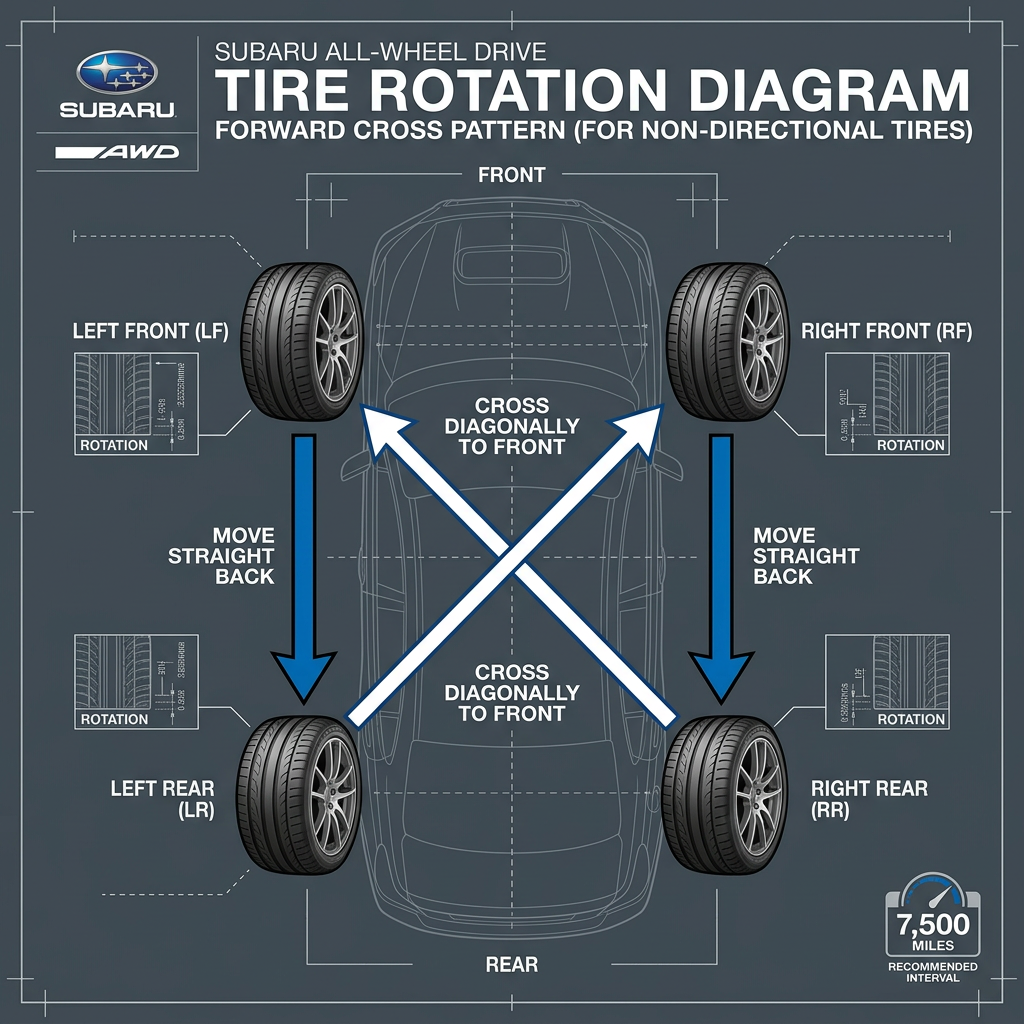
To maximize tire lifespan and prevent uneven tread wear that could strain the Symmetrical AWD system, Subaru specifies a mandatory tire rotation schedule every 6,000 miles. In local driving conditions surrounding Plainfield, Naperville, and Joliet, sticking strictly to this maintenance cadence is vital. Northern Illinois experiences dramatic seasonal freeze-thaw cycles that result in heavy pothole seasons every spring, along with severe winter salt application on routes like I-55 and Illinois Route 59.
Rough road surfaces accelerate shoulder wear on high-grip performance tires like those standard on the WRX. Routine rotations ensure that front tires—which absorb steering load and front-engine weight bias—wear evenly with the rear tires. Drivers who need fast, certified tire servicing can easily drop by Hawk Subaru or Get Directions to Hawk Subaru for quick tire tread depth measurements and precision digital wheel alignments.
What Trim Levels Are Available for the Subaru WRX and How Do They Affect Service Costs?
Base & Premium
The Base and Premium trims feature standard 17-inch or 18-inch alloy wheels, standard brake rotors, and traditional suspension dampers. Maintenance on these models remains the most economical, utilizing standard OEM brake pads and standard fluid replacement schedules.
Limited & TR
The track-focused WRX TR upgrades to high-performance Brembo® 6-piston front and 2-piston rear braking systems with larger rotors and stiffer suspension tuning. Replacement brake pads and rotors for TR trims command higher OEM parts pricing due to high-performance friction materials.
GT Trim
The top-tier WRX GT introduces electronically controlled adaptive dampers and Subaru EyeSight® Driver Assist integration. Special suspension calibration and radar sensor alignment during body or suspension work slightly increase complex repair costs compared to mechanical dampers.
Similarly, the Volkswagen Golf GTI ranges across S, SE, and Autobahn trims, with upper trims introducing DCC® Adaptive Chassis Control and larger differential locks. However, across comparable trim levels, the WRX maintains a distinct price advantage on standard wearable chassis components.
Manual vs Automatic Transmission Service: WRX 6-Speed & SPT vs Golf GTI DSG
Transmission maintenance represents one of the largest routine cost divergence points between the Subaru WRX and Golf GTI. The majority of WRX models are equipped with a durable 6-speed manual transmission. Manual gearbox gear oil changes are straightforward, inexpensive, and typically scheduled around every 45,000 to 60,000 miles. For automatic drivers, the available Subaru Performance Transmission (SPT CVT) uses a high-torque fluid designed for long service life, with routine inspections and fluid changes required primarily under heavy-duty driving conditions.
In comparison, automatic Volkswagen Golf GTI models feature VW's Direct Shift Gearbox (DSG) dual-clutch transmission. While the DSG shifts with incredible speed, it requires mandatory transmission fluid and filter flushes every 40,000 miles. Due to the complex dual-clutch fluid filling procedure, special pressure filler adapters, and expensive synthetic DSG fluid, a single DSG service routinely costs between $400 and $650 at certified repair centers. Over 100,000 miles of driving, GTI automatic ownership requires significantly more transmission service expenditure.
Brake and Suspension Wear Across Naperville and Joliet Commutes
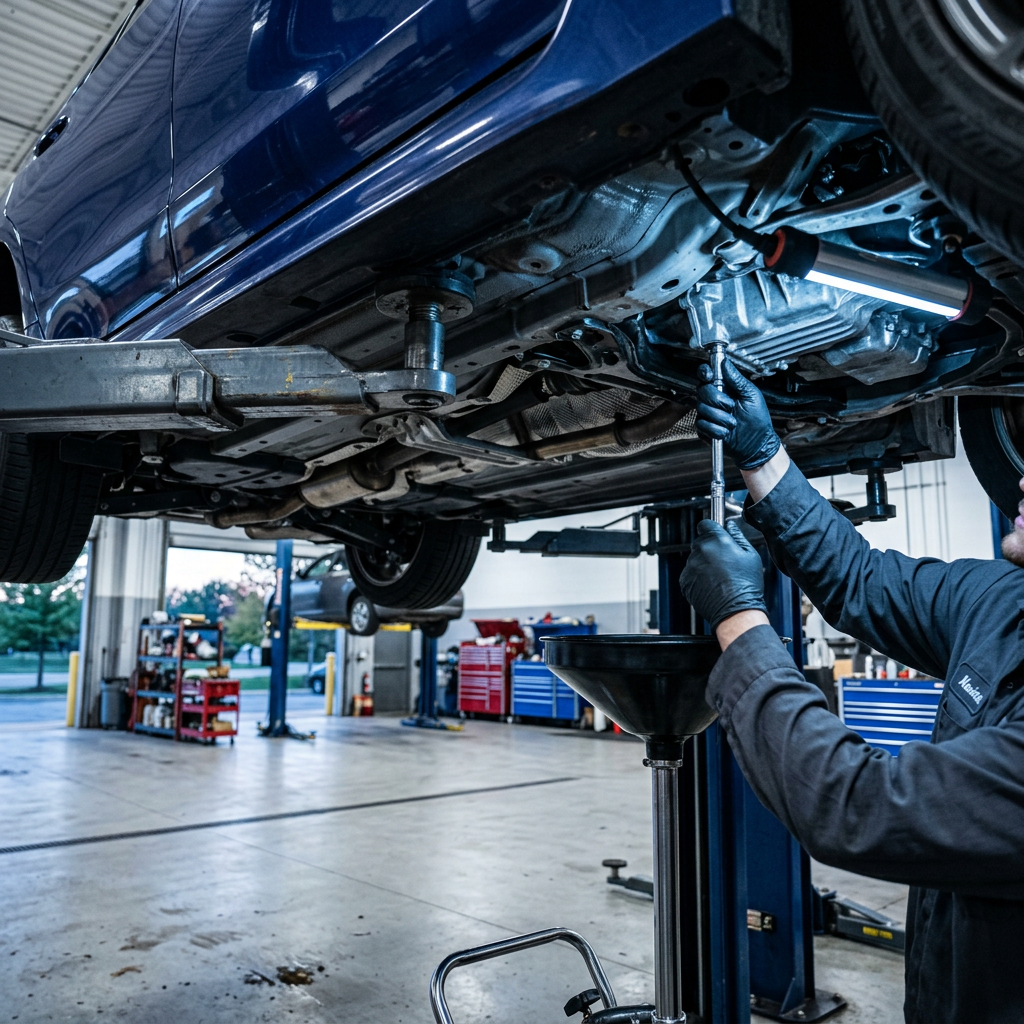
Daily commuting through northern Will County and DuPage County exposes performance compacts to demanding operational environments. Constant stop-and-go traffic along Interstate 55 and Weber Road speeds up friction wear on performance brake pads and rotors. Furthermore, winter road treatments—such as liquid calcium chloride and rock salt—can induce premature corrosion on slider pins, caliper pistons, and coil spring perches. Subaru designs its OEM brake components and suspension bushings with heavy-duty weather sealing suited for harsh climates. Replacing front brake pads and resurfacing rotors on a WRX at Hawk Subaru is cost-effective, using genuine OEM parts engineered specifically for your vehicle's weight distribution and braking metrics. Have questions about brake wear? Call (815) 725-3789 to talk directly with our service advisors.
What Is the Estimated 5-Year Total Cost of Ownership for a Subaru WRX?
Evaluating the 5-year total cost of ownership (TCO) requires accounting for depreciation, scheduled maintenance, repair reserve budgets, fuel expenditures, and insurance premiums. Thanks to legendary resale value and high demand in cold-weather states, the Subaru WRX depreciates slower than many European compact rivals, retaining strong trade-in equity over 60 months. While both vehicles require 91+ octane premium unleaded gasoline, the WRX's balanced maintenance structure keeps overall financial outlays consistently predictable for owners.
|
Ownership Category (5 Years / 60k Miles)
|
Subaru WRX
|
VW Golf GTI
|
|
Depreciation Retention
|
Excellent (~62%)
|
Good (~55%)
|
|
Scheduled Maintenance
|
$3,300 - $3,600
|
$4,100 - $4,600
|
|
Estimated Repair Reserve
|
$1,100 - $1,400
|
$1,600 - $2,100
|
|
Fuel Expenses (Est. 15k mi/yr)
|
$10,200
|
$9,400
|
|
Est. 5-Year Ownership Outlay
|
$14,600 - $15,200
|
$15,100 - $16,100
|
100,000-Mile Longevity: BOXER Engine Care vs German Turbo Engineering
Intake Carbon Buildup
Both modern engines utilize Direct Injection (DI). However, European EA888 engines in the GTI historically exhibit heavy carbon buildup on intake valves by 70,000 miles, requiring walnut blasting service ($500-$800). Modern Subaru FA24 2.4L engines incorporate optimized PCV and top-end airflow design that reduces rapid carbon accumulation.
Turbo Thermal Management
The WRX places its turbocharger low and forward near the engine bottom, utilizing natural oil drain routes and thermo-siphoning coolant channels. This setup prevents heat soak and protects turbine seals, drastically reducing turbo replacement risks well past 100,000 miles.
Electrical Systems
As vehicles cross 100k miles, German electrical sensors and plastic water pump housings frequently become brittle and prone to leaks. Japanese wiring harnesses and cooling modules in the Subaru WRX offer superior long-term resistance to thermal degradation.
Proper routine care, timely oil changes, and genuine OEM fluid flushes ensure that a Subaru WRX routinely reaches 150,000+ trouble-free miles with minimal unscheduled downtime.
Maintaining Your WRX Warranty with Certified Service at Hawk Subaru
Protecting your Subaru factory warranty requires documented service completed to strict OEM specifications. At Hawk Subaru in Plainfield, IL, our factory-certified technicians specialize exclusively in BOXER engine architecture and Symmetrical All-Wheel Drive systems. Using genuine OEM Subaru parts and specialized factory diagnostic equipment, we ensure your performance sedan remains in peak condition. Thinking about upgrading to the latest model year? Check out our online trade-in calculator to Value Your Trade-In and see how much equity you hold in your current vehicle.
Schedule Your Subaru WRX Maintenance or Test Drive at Hawk Subaru in Plainfield
Whether you need routine 6,000-mile maintenance for your current Subaru WRX or are looking to experience the thrill of rally-tested performance for the first time, Hawk Subaru is here for drivers across Plainfield, Joliet, Naperville, and Bolingbrook. Visit our state-of-the-art facility at 2401 Rte 59 in Plainfield, IL, explore OEM replacement parts, or click below to Browse New Inventory and test drive a new Subaru WRX today!