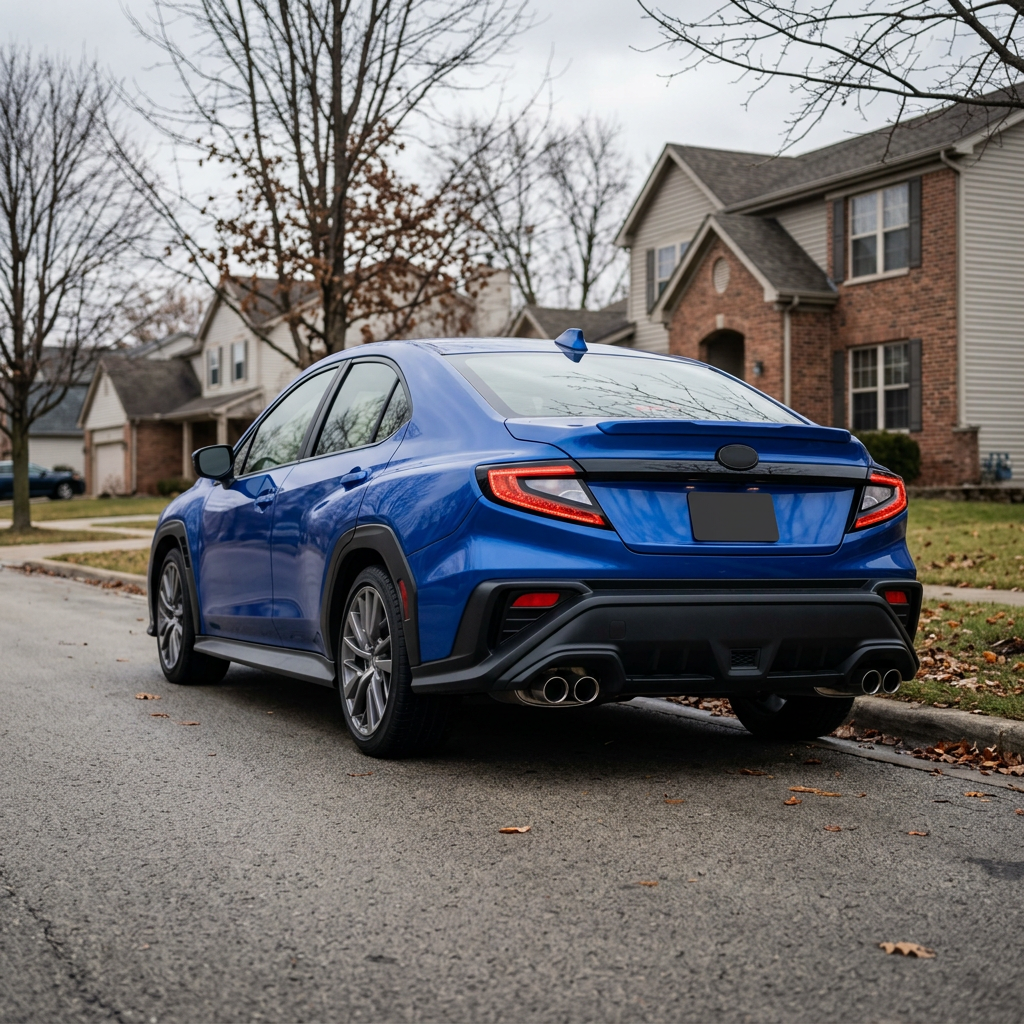
Subaru WRX Insurance Costs: Quick Answer and Average Annual Rates
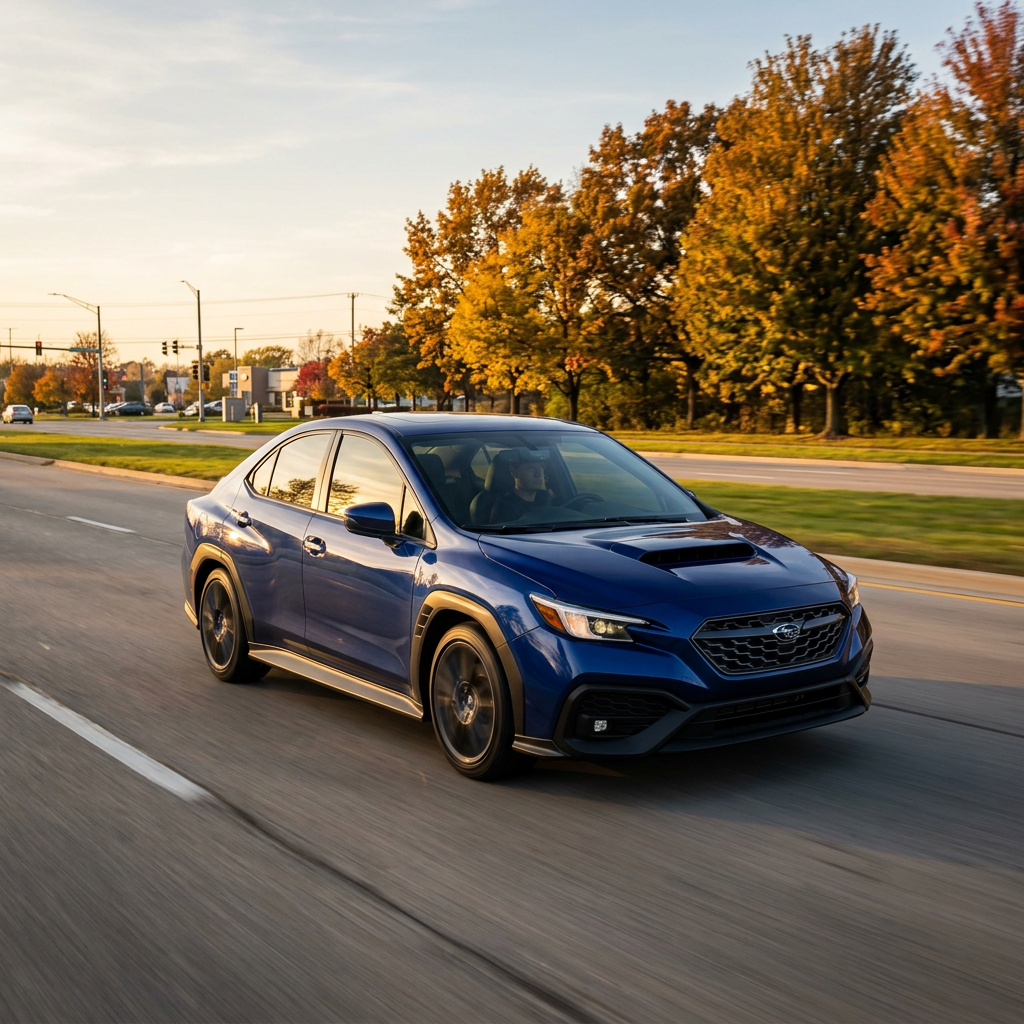
On average, insuring a Subaru WRX costs between $2,150 and $2,650 per year(approximately $180 to $220 per month) for full coverage policy limits (100k/300k/100k liability with $500 comprehensive and collision deductibles). While this places the rally-bred sports sedan above standard compacts like the Subaru Impreza or Honda Civic, it remains remarkably competitive against dedicated rear-wheel-drive sports coupes and European hot hatches.
Nationwide insurance underwriters evaluate the WRX through a specialized actuarial lens. On one hand, its legendary Symmetrical All-Wheel Drive and top-tier safety marks reduce loss frequency in inclement Midwest weather. On the other hand, its 2.4-liter turbocharged BOXER® powerplant, enthusiast driving demographic, and elevated collision repair costs place it into higher premium underwriting tiers. Below is a foundational baseline of what drivers typically encounter across varying coverage selections.
|
Coverage Tier
|
Average Annual Premium
|
Estimated Monthly Cost
|
Typical Policy Limits
|
|
State Minimum Liability
|
$720 – $910
|
$60 – $76
|
State minimum bodily injury & property damage only
|
|
Standard Coverage
|
$1,680 – $1,980
|
$140 – $165
|
50/100/50 liability, $1,000 comp/collision deductibles
|
|
Full Coverage (Recommended)
|
$2,150 – $2,650
|
$180 – $220
|
100/300/100 liability, $500 comp/collision deductibles
|
|
High-Limit / Gap Protection
|
$2,750 – $3,200
|
$229 – $267
|
250/500/250 liability, OEM replacement parts, loan payoff
|
Why the Subaru WRX Carries Higher Insurance Premiums Than Standard Compact Cars
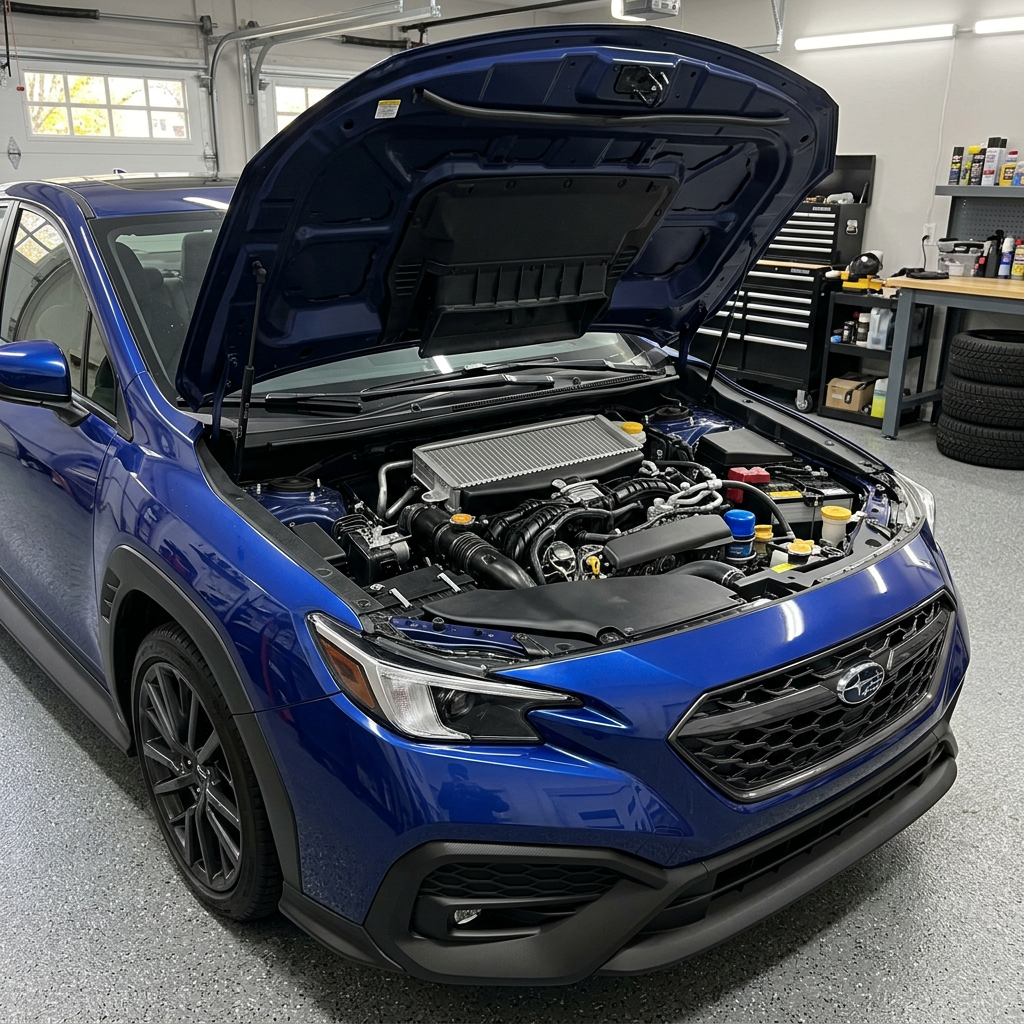
When comparing the WRX to mainstream sedans, insurance actuaries point to three distinct cost drivers: vehicle performance classification, claim frequency statistics, and repair complexity. Unlike an entry-level commuter car, the WRX is equipped with a 271-horsepower twin-scroll turbocharged engine paired with high-performance chassis components.
Historical data collected by the Insurance Institute for Highway Safety (IIHS) consistently indicates that vehicles in the compact sports classification experience higher collision severity ratings. Enthusiast drivers naturally operate these vehicles more spiritedly, which can contribute to higher collision claim frequency.
Additionally, modern WRX models feature specialized aerodynamic underbody trays, aluminum front fenders, functional hood scoops for the intercooler, and precision front bumper assemblies integrated with cooling ducts. Replacing these motorsport-derived components after a frontal collision requires specialized body labor, recalibration of active radar sensors, and genuine OEM panels—pushing the average collision claim payout significantly higher than a base Impreza or Legacy.
How Driver Age, Location, and Record Impact Your Subaru WRX Insurance Quote
Because the WRX is classified as a performance vehicle, insurers weight personal risk profiles much more heavily than they would for a standard crossover. A clean driving history and mature driver rating can halve annual premiums, whereas minor infractions compound quickly.
Driver Age Demographics
Drivers aged 18 to 24 face the steepest rates, often ranging from $3,800 to $5,400 per year due to limited driving tenure and heightened statistical risk. Once a driver passes age 30, annual premiums drop sharply toward the $1,850 to $2,300 range, stabilizing through age 55 for drivers maintaining unblemished driving histories.
Violations & Driving History
A single speeding violation (15+ mph over) on a sports sedan policy can add an immediate 20% to 35% surcharge that remains for 36 months. An at-fault collision can raise rates by $700 to $1,200 annually. Keeping a clean MVR is the single most effective way to keep your annual WRX carrying costs manageable.
Urban Density vs Suburban Garaging
Where the vehicle sleeps at night directly influences comprehensive premiums. Dense metropolitan ZIP codes with street parking face elevated vandalism and theft ratings. Suburban communities with private garaging enjoy substantially lower comprehensive rates, saving owners upwards of $400 to $650 annually.
Subaru WRX Insurance Rates Across Plainfield, Joliet, and Naperville
For motorists in the greater Will County and DuPage County corridor, insurance quotes can fluctuate based on specific municipal traffic density and expressway commuting habits. Plainfield (ZIP 60586 and 60544) consistently offers some of the most competitive WRX insurance rates in the southwest Chicago suburbs, averaging $1,980 to $2,250 annually.
Heading east into Joliet, heavy commercial freight corridors around I-80 and Route 53 bump collision loss projections, raising annual averages to approximately $2,180 to $2,420. Meanwhile, Naperville commuters traveling daily along the high-traffic I-88 research corridor see average full-coverage rates around $2,050 to $2,380.
Whether you are navigating winter slush on Route 59 or merging onto I-55, pairing safe driving habits with an advanced AWD chassis keeps local premiums lower than central Chicago rates. Stop by Hawk Subaru in Plainfield to compare vehicle trim levels and review ownership figures firsthand.
How Subaru EyeSight and Symmetrical AWD Help Lower Insurance Rates
Subaru EyeSight® Driver Assist Technology
Modern WRX models (now standard across both manual and Subaru Performance Transmission configurations) feature the award-winning Subaru EyeSight® system. With dual color cameras monitoring traffic conditions ahead, this system includes Pre-Collision Braking, Pre-Collision Throttle Management, and Adaptive Cruise Control.
Major insurance carriers recognize that automatic emergency braking reduces front-to-rear collisions by up to 85%. Because collision liability is a primary component of car insurance pricing, EyeSight-equipped WRX sedans may be eligible for potential insurance savings ranging from 5% to 12% on liability and collision coverage.
Symmetrical All-Wheel Drive Advantage
Unlike front-wheel drive hot hatches or tail-happy rear-wheel drive sports cars, Subaru's continuous Symmetrical AWD actively distributes power to the wheels with the firmest grip. In Illinois winters characterized by black ice and rapid freeze-thaw cycles, this balanced mechanical layout drastically diminishes loss-of-control single-car claims.
Insurers reward this stability: winter accident claim rates for Symmetrical AWD sedans are notably lower than comparable rear-drive competitors. Furthermore, combined with standard Blind-Spot Detection and Rear Cross-Traffic Alert, the WRX protects passengers and keeps insurance risk scores moderate.
How Much Does Routine Maintenance and Repair Cost on a Subaru WRX?
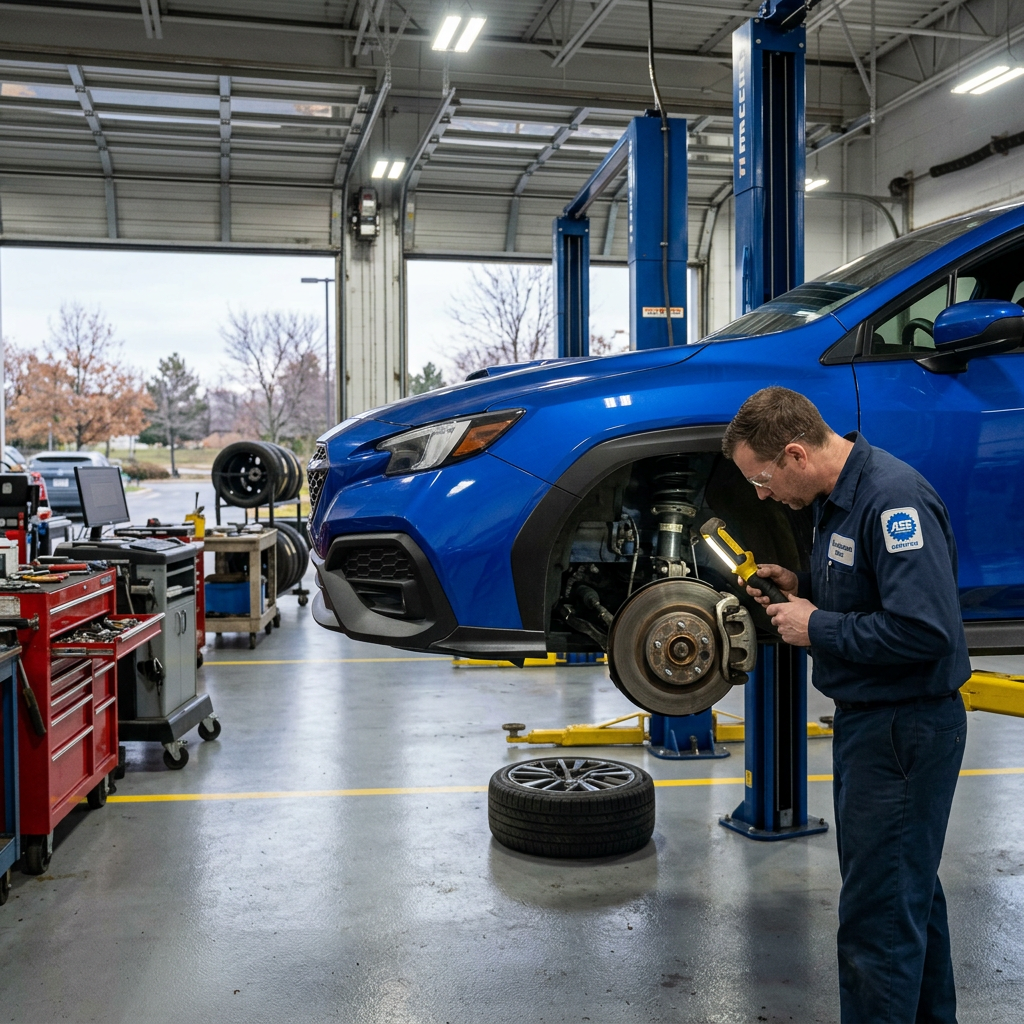
Routine ownership expenses for the Subaru WRX are modest when measured against European performance sedans, averaging approximately $680 to $950 per year during the first three to five years of ownership. Because the WRX utilizes a performance-tuned powertrain, specific service requirements demand strict adherence to factory schedules.
Full Synthetic Oil & Filters
The 2.4L turbocharged direct-injection FA24 engine requires genuine 0W-20 full synthetic engine oil and high-flow Tokyo Roki or OEM Subaru filters. Expect oil services every 6,000 miles, averaging $85 to $115 per visit, protecting turbo bearings under sustained boost.
Performance Tires & Rotations
Factory summer-performance tires (Dunlop Sport Maxx GT) have a 20,000 to 30,000-mile treadwear life. Consistent 6,000-mile tire rotations ($30–$45) ensure even wear across the AWD differential. A replacement set of performance all-season or winter tires runs $800 to $1,150.
Brake Service & Pad Wear
High-friction brake pads provide rapid stopping power but wear faster under enthusiastic driving. Front and rear pad replacements paired with rotor resurfacing or upgrades average $350 to $650 per axle, typically every 35,000 to 45,000 miles depending on commute patterns.
What Is the Recommended Service Schedule and Major Service Milestone Costs for the Subaru WRX?
Following the Subaru factory maintenance schedule protects your powertrain warranty and preserves strong residual value. The WRX operates on 6,000-mile or 6-month minor service intervals, anchored by comprehensive major milestones at 30,000, 60,000, and 100,000 miles.
6,000 / 12,000 / 18,000 Miles: Full synthetic oil and filter change, tire rotation, comprehensive multi-point inspection, battery load check, and fluid level top-offs Contact us for current pricing. 30,000-Mile Milestone: Engine oil change, engine air filter, cabin A/C microfilter, complete brake fluid flush, and thorough inspection of steering, suspension ball joints, CV axles, and exhaust system Contact us for current pricing. 60,000-Mile Major Service: Includes all 30k items plus spark plug replacement (iridium tipped, requiring horizontal cylinder access), differential gear fluid exchange (front and rear), and cooling system inspection Contact us for current pricing. 100,000-Mile Longevity Service: Engine coolant flush, drive belt replacement, transmission fluid exchange, and suspension bushing review Contact us for current pricing.
Certified Subaru maintenance ensures that only OEM spec components and fluids enter your vehicle, preventing premature wear on delicate variable valve timing and turbocharged valvetrain hardware.
Our certified technicians in Plainfield are equipped with factory Subaru diagnostic scanners and precision alignment racks built specifically for Symmetrical All-Wheel Drive drivetrains. Reach out to our factory-trained advisors to protect your investment.
Can You Use 87 Octane Regular Gasoline in a Subaru WRX?
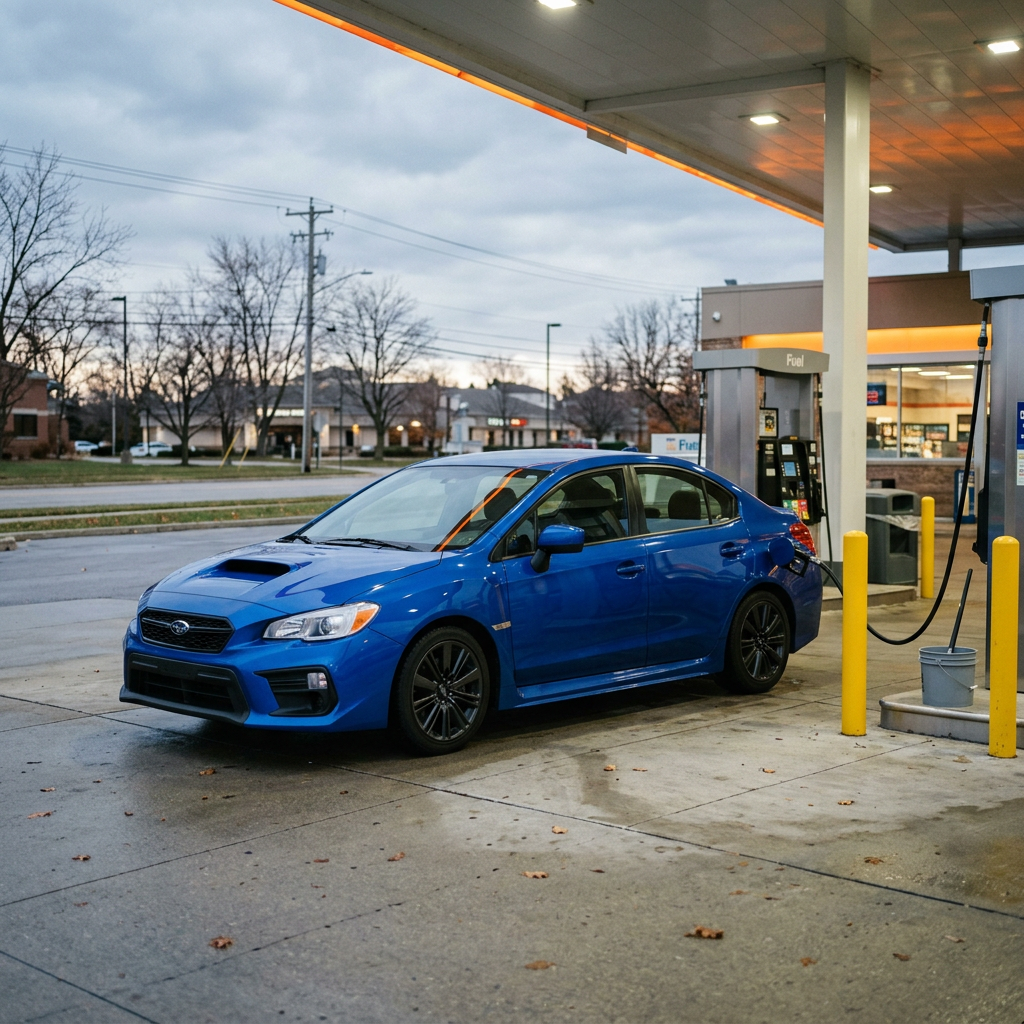
The short answer is yes, but only temporarily in emergency situations. Subaru factory specifications state that 91 octane premium gasoline (or higher) is strongly recommended for the 2.4-liter turbocharged BOXER engine. In Illinois, where 93 octane premium is standard at gas pumps, choosing premium fuel delivers optimal performance and safeguards your engine.
If you find yourself in an emergency where premium fuel is unavailable, the WRX's modern Engine Control Unit (ECU) utilizes advanced knock sensors to retard ignition timing and reduce boost pressure, preventing catastrophic detonation or pre-ignition. However, running 87 octane comes at a noticeable cost: you will experience reduced acceleration, sluggish throttle response, and a 5% to 10% decline in fuel economy.
Financially, saving $0.60 to $0.80 per gallon by pumping regular 87 octane saves roughly $10 to $13 per 16.6-gallon fill-up. However, because fuel efficiency drops when the ECU pulls timing, your real-world net savings are negligible—and chronic use under high thermal loads can cause premature carbon build-up and knock events. Always use 91 or 93 octane to maintain full 271-horsepower output and protect your warranty.
What Five-Year Maintenance Budget Is a Reasonable Starting Point for a 2027 Subaru WRX?
A well-prepared buyer should plan for a total five-year routine maintenance and wear-and-tear budget of $4,200 to $5,400(roughly $70 to $90 per month) when driving the national average of 12,000 to 15,000 miles per year. Because new WRX models include Subaru's 3-year/36,000-mile Limited Warranty and 5-year/60,000-mile Powertrain Warranty, mechanical repair surprises are effectively mitigated during this initial cycle.
|
Year / Cumulative Mileage
|
Key Services & Wear Items
|
Estimated Annual Cost
|
Warranty Coverage
|
|
Year 1 (0 – 12,000 mi)
|
Two synthetic oil changes, tire rotations, multi-point checks
|
$220 – $260
|
Full Bumper-to-Bumper OEM Warranty
|
|
Year 2 (12,000 – 24,000 mi)
|
Two oil services, rotations, engine air & cabin microfilters
|
$350 – $420
|
Full Bumper-to-Bumper OEM Warranty
|
|
Year 3 (24,000 – 36,000 mi)
|
Major 30k service, brake fluid exchange, replacement performance tires
|
$1,350 – $1,650
|
Bumper-to-Bumper expires at 36k; Powertrain continues
|
|
Year 4 (36,000 – 48,000 mi)
|
Two oil services, rotations, front/rear brake pad replacement
|
$720 – $900
|
5-Year / 60,000-Mile Powertrain Warranty active
|
|
Year 5 (48,000 – 60,000 mi)
|
Major 60k service: spark plugs, differential fluids, coolant check
|
$980 – $1,250
|
Powertrain Warranty active up to 60,000 miles
|
|
5-Year Cumulative Total
|
Comprehensive scheduled factory care and normal wear items
|
$3,620 – $4,480
|
Add $600–$900 contingency for alignment/wipers/batteries
|
How Does the Subaru WRX Depreciation Rate Compare to Other Sports Cars?
While insurance premiums on the WRX are somewhat higher than standard compact sedans, its exceptional resale value retention offsets those ownership costs. According to automotive valuation authorities such as ALG and Kelley Blue Book, the Subaru WRX consistently ranks near the top of its class for 3-year and 5-year residual value retention.
The average compact sports sedan depreciates roughly 42% to 48% over a five-year lifecycle. In contrast, the Subaru WRX typically depreciates only 32% to 37% over five years. A major reason is the enduring enthusiast demand in snowbelt regions like northern Illinois, where drivers seek all-weather daily performance that cars like the Honda Civic Si or rear-wheel-drive sport coupes cannot match in heavy winter conditions.
When you factor in holding an extra $3,000 to $4,500 in vehicle equity at trade-in time, the total cost of ownership for a WRX often ends up substantially lower than comparable rivals. Curious what your current vehicle is worth toward a new WRX? Check your trade equity in minutes.
How Much Does Financing Interest Typically Add to the 5-Year Cost of a WRX?
Financing terms and interest rates constitute one of the largest variables in five-year cost modeling. On a representative new Subaru WRX with an starting MSRP of approximately $35,000, putting 10% down ($3,500) leaves an initial financed balance of $31,500 (before taxes, licensing, and fees).
• Current financing offers: Contact our finance team for current payment estimates, APR options, and term availability.
Contact our finance department for current financing options on select WRX models.
Drivers looking to optimize monthly expenditures can take advantage of our online pre-approval application to lock in competitive terms before visiting our showroom. You can also explore our quality certified pre-owned WRX selection or used vehicle inventory for lower initial balances.
Proven Strategies to Lower Your Annual Subaru WRX Insurance Premium
You do not have to accept the first auto insurance quote you receive. By implementing proven risk mitigation techniques and carrier discounts, WRX owners often trim 15% to 30% off their annual coverage premiums.
1. Multi-Policy Bundling
Bundling your WRX auto policy with homeowners, condo, or renters insurance is the quickest single discount, delivering an average 12% to 20% premium reduction across major national carriers like State Farm, Travelers, and Progressive.
2. Telematics & Low Mileage
If you commute via Metra into Chicago or work remotely from Plainfield, enrollment in usage-based insurance programs or declaring under 8,000 annual miles can net discounts of 10% to 25%, rewarding safe driving and low exposure.
3. Calibrated Deductibles
Increasing your comprehensive and collision deductibles from $250 to $1,000 can lower annual premiums by $250 to $400. Setting that difference aside in an emergency savings account gives you instant recurring savings.
Test Drive and Calculate Your Total WRX Ownership Costs at Hawk Subaru
Owning a Subaru WRX is about blending pure rally-bred excitement with dependable all-weather utility. When you evaluate the complete financial picture—balancing competitive residual value, standard active safety discounts, and reasonable factory maintenance against insurance rates—the WRX stands out as an exceptionally rewarding performance purchase.
At Hawk Subaru, our team is proud to serve drivers across Plainfield, Joliet, Naperville, and surrounding communities. Visit us at 2401 Rte, 59 in Plainfield, IL 60586 or give our friendly product specialists a call directly at (815) 725-3789 to explore current incentives, value your trade, or get behind the wheel of a new WRX today.