Are Winter Tire Changeover Services Covered by Standard Dealer Maintenance Packages?
As autumn winds usher freezing temperatures across northern Illinois, many drivers reviewing their factory warranty or prepaid maintenance paperwork ask a fundamental question: does a standard dealer maintenance package cover the seasonal changeover from all-season to dedicated winter tires? The short and direct answer is generally no. Standard dealer service agreements, complimentary factory programs like Subaru Maintain the Love, and third-party prepaid maintenance contracts are specifically structured around routine preventative wear and fluid preservation, rather than seasonal equipment swaps.
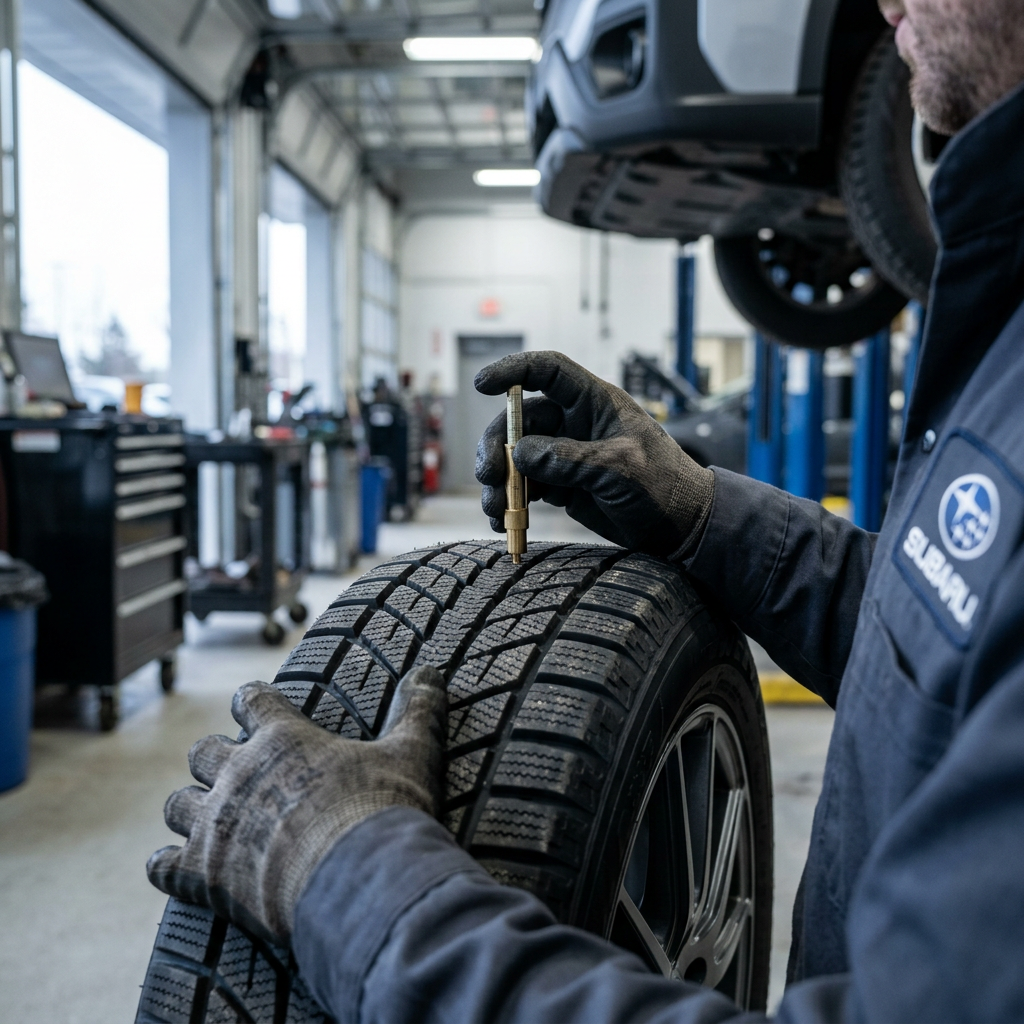
There is an essential mechanical distinction between a standard scheduled tire rotation and a seasonal tire changeover. A standard rotation involves removing mounted tire-and-wheel assemblies from one hub and repositioning them on another corner of the chassis to equalize tread wear across front and rear axles. In contrast, a seasonal tire changeover involves swapping tire sets entirely. If you arrive with bare winter rubber, technicians must break the bead on existing wheels, demount the old casing, seat the new tire, dynamically balance the assembly with lead-free weights, and recalibrate tire pressure monitoring sensors (TPMS). Standard maintenance packages cover the quick five-minute hub rotation, but exclude the precision workshop labor needed for seasonal rubber transfers.
Factory Maintenance Plans vs. Seasonal Swaps: Understanding What Is Actually Covered
Factory maintenance agreements are designed around standardized factory schedules that apply consistently regardless of geographic location. Whether a vehicle is delivered in southern Florida or northern Illinois, complimentary scheduled intervals include synthetic engine oil changes, genuine oil filter replacements, multi-point chassis inspections, fluid top-offs, and rotational axle repositioning of the tires currently installed on the car. Standard factory warranties cover manufacturer defects in materials or assembly workmanship, never seasonal adaptation labor.
A seasonal tire changeover requires specialized pneumatic mounting equipment, delicate handling of alloy rim lips, computer-controlled road-force wheel balancing, and electronic handheld coding tools to synchronize TPMS sensor IDs with the vehicle's electronic control unit. Because road conditions in Chicagoland require traction upgrades that drivers in warmer climates do not need, automotive manufacturers treat winter changeover operations as an à la carte specialty service rather than standard nationwide maintenance.
Mounted Wheel Sets vs. Bare Tires: How Changeover Labor and Pricing Differ
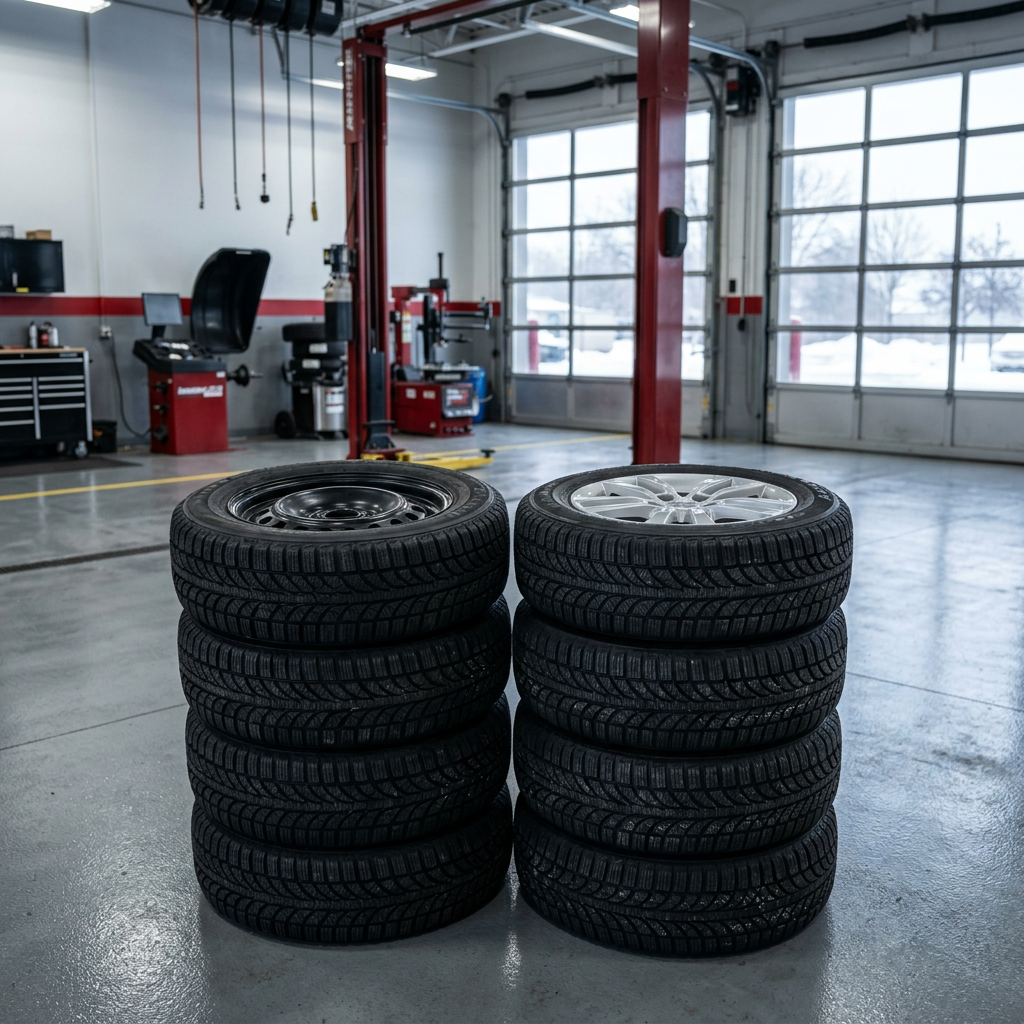
Bare Rubber Dismount & Remount
Using a single wheel set requires technicians to break tire beads, demount rubber, stretch replacement winter beads over rims, dynamically re-balance all four wheels, and reprogram sensors twice each year. This process requires substantial technician time and risks gradual bead stretching or cosmetic clear-coat chipping.
Dedicated Pre-Mounted Wheel Sets
Investing in a secondary set of factory-approved alloy or heavy-duty steel wheels pre-fitted with winter tires turns a complex demounting task into a straightforward bolt-on wheel swap. Changeover appointments become significantly faster, minimizing service waiting times and reducing billable technician hours.
Salt Corrosion & Long-Term Savings
Will County road maintenance crews rely heavily on rock salt and chemical liquid de-icers that pit diamond-cut factory rims. Dedicated winter wheel packages shield your primary rims from road brine corrosion while paying for themselves over three seasons through standard changeover labor fees.
Schedule Your Seasonal Tire Installation and Winter Service Package
For convenient scheduling, plan your seasonal service before winter weather arrives. At Hawk Subaru in Plainfield, our certified service department offers dedicated seasonal tire changeover slots combined with comprehensive pre-winter health inspections. Whether you need winter rubber mounted to existing alloys or a rapid bolt-on installation of a pre-balanced seasonal wheel set, our team ensures your vehicle is calibrated for freezing conditions. Schedule your service today to secure your preferred morning or afternoon appointment before subzero temperatures arrive.
Are Winter Tires Necessary for Chicagoland Commuting, or Are Factory All-Season Tires Adequate?
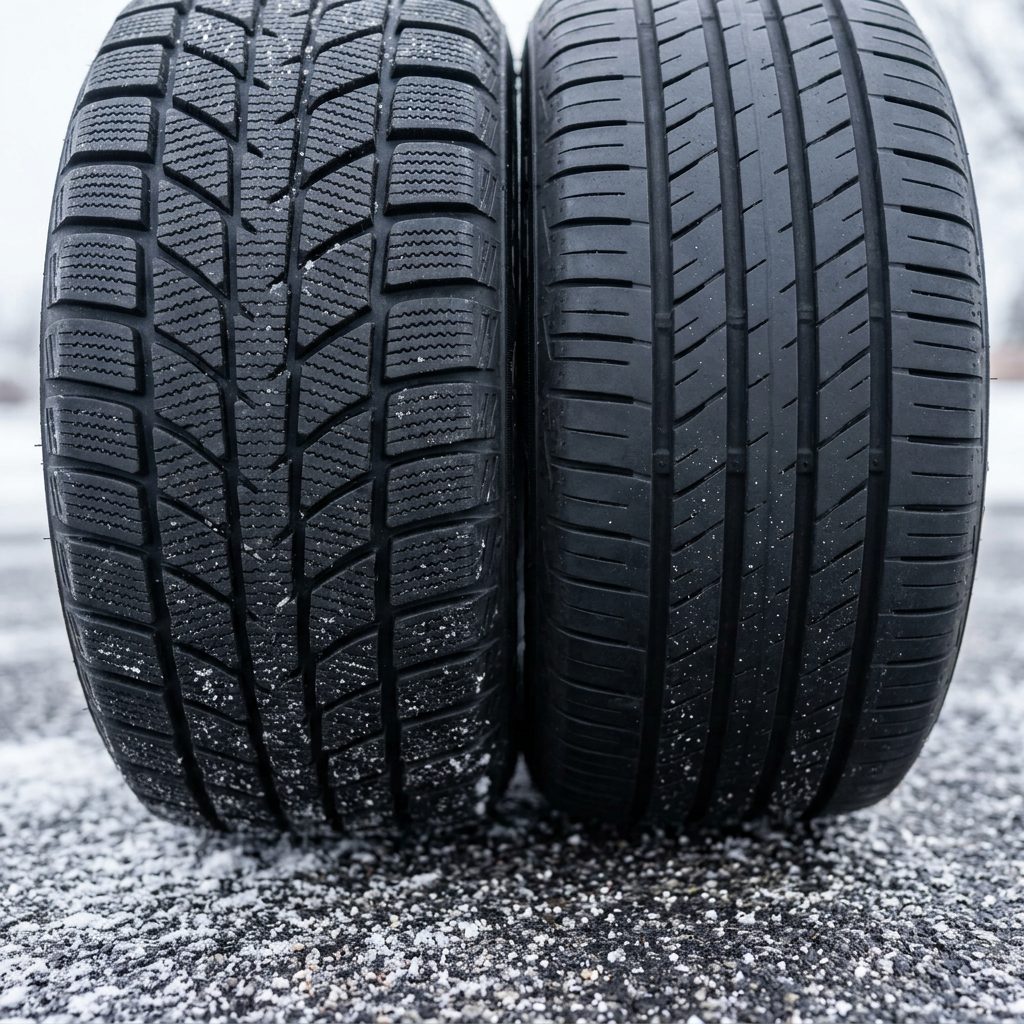
A widespread automotive myth across Will and DuPage counties suggests that modern all-season tires provide complete cold-weather safety. While all-season tires function adequately in wet autumn rain, chemical rubber compounding tells a very different story once ambient temperatures drop below 45 degrees Fahrenheit. Standard all-season rubber contains vulcanized polymers optimized for high-temperature heat dissipation and longevity. When exposed to persistent sub-freezing temperatures, these compounds stiffen into rigid plastic, dramatically losing friction coefficient against road asphalt.
True winter tires, marked with the Three-Peak Mountain Snowflake (3PMSF) symbol, are engineered with high-silica hydrophilic tread compounds that remain malleable in severe cold. Thousands of micro-sipes cut into the tread blocks flex under vehicle load, generating mechanical biting edges that shear through microscopic water films on black ice and grip packed snow firmly.
Is an AWD Subaru with All-Season Tires Better on Ice Than a FWD Car with Winter Tires?
This question addresses one of the most common false assumptions among Chicagoland motorists. Many drivers assume that an all-wheel-drive crossover on factory all-season tires will inherently outperform a front-wheel-drive sedan on dedicated winter tires when encountering icy pavement on Route 59 or Weber Road. Vehicle dynamics and Newtonian physics demonstrate otherwise.
All-wheel drive governs acceleration and forward propulsion. Distributing engine torque to all four hubs enables an AWD vehicle to accelerate effortlessly from a dead stop on packed snow. However, all-wheel drive contributes nothing to deceleration or lateral steering friction. When braking, every modern passenger vehicle uses four-wheel brakes.
In emergency braking tests on sheet ice from 30 mph, a front-wheel-drive car equipped with dedicated winter tires typically comes to a complete halt in 50 to 60 feet. Conversely, an all-wheel-drive vehicle on hardened all-season tires can take up to 90 to 110 feet to stop—often sliding through an intersection or into the rear bumper of preceding traffic.
When you combine the industry-leading balance of Subaru Symmetrical All-Wheel Drive with dedicated winter rubber, you unlock the pinnacle of active safety: unrivaled acceleration traction matched with exceptional stopping power and cornering stability.
How Subaru Symmetrical All-Wheel Drive Performs on Icy Interstate Corridors Like I-55 and I-80
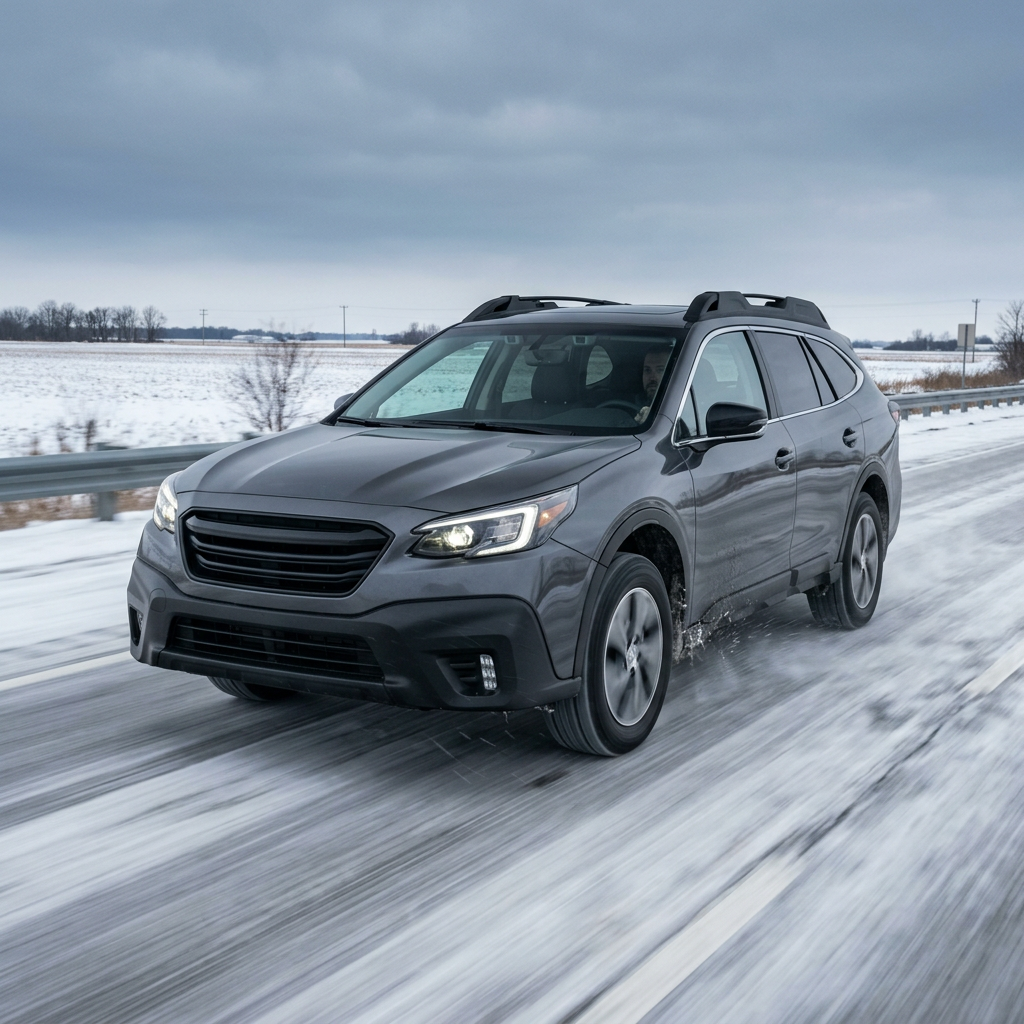
Longitudinal Balance
Unlike reactive slip-and-grip systems built on transverse front-wheel architectures, Subaru Symmetrical All-Wheel Drive mounts its Subaru BOXER engine longitudinally along the vehicle centerline. This symmetrical weight distribution prevents sudden torque-steer twitches when changing lanes over icy slush ruts between Joliet and Plainfield.
Active Torque Vectoring
When navigating high-speed interchange curves connecting I-55 and I-80, electronic sensors continuously monitor yaw rate, steering angle, and individual wheel speeds. Active Torque Vectoring applies subtle braking pressure to the inside front wheel while directing driving torque to the outside wheel, cleanly pulling the vehicle through slippery arcs.
Crosswind Stability
Open agricultural fields surrounding Will County funnel ferocious crosswinds across interstate lanes. The horizontally opposed low center of gravity in every Subaru dampens body roll and aerodynamic lift, working in tandem with winter tires to track true even during sudden wind gusts across exposed river overpasses.
How Subaru X-MODE Improves Control During Severe Chicagoland Winter Storms
When winter lake-effect systems dump six to ten inches of unplowed snow on suburban subdivisions, municipal plow windrows create impassable walls at cul-de-sacs and driveway aprons. In these extreme low-speed conditions, standard traction control systems often hinder progress by abruptly cutting engine power the moment wheel slip is detected.
Engaging Subaru X-MODE fundamentally reconfigures the vehicle's powertrain logic. Throttle sensitivity softens to prevent accidental over-revving, transmission gearing holds lower drive ratios to deliver high immediate torque, and the all-wheel drive clutch pack locks tighter to divide power evenly across front and rear differentials.
In vehicles equipped with Dual-Function X-MODE (featuring dedicated 'Snow/Dirt' and 'Deep Snow/Mud' modes), the system permits controlled tire spinning in deep drifts. This controlled spin allows the tread blocks of your winter tires to dig through top fluff down to stable pavement below. Coupled with integrated Hill Descent Control, X-MODE safely governs braking down icy incline driveways and viaduct approaches.
Interested in upgrading to a model equipped with advanced dual-function terrain systems? You can browse our dedicated Parts Center for OEM winter accessories or inspect our available vehicle lineup.
What Systems Are Included in a Standard Pre-Winter Dealership Inspection?
Battery Amperage & Charging
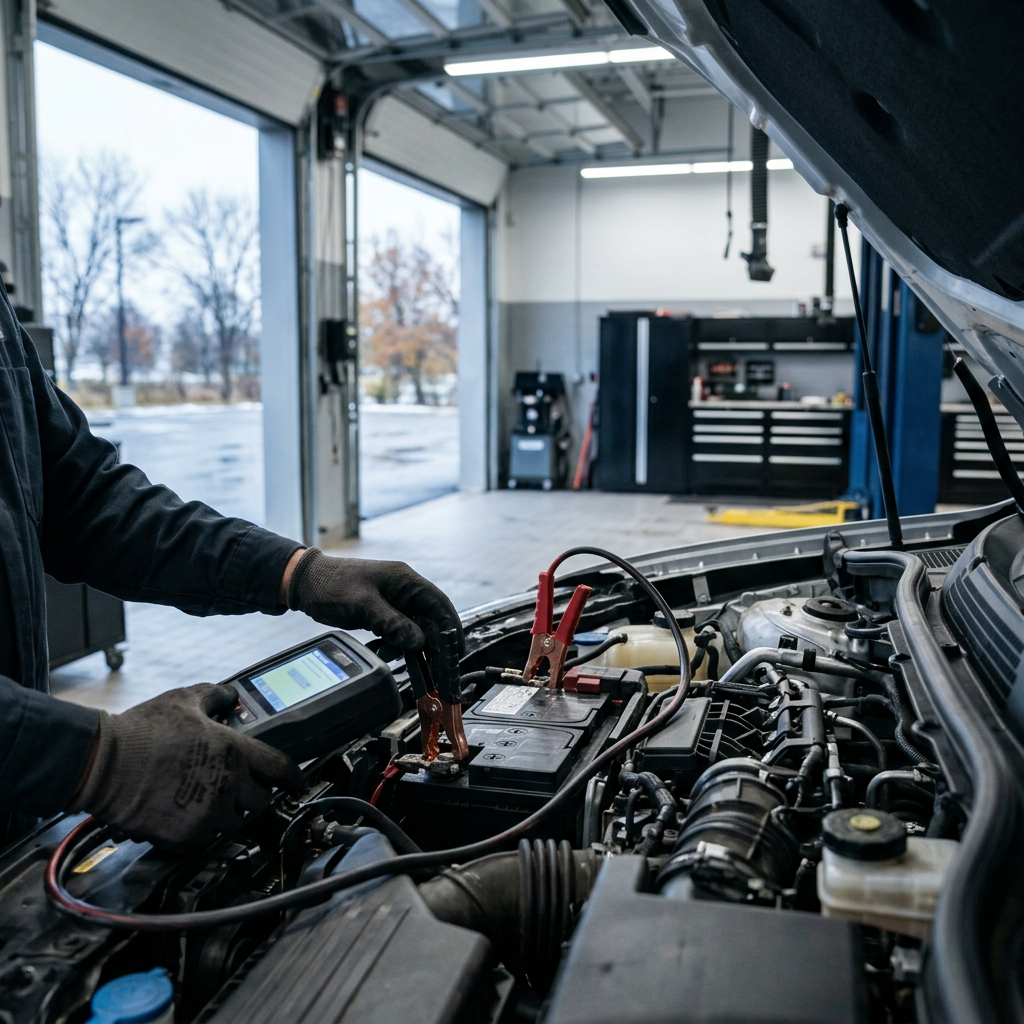
At zero degrees Fahrenheit, an automotive battery loses up to 60 percent of its starting strength while cold engine oil doubles internal cranking resistance. Technicians perform digital cold-cranking amp (CCA) load tests to guarantee your starter turns over during subzero mornings.
Coolant Freeze-Point & Hoses
Using optical refractometers, factory technicians verify the chemical concentration of your engine coolant. Sub-standard coolant mixtures can crystallize inside aluminum radiator cores and heater matrices, causing severe engine block cracking during extended polar vortex events.
HVAC, Blades & Calipers
The inspection covers defroster blower output, cabin filter airflow, wiper blade squeegee flexibility, and brake caliper slide pin lubrication. Road brine quickly seizes unlubricated caliper slider pins, causing premature inner pad wear and unbalanced winter braking.
What Illinois-Specific Precautions Should Plainfield Drivers Take Before Winter Trips on I-55 and I-80?
Navigating the southwestern Chicago metropolitan fringe requires localized preparation due to specific geographic and atmospheric factors. Plainfield sits at the transition zone where dense suburban development gives way to vast open cornfields spanning westward toward Kendall and LaSalle counties. This flat topography creates sudden 'ground blizzards' along Interstate 55 and Interstate 80, where gusting 40-mph winds sweep loose snow across dry pavement, instantly reducing visibility to near-zero and freezing surface moisture into black ice.
Another localized risk is flash-freezing bridge decks along the DuPage River and Des Plaines River crossings. Cold ambient air circulates above and below elevated road surfaces, lowering concrete bridge temperatures hours before surrounding earth-banked asphalt freezes. Motorists maintaining cruising speed on dry highway lanes suddenly hit invisible ice sheets when transitioning onto overpasses. Equip your vehicle with subzero-rated washer fluid containing high methanol concentrations (-20°F rated); summer or standard washes quickly freeze against your windshield in high-speed highway windchill.
Chicagoland Holiday Travel Checklist: Preparing Your Subaru for I-55 and I-80 Winter Commutes
Before packing luggage for Thanksgiving, Christmas, or New Year holiday excursions across Illinois, follow this essential pre-departure checklist: • Cold Tire Inflation Pressure: For every 10-degree Fahrenheit drop in ambient temperature, tire pressure decreases by approximately 1 PSI. Calibrate cold tire pressures in the morning before driving, following the B-pillar door placard specs. • EyeSight Camera Clarity: Ensure your upper windshield glass is completely cleared of frost, road grime, and salt mist so the dual stereo cameras of your Subaru EyeSight Driver Assist system can track lane markings. • Fuel Tank Buffer: Never allow your gas tank to drop below a half tank during winter highway travel. A full tank prevents condensation in the fuel lines and provides hours of cabin heat if traffic stalls behind a jackknifed tractor-trailer on I-80.
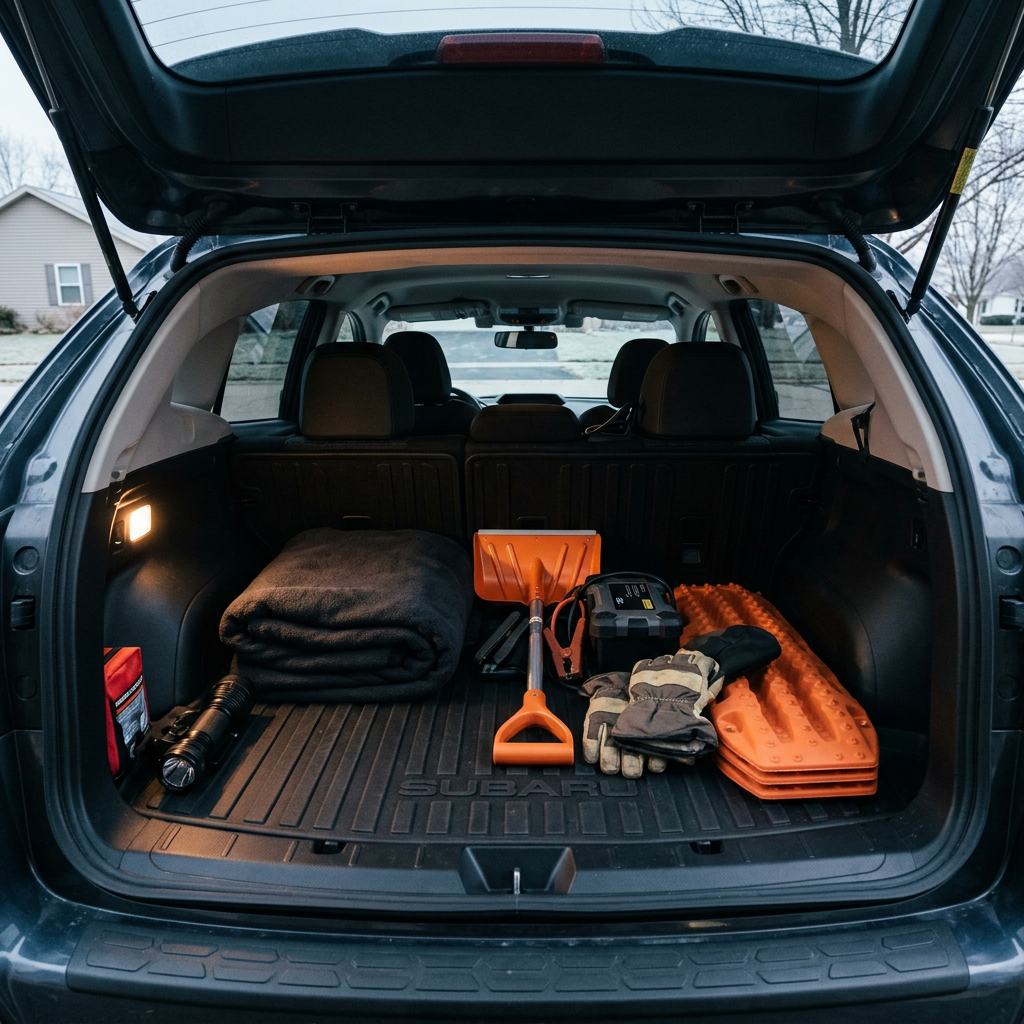
• Trunk Emergency Winter Gear: Pack a heavy fleece blanket, compact snow shovel, portable jump starter pack, LED flashlight, thermal gloves, high-traction traction mats or cat litter, and bottled water. • Pre-Program Emergency Assistance: Keep the dealership service desk and roadside assistance numbers stored in your smartphone for rapid dispatch.
Equip Your Subaru for Winter at Hawk Subaru in Plainfield
Prepare your vehicle for cold-weather driving. Whether you need professional seasonal tire mounting, factory-approved winter wheel packages, or a full pre-winter battery and fluid inspection, our factory-trained technicians are ready to prepare your vehicle. If you have questions about scheduling or seasonal packages, Call (815) 725-3789 or Get Directions to Hawk Subaru located at 2401 Rte, 59, Plainfield, IL 60586. Visit us today and experience the winter confidence of genuine Subaru engineering.