How Much Can Be Saved by Performing Winter Vehicle Inspections as a DIY Project?
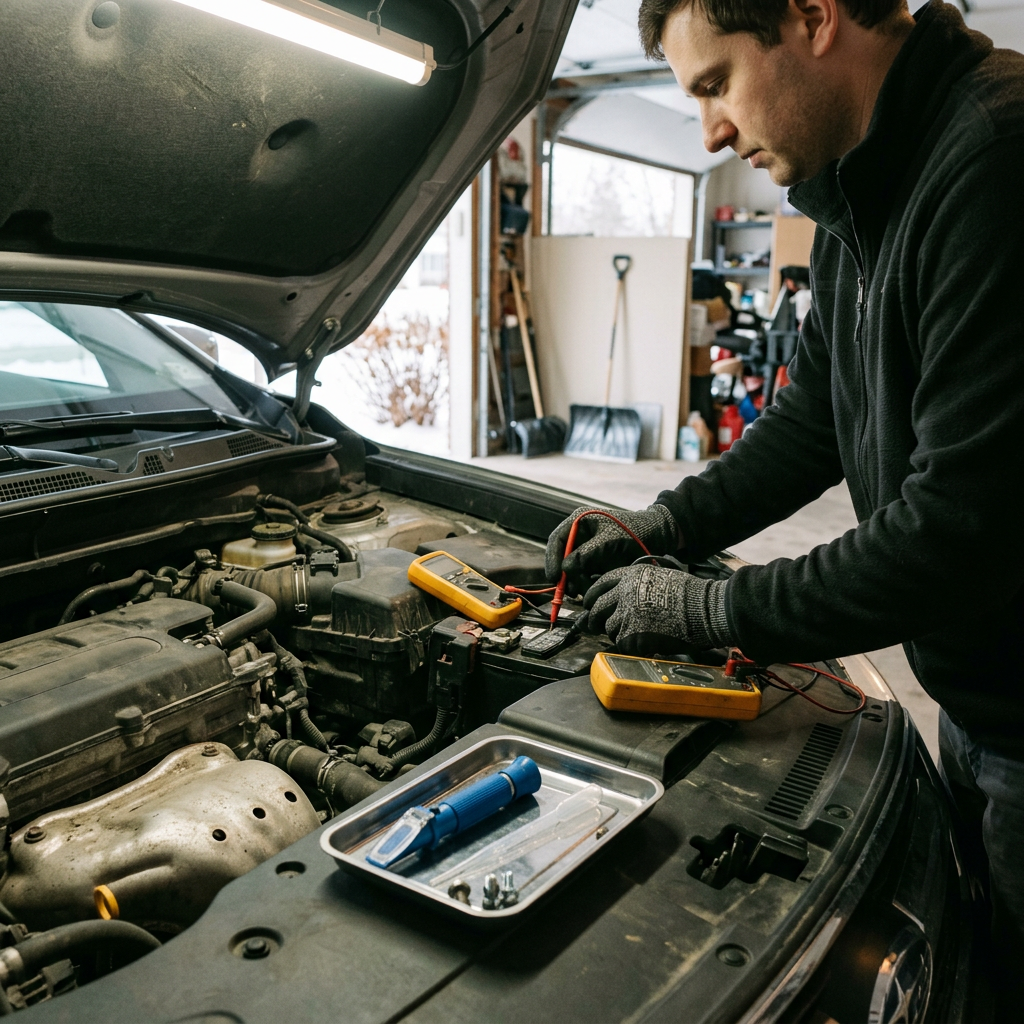
For Chicagoland motorists navigating the seasonal shift into sub-zero conditions, performing a thorough DIY winter vehicle inspection delivers immediate financial dividends. On average, drivers save between $150 and $350 in upfront dealer or independent repair shop multi-point inspection fees, minor diagnostic charges, and fluid top-off surcharges by tackling baseline system audits in their own garages. Across Will County, DuPage County, and the broader Chicago metropolitan area, standard diagnostic labor rates routinely hover between $130 and $190 per billable hour. When an automotive technician spends 90 minutes testing electrical health, measuring coolant freeze thresholds, checking wiper clearances, and evaluating tire wear bars, you are paying predominantly for time and basic tool access—tasks that any methodical vehicle owner can execute with an afternoon's commitment and under $40 in basic equipment.
Yet the direct labor savings represent merely the tip of the financial iceberg. The monumental economic value of a home-brewed winter inspection lies in catastrophe prevention. When winter storm winds sweep off Lake Michigan and drop wind chills to -20°F across Plainfield, Naperville, and Joliet, marginal vehicle components experience catastrophic failure modes. An undetected weak 12-volt battery fails to turn over the starter, stranding you in sub-zero highway conditions where flatbed towing surcharges range from $175 to $400 under emergency blizzard dispatches. Diluted engine coolant freezes solid inside water jackets, expanding to crack cast engine blocks or split aluminum radiator cores—resulting in catastrophic mechanical repairs scaling from $1,200 to over $4,500. By investing an hour of your weekend into systematic checks, you not only keep immediate maintenance funds in your wallet but also safeguard against the crushing secondary expenses of Midwestern winter breakdowns.
Itemized Cost Breakdown: Professional Winter Multi-Point Inspection vs. DIY Garage Costs
|
Inspection / Service Category
|
Professional Shop Rate (Chicagoland Avg.)
|
DIY Upfront Tool & Material Cost
|
Net First-Year Savings
|
|
Coolant Specific Gravity & Freeze-Point Test
|
$45 - $65
|
$8 (Hydrometer) or $18 (Refractometer)
|
$37 - $47
|
|
12V Battery Cold Cranking & Charging Audit
|
$40 - $70
|
$15 - $22 (Digital Multimeter)
|
$25 - $48
|
|
Tire Tread Depth & Dynamic Wear Analysis
|
$25 - $40
|
$4 (Calibrated Depth Gauge)
|
$21 - $36
|
|
De-Icing Fluid Top-Off & Nozzle Alignment
|
$20 - $35 (Shop Supply Markups)
|
$5 (Premium -30°F Fluid Jug)
|
$15 - $30
|
|
Winter Wiper Blade Installation Labor
|
$25 - $50 (Labor Only)
|
$0 (Self-Installed in 5 Minutes)
|
$25 - $50
|
|
Underbody Splash Guard & Belt Inspection
|
$45 - $90 (Lift Time Allocation)
|
$0 (Garage Flashlight Audit)
|
$45 - $90
|
|
Total Estimated Expenditure
|
$200 - $350
|
$32 - $49 (Reusable Investment)
|
$168 - $301 Net In-Pocket
|
Analyzing these figures reveals why doing your own evaluation makes immense fiscal sense. An independent garage or commercial service chain in the Plainfield corridor must factor significant building overhead, technician health plans, software licensing fees, and shop material disposal costs into their service billing. Consequently, something as straightforward as hooking up an automated battery tester or dipping a hydrometer strip into your coolant overflow tank incurs a standard minimum diagnostic charge. By contrast, purchasing your own diagnostic instruments represents a permanent capital investment. A basic digital multimeter from a hardware store will serve your household across countless automotive and domestic electrical issues for a decade. A dial-type or digital tire tread gauge lasts indefinitely. When amortized over multiple family vehicles and multiple winter seasons, the initial $35 to $50 investment in basic diagnostic tools diminishes toward negligible fractions of a cent per check.
Essential DIY Winter Checklist: Fluids, Battery Health, and Tread Depth Checks
Executing a professional-grade winter evaluation at home requires systematic focus across three core operational pillars: thermal fluid chemistry, electrochemical storage capacity, and mechanical tire traction interfaces. Follow these proven inspection procedures tailored for harsh northern Illinois climates.
1. Fluid Freeze Point Audits
Never rely on coolant color alone. Once the engine is completely cold, remove the expansion reservoir cap and sample the antifreeze using an optical refractometer or floating-disc hydrometer. In Will County, your ethylene glycol-to-distilled water ratio must guarantee protection down to at least -30°F (-34°C). If past summer top-offs with plain water diluted your concentration, siphon excess reservoir fluid and replenish with dedicated 50/50 or concentrated OEM-approved coolant. Simultaneously, drain any remaining summer bug-wash washer fluid, cycling the pump until the lines are empty, and recharge the reservoir with a winter-grade de-icer rated down to -20°F or -30°F to prevent reservoir splitting and high-speed line freezing on expressways.
2. Battery Baseline & Cranking
Automotive chemical reaction speeds plummet in cold weather. At 0°F, a lead-acid battery retains barely 50% of its normal room-temperature cranking output, while cold, thickened engine oil demands up to 2.5 times more cranking torque from the starter. Set your digital multimeter to DC volts. Measure across clean battery terminals with the engine off: a healthy resting state reads 12.6V to 12.8V (100% state of charge). A reading of 12.2V indicates a 50% discharge requiring immediate bench-charging. Next, have a partner crank the engine while observing voltage drop: if output collapses below 9.6V during active cranking, the battery's internal plates are sulfated or degraded, signaling imminent cold-snap failure.
3. Tread Depth & Sipe Analysis
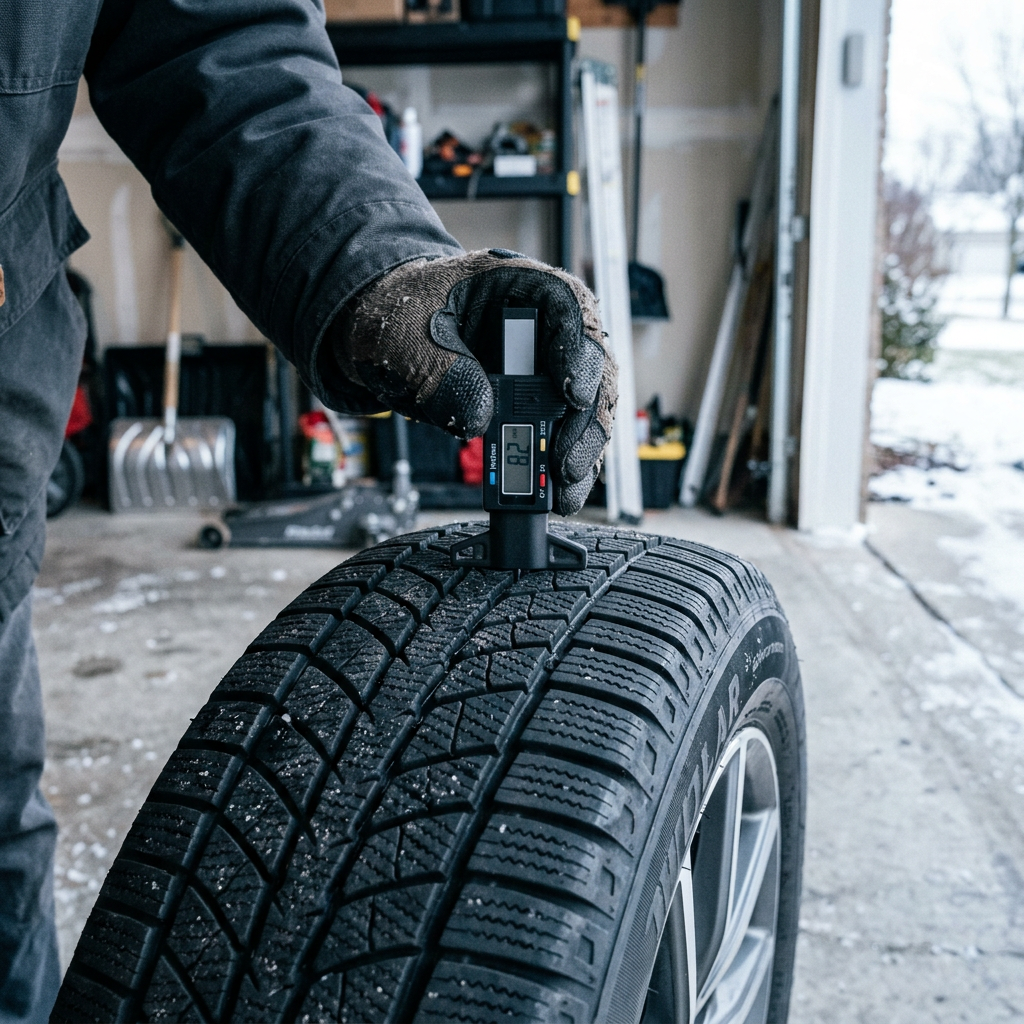
While the legal minimum tread depth across Illinois is 2/32 of an inch, automotive safety physics mandates at least 4/32 to 5/32 of an inch to clear compacted slush and channel meltwater out of the contact patch. Insert your depth gauge into inner, center, and outer circumferential tire grooves. If your tires hover around 3/32 of an inch, your braking distances on packed snow will escalate by over 40% compared to deep-tread alternatives. Inspect the micro-sipes—the razor-thin lateral slits molded into the tread blocks that open under load to bite ice. Ensure they are not rounded off or packed with hard foreign debris.
Before Winter Trips on I-55 or I-80, What Vehicle Checks and Emergency Supplies Does Illinois Recommend?
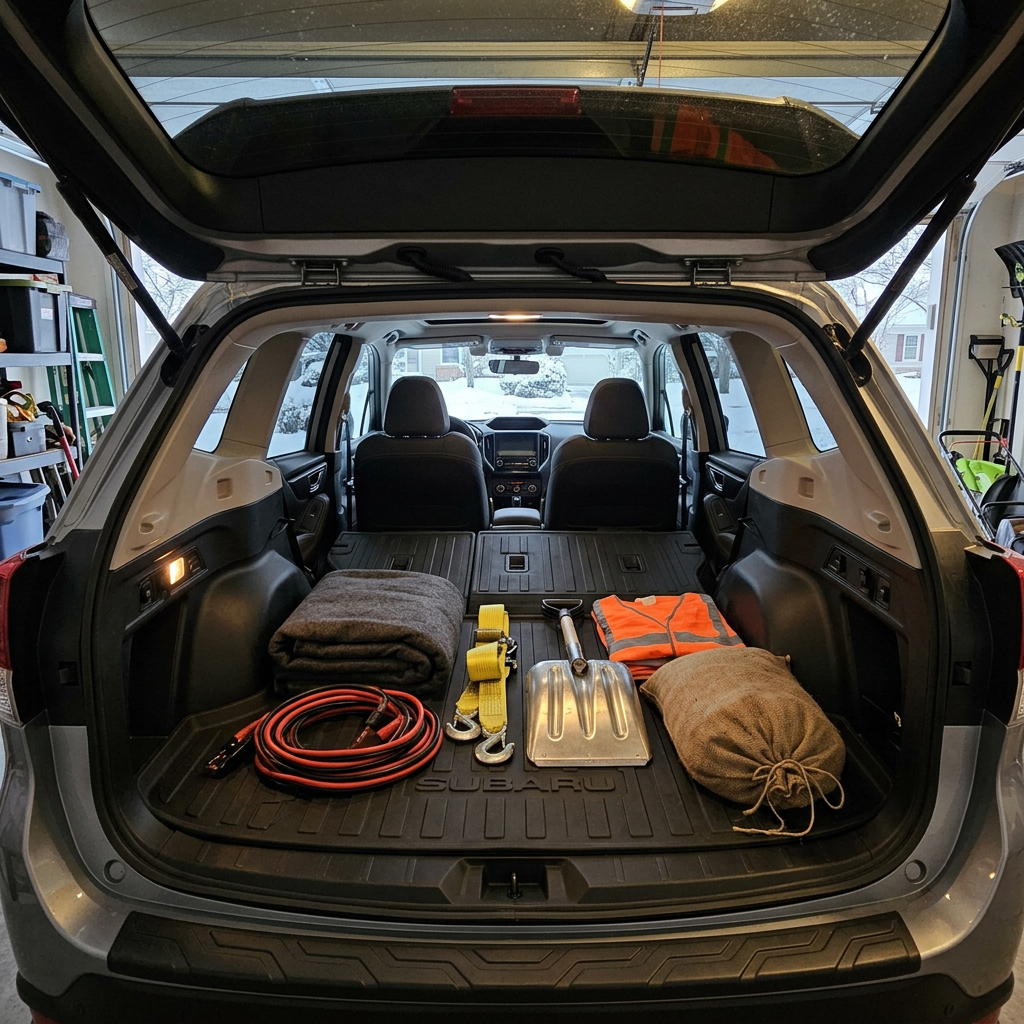
The Illinois Department of Transportation (IDOT) consistently emphasizes that interstate corridors across northern Illinois—most notably the intersection corridors of Interstate 55 and Interstate 80 in Will County—experience severe multi-vehicle pileups and prolonged gridlocks during whiteout events. When lake-effect moisture collides with Arctic cold fronts descending across the open plains of Kendall and Grundy counties, visibility and pavement temperatures collapse in minutes. IDOT protocols specify a mandatory mechanical pre-flight: verifying clean, operational exterior lighting (headlights, tail lamps, and hazard markers free of salt crust), verifying windshield wiper blade flexibility without torn squeegee edges, and maintaining a fuel tank level above 50% capacity at all times. Keeping a full tank mitigates fuel line condensation freeze-ups and ensures you can run your vehicle's cabin heater intermittently for 12 to 24 hours if trapped in an interstate stoppage. In addition to vehicle readiness, assemble an emergency roadside survival kit inside your rear cargo area. Rather than buying commercial kits filled with plastic fillers, build an effective DIY emergency setup for zero added cost using household supplies: heavy wool blankets or rated sub-zero sleeping bags, a 20-pound bag of coarse clay cat litter or traction sand, a heavy-duty nylon tow strap, 4-gauge copper jumper cables, a compact folding aluminum snow shovel, an LED headlamp with lithium batteries (alkaline batteries freeze and drain rapidly), a high-visibility safety vest, and calorie-dense non-perishable food rations like energy bars and dried fruit.
How Can Drivers Clear the Windshield Area Covering EyeSight Cameras?
Subaru's acclaimed EyeSight Driver Assist Technology relies on high-precision dual or tri-camera stereo visual feeds positioned behind the upper interior glass of the windshield. During winter highway transit along I-55, salt brining agents, tire spray, slush, and frozen sleet constantly strike this critical optical sweep area. If the windshield viewing zone becomes obstructed, EyeSight safety systems—including Pre-Collision Braking, Adaptive Cruise Control, and Lane Keep Assist—will automatically lock out and disable themselves to prevent algorithmic errors. Clearing this exterior zone demands strict care. Never employ harsh, serrated plastic ice scrapers aggressively directly over the glass zone in front of the stereo camera apertures; micro-abrasions and deep surface scratches in the glass prism path can scatter light, producing optical aberration errors that confound the image processing software. Instead, utilize your vehicle's full front defroster on high heat to warm the laminated windshield glass gently from the inside, loosening ice adhesion. Apply generous amounts of methanol-based windshield de-icer fluid and activate rubber winter wiper blades to clear the slush cleanly.
Crucially, the interior treatment of the camera lenses requires strict adherence to factory procedures. Never touch the camera lenses directly with your fingers, microfiber towels, or commercial cleaning solutions. The interior optical glass of the EyeSight modules features microscopic anti-reflective and polarizing treatments. Touching these surfaces deposits natural skin oils or abrasive dust grains that are nearly impossible to clean without professional disassembling, frequently requiring comprehensive stereo camera recalibration. To manage interior window fogging or condensation film in the upper windshield zone, turn on your vehicle's air conditioning compressor concurrently with the cabin heater. The A/C evaporator functions as an active dehumidifier, stripping moisture from cabin breath and wet floor mats before the air touches the cold glass. If exterior road film or dried salt residues create a hazy barrier on the outside glass, wipe the exterior glass down manually using pure isopropyl alcohol and a clean, lint-free automotive microfiber cloth, wiping in straight parallel motions rather than aggressive circles.
DIY vs. Professional Winter Prep: Knowing When to Transition from Your Garage to the Service Bay
A successful DIY maintenance program relies just as heavily on recognizing your mechanical boundaries as it does on mechanical competence. The goal of at-home winter inspection is to exploit accessible diagnostic tasks without risking vehicle damage or safety. Tasks such as assessing fluid freeze points, topping off winter washers, inspecting serpentine belt ribs for dry rot or micro-cracking, checking tire pressures, and verifying lamp operations are straightforward, safe, and cost-effective home garage procedures.
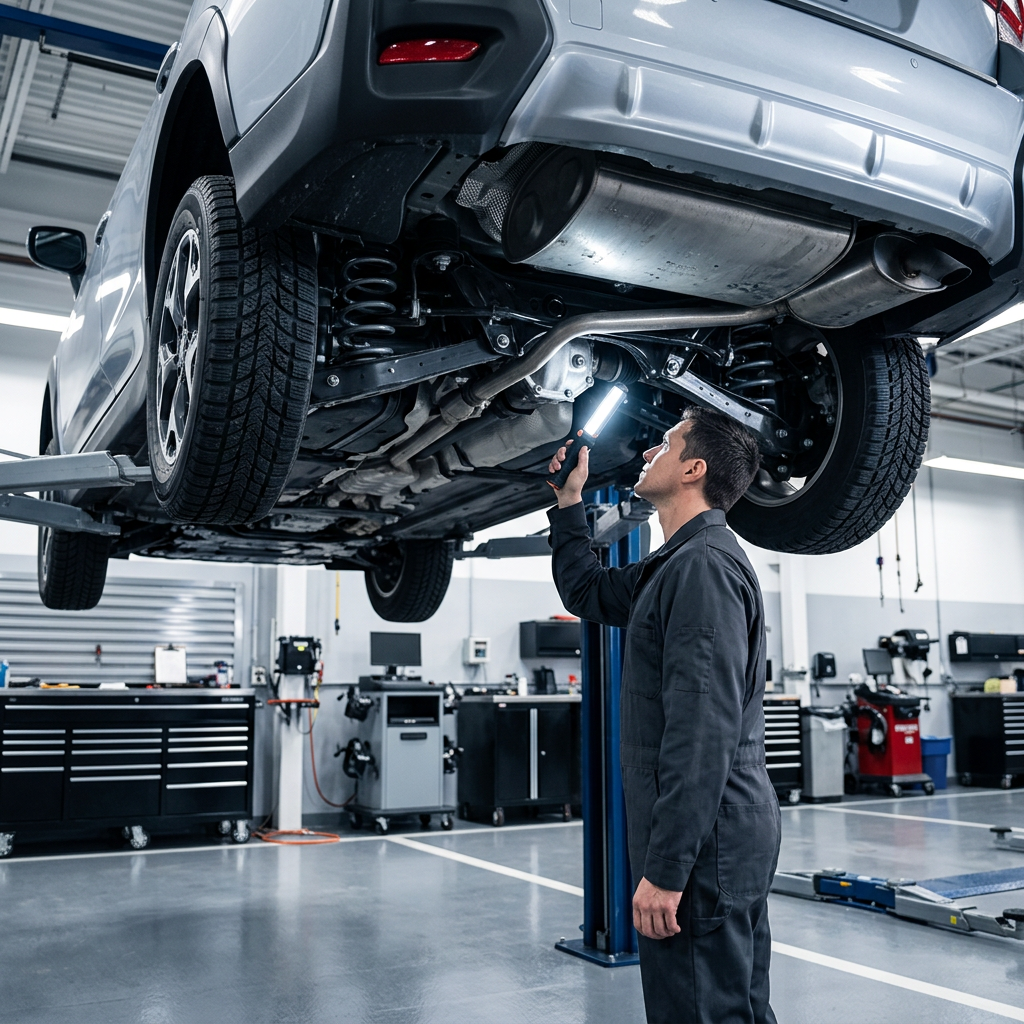
Conversely, several critical winter maintenance interventions mandate specialized heavy machinery, hydraulic vehicle lifts, and factory electronic scanning interfaces. For example, servicing your front and rear differential fluid—vital gear oil that protects all-wheel-drive gearsets under intense cold-start friction—involves breaking stubborn fill/drain plugs and ensuring precise level checks while the chassis rests level. Similarly, modern Electronic Brakeforce Distribution (EBD) and ABS hydraulic modulators require bidirectional electronic scanning tools to bleed air and verify cold-weather valve cycling. Furthermore, if you suspect stereo camera misalignment or notice an EyeSight diagnostic alert after a harsh bump against an icy curb, optical recalibration targets and factory diagnostic computers are strictly required. If your DIY assessment flags split CV axle boots, weeping brake calipers, or heavy uneven tire shoulder wear indicating severe camber misalignment, have your vehicle inspected by the certified technicians at Schedule Your Service Today.
Navigating I-55 and I-80 Lake-Effect Snow: Winter Highway Prep for Chicagoland Subaru Drivers
Commuters traveling the major transport arteries connecting Joliet, Plainfield, Naperville, and downtown Chicago face extreme meteorological volatility. Lake-effect snow squalls generated by cold Siberian air masses passing over the warmer waters of Lake Michigan can dump multiple inches of dense, grease-slick snow per hour. Preparing your vehicle specifically for these rapid transitions requires attention to freeze-thaw cycles, lighting clarity, and HVAC heat exchange.
Wiper Freeze Mitigation
Standard summer wiper blades feature open metal armatures that trap melting highway slush. When driving at 65 MPH along I-80 in 15°F ambient temperatures, that trapped water freezes instantaneously into solid ice, locking the wiper joints and lifting the rubber blade off the curved windshield glass. Inspect and upgrade to beam-style winter wiper blades equipped with fully enclosed protective rubber boots. Subaru vehicles equipped with the All-Weather Package feature electrical resistive de-icing elements embedded directly beneath the windshield wiper resting park position—always verify that this cabin-controlled circuit is functional before winter storms arrive.
Headlight Output & Heat
Modern LED headlights emit brilliant, daylight-balanced illumination while drawing minimal electrical wattage. However, unlike traditional incandescent or halogen bulbs that radiate significant forward infrared heat, LED headlights project minimal forward thermal energy across the outer polycarbonate lens. During sustained highway driving through wet, blowing lake-effect snow, slush cakes against the cold lenses, obscuring forward visibility. Treat your headlight lenses with a hydrophobic ceramic coating or high-grade silicone sealant at home to reduce snow adhesion.
Heater Core & Thermostat
In sub-zero blizzard driving, cabin heat is not merely a matter of comfort—it is an active safety requirement to keep interior glass from frosting over. Inspect your vehicle's engine warm-up cycle. If your engine takes more than 10 to 12 minutes to achieve normal operating temperature (typically 190°F to 210°F on modern Subaru boxer engines), your engine thermostat may be stuck partially open. A thermostat that fails to seat correctly circulates coolant through the radiator continuously, preventing the heater core from achieving defroster temperatures and increasing engine bore wear.
How Much Ground Clearance Do Subaru SUVs Offer for Clearing Snow Ruts on I-80?
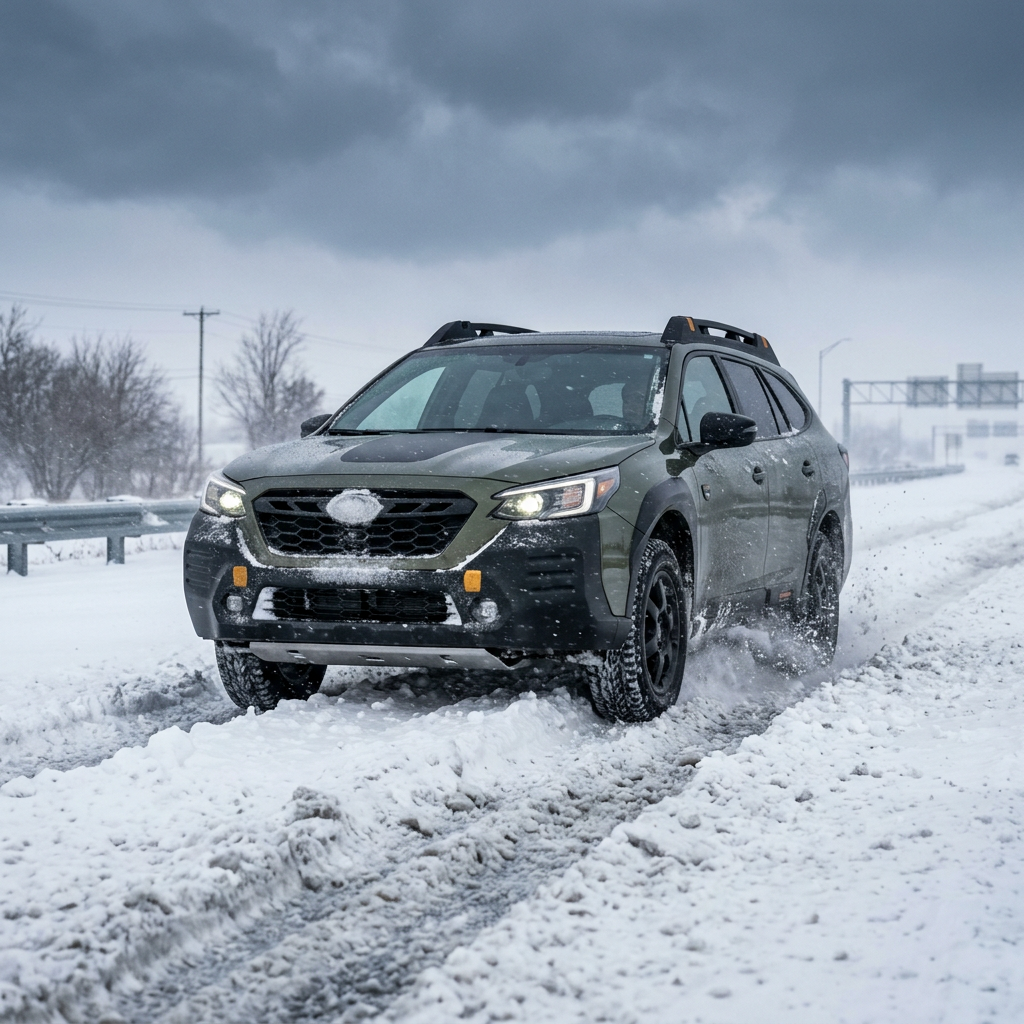
When heavy freight traffic grinds through unplowed snow on Interstate 80 between Minooka, Joliet, and New Lenox, semi-truck tires carve deep dual trenches, compressing center snow ridges that reach heights of six to eight inches. Most conventional passenger sedans and competitive compact crossovers provide between 5.5 and 6.8 inches of underbody ground clearance. When forced to cross these frozen center ridges during lane changes, low-slung vehicles act as makeshift snowplows, collecting heavy, compacted snow underneath the undercarriage until the vehicle high-centers—lifting driving wheels off the road and eliminating tractive effort entirely. Subaru SUVs deliver a decisive mechanical advantage in this scenario. Models like the Subaru Outback, Forester, Crosstrek, and Ascent provide a standard baseline ground clearance of 8.7 inches. For drivers navigating severe rural drifts, Subaru Wilderness editions elevate this capability even further, providing 9.2 inches on the Outback Wilderness and up to 9.3 to 9.5 inches on the Forester and Crosstrek Wilderness trims.
During your DIY garage inspection, slide underneath the vehicle with a work light to evaluate undercarriage armor. Verify that the factory fiberglass composite and aluminum engine splash shields are firmly fastened. Midwestern highway slush packs into loose plastic undertrays at high speed, tearing fasteners out of wheel well liners. Ensure your exhaust heat shields, rear differential housing casing, and fuel tank protective straps are uncompromised and clear of road-debris buildup.
How Does Toyota's Electronic On-Demand AWD (E-Four) Compare to Subaru AWD in Deep Snow?
Electronic On-Demand AWD (E-Four)
Many modern hybrid crossovers, including Toyota's popular Electronic On-Demand All-Wheel Drive (E-Four) system, discard the traditional physical driveshaft connecting the front internal combustion engine to the rear wheels. Instead, the rear axle is propelled exclusively by an independent, low-voltage electric motor generator. Under dry conditions and moderate highway cruising, the rear motor sits entirely idle, rendering the vehicle a front-wheel-drive platform for fuel conservation. When front wheel slip is detected by wheel speed sensors, the vehicle's hybrid management ECU signals electrical current to engage the rear electric motor. While highly fuel-efficient during light suburban commutes, this architecture encounters fundamental engineering limitations in deep snow and steep, icy gradients. The rear electric motor delivers modest continuous horsepower and limited peak torque compared to the primary front powertrain. When attempting to rock a vehicle free from heavy snowbanks or climbing sustained icy highway grades along I-80, the rear electric motor experiences rapid thermal load. To protect the motor inverter and battery pack from thermal degradation, the ECU automatically throttles power back—reverting the car to front-wheel drive precisely when multi-wheel tractive torque is needed most.
Subaru Symmetrical All-Wheel Drive
By contrast, Subaru Symmetrical All-Wheel Drive relies on a permanent, longitudinally mounted mechanical powertrain with a continuous physical driveshaft linking the transmission output directly to heavy-duty front and rear mechanical differentials. Rather than waiting for wheel slippage to initiate an electrical wake-up command, Subaru's active all-wheel-drive systems continuously route torque to all four wheels at all times. Under standard cruising, Subaru's Active Torque Split (ATS) maintains an active baseline torque distribution (typically 60:40 front-to-rear) utilizing an electronically managed, multi-plate wet clutch pack. When yaw rate sensors, steering angle sensors, and transmission output telemetry register slick road conditions or loss of traction, torque is redirected across the mechanical driveline in milliseconds—without software thermal shutdowns. Augmented by dual-function X-MODE software that manages individual wheel-spin braking, throttle response, and transmission gear ratios, Subaru's all-wheel-drive layout is designed to provide traction support across deep snowdrifts and frozen lake-effect squalls.
Tire Inspection and Pressure Math: Managing the 10-Degree Pressure Drop in Joliet and Plainfield
The 10-Degree Pressure Drop
Gas physics—specifically Gay-Lussac's and Boyle's thermodynamic laws—dictates that confined air molecules lose kinetic energy as temperatures decline. For every 10°F drop in ambient outdoor temperature, pneumatic tire pressure decreases by approximately 1 to 2 PSI (pounds per square inch). In northeastern Illinois, late autumn temperatures of 55°F can plunge to 5°F within a single 36-hour Arctic cold front. That 50-degree temperature crash translates to a rapid loss of 5 to 8 PSI per tire—often enough to trigger dashboard Tire Pressure Monitoring System (TPMS) warning lamps without any mechanical puncture.
Sidewall & Bead Audits
During your DIY inspection, check tire pressures strictly when tires are cold—meaning the vehicle has rested parked for at least three hours. Use a calibrated digital pressure gauge rather than relying entirely on dashboard cluster estimates. Inspect the inner and outer sidewalls for micro-cracks (dry rot) and localized outward bulges. Bulges indicate internal structural carcass failure caused by impact with Chicagoland roadway expansion joints or potholes. In freezing weather, damaged sidewall plies are prone to sudden high-speed blowouts along highway corridors.
Rubber Compound Dynamics
All-season tire compounds utilize petroleum-based polymers engineered to maintain stability in summer heat. However, once pavement temperatures drop below 45°F, all-season rubber hardens into a rigid, non-compliant glass-like state, losing mechanical adhesion to the road. Dedicated winter tires (bearing the Three-Peak Mountain Snowflake 3PMSF emblem) utilize high-silica rubber compounds that remain soft and pliable down to -40°F. On packed snow and ice at 30 MPH, winter tires can reduce emergency stopping distances by up to 30 feet—the length of two full vehicle chassis.
Preventative Cost-Benefit Analysis: How An Affordable DIY Inspection Averts a Major Winter Repair
Quantifying the financial return on investment of a DIY inspection reveals how minor preventative maintenance preserves your household budget. Consider the accessory serpentine drive belt: a critical EPDM rubber component that drives your vehicle's alternator, water pump, power steering, and A/C compressor. In freezing winter weather, hardened rubber becomes brittle. A serpentine belt showing minor rib micro-cracks or edge fraying during a flashlight inspection can be purchased at a parts counter for $25 to $45 and replaced easily at home. Should that belt snap while accelerating along I-55 in sub-zero traffic, the water pump immediately stops circulating coolant, causing severe engine overheating even in winter conditions. Simultaneously, the alternator ceases generating current, draining the battery in minutes and disabling electronic power steering and power brake boosters. By the time a flatbed tow truck retrieves your stranded vehicle, you face a $250 towing bill, a potential $900 cylinder head resurfacing charge from thermal shock, and a $200 emergency repair labor premium—transforming a deferred $35 belt into a $1,350 mechanical emergency.
The exact same financial math applies to electrical connectivity. Lead-acid battery posts naturally form acidic, chalky copper-sulfate and lead-sulfate corrosion crust over humid summer months. This crust creates electrical resistance measured in milliohms. In warm weather, starter current easily punches through minor surface resistance. But when freezing oil thickens inside your engine block, that resistance causes a critical voltage drop. When a driver repeatedly cranks a cold engine against high electrical resistance, the starter motor's armature windings overheat from prolonged amp draw, burning out internal brushes. A $4 brass wire terminal cleaning brush and a $1 box of baking soda dissolved in warm water effortlessly dissolves post corrosion, restoring clean metal-to-metal continuity and preserving a $450 starter motor. To verify full electrical system integrity or contact the dealership for current financing information, explore Get Pre-Approved for Financing.
Equip Your Vehicle for Winter at Hawk Subaru in Plainfield
Whether you choose to perform your complete winter maintenance inspection in your own garage or prefer our factory-certified master technicians to execute a comprehensive multi-point winter audit on a hydraulic lift, Hawk Subaru is your regional winter mobility headquarters. Conveniently located at 2401 Rte 59, Plainfield, IL 60586, our modern service and parts facility serves Plainfield, Joliet, Naperville, Aurora, and the greater Will County region. Our dedicated OEM parts department stocks factory-certified Subaru high-cranking cold-climate batteries, genuine long-life Super Coolant, beam winter wiper blades, and tailored winter wheel and tire packages balanced for Symmetrical All-Wheel Drive drivetrains. If your winter audit reveals it is time to transition into a new or updated vehicle engineered to conquer Midwestern lake-effect blizzards, explore our extensive inventory of winter-ready Outback, Forester, Crosstrek, and Ascent models today. Have specific technical questions regarding your vehicle's winter prep? Use Get Directions to Hawk Subaru to visit our showroom, or call our customer care specialists directly at Call (815) 725-3789.