Key Takeaway: How to Test If Your Subaru Battery Will Survive the Plainfield Winter Frost
As autumn leaves blanket Will County and crisp October mornings give way to harsh November freezes, Subaru owners across Plainfield, Joliet, and Naperville face a critical seasonal reality: cold weather is the ultimate stress test for an automotive battery. When temperatures drop to freezing (32°F), a standard car battery loses approximately 20% to 35% of its available chemical cranking capacity. When the thermometer plunges into single digits or sub-zero territory during a Chicagoland winter blast, battery capacity drops by a staggering 50% or more. Simultaneously, cold engine oil thickens dramatically, requiring up to twice as much electrical energy from the starter motor to crank your Subaru BOXER® engine. If your battery is already compromised by internal plate sulfation or micro-corrosion, the first hard frost of November will leave you stranded right in your own driveway.
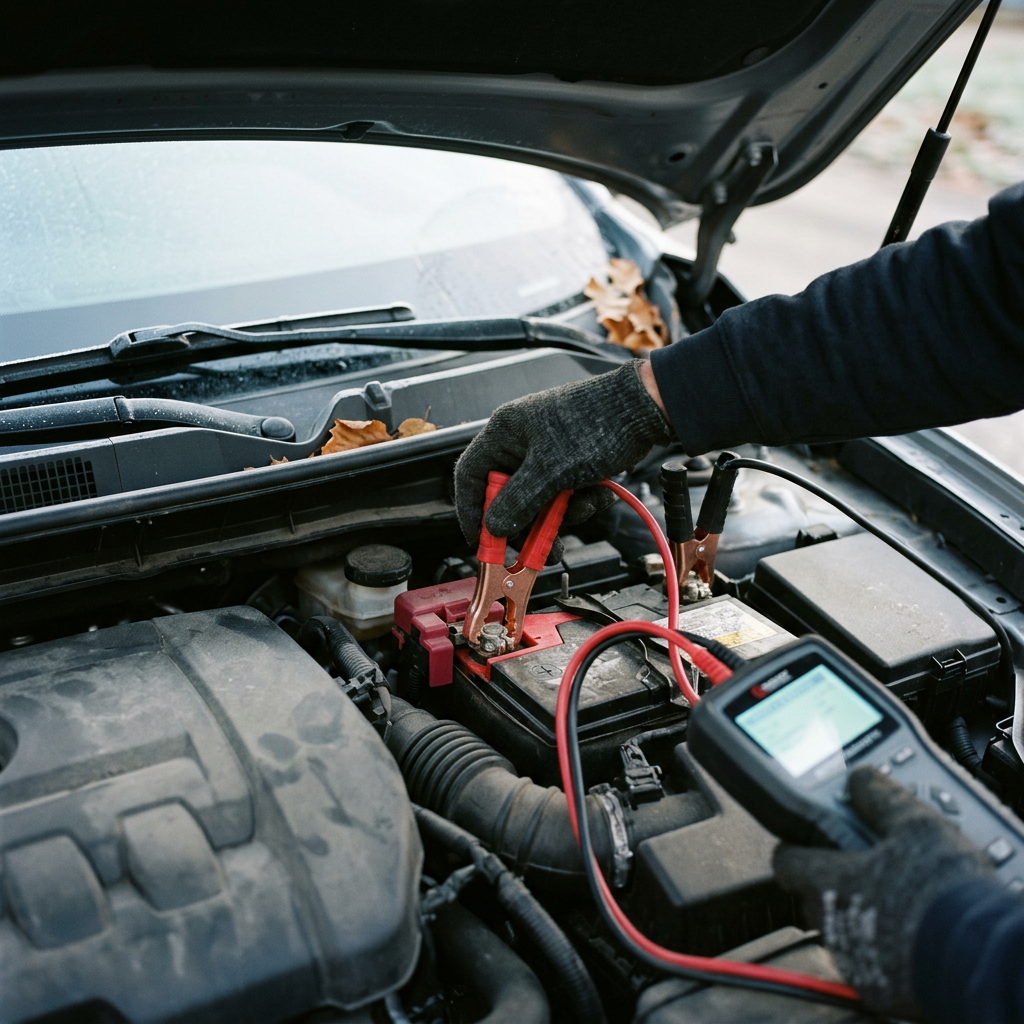
Determining whether your Subaru battery can endure the impending freeze requires understanding three key diagnostic metrics: static resting voltage, cranking voltage drop, and conductance load testing. A fully charged, healthy 12-volt battery must read at least 12.6 volts when the vehicle has been parked overnight (resting state). A reading of 12.4 volts indicates a 75% charge, while anything below 12.2 volts reveals a severely discharged or failing battery that will almost certainly fail when the temperature drops. During engine ignition, cranking voltage must remain strictly above 9.6 volts. If ignition causes the voltage to dip into the 8-volt range, your starter motor is starved for amperage, signaling immediate battery degradation.
While resting voltage provides a quick baseline, resting voltage alone can be deceptive. A surface charge can mask underlying structural breakdown inside the battery cells. Professional digital conductance testing—the gold standard used by certified technicians at Hawk Subaru in Plainfield—measures the internal resistance of the battery plates without draining energy. This determines the actual remaining Cold Cranking Amps (CCA) compared to the factory rating stamped on the battery case. If your battery exhibits sluggish engine turnover, flickering instrument cluster displays during startup, clicking sounds upon turning the key, or is over three years old, visiting Hawk Subaru for a complimentary winter battery diagnostic before November frost hits is your best defense against unexpected winter breakdowns.
Digital Multimeter vs. Load Testing: How to Check Subaru Battery Health at Home
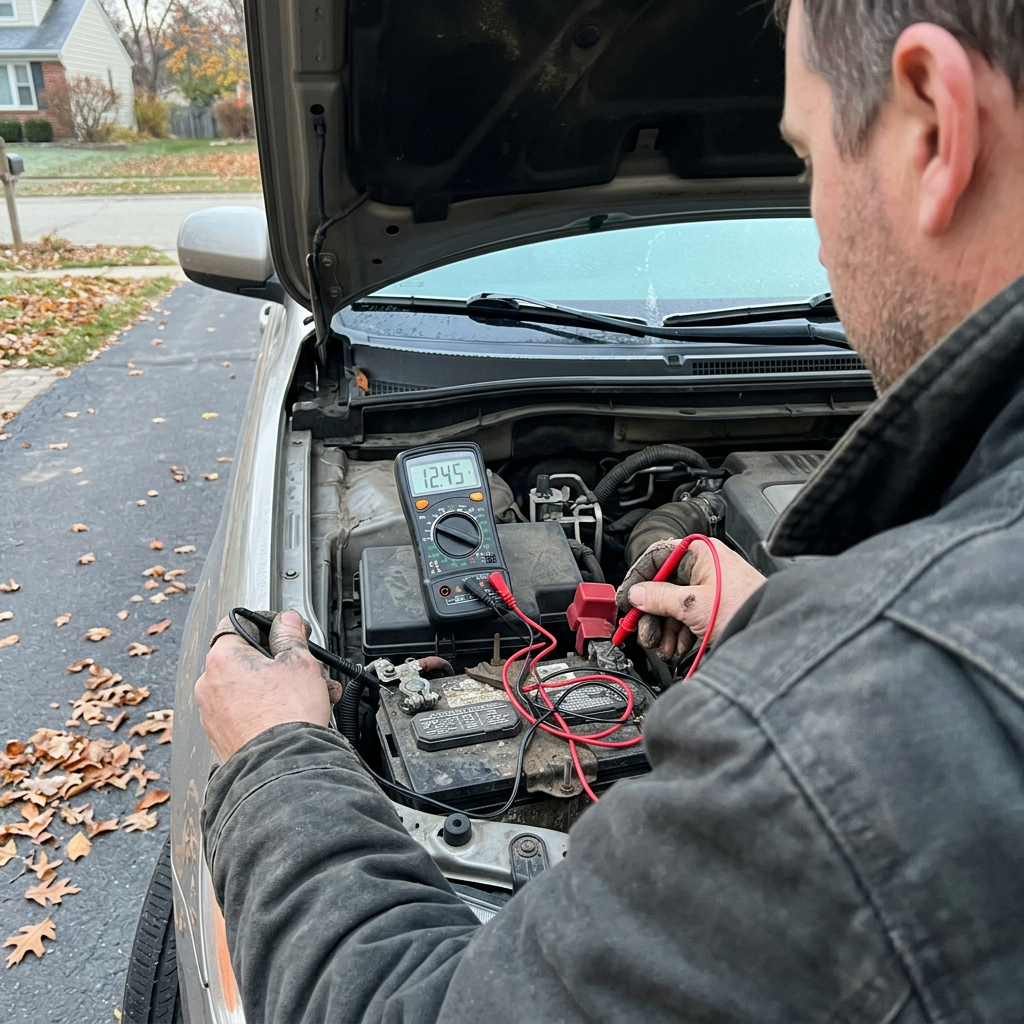
Testing Battery Voltage at Home with a Multimeter Checking your Subaru battery at home is relatively straightforward if you possess a basic digital multimeter. To perform an accurate resting voltage measurement, ensure the engine has been turned off for at least 4 to 6 hours (or overnight) so any residual surface charge dissipates. Set your multimeter to Direct Current Voltage (DCV), typically indicated by a solid line above a dashed line next to the letter V, and select the 20V scale.
Connect the red positive probe to the positive terminal (+) of your Subaru battery and the black negative probe to the negative terminal (-). Interpret your static voltage reading based on state-of-charge standards: • 12.66V to 12.80V: 100% Fully Charged • 12.45V to 12.54V: 75% Charged (Slight state-of-charge degradation) • 12.20V to 12.40V: 50% Charged (High risk of failure in freezing weather) • 11.90V to 12.00V: 25% Charged or lower (Battery is severely depleted)
Next, perform a cranking voltage test with an assistant. While watching the multimeter display, have your assistant start the engine. Note the lowest voltage number reached during the 1-to-2-second crank. Healthy Subaru electrical systems should maintain at least 9.6V to 10.2V during engine ignition. If voltage dips to 9.0V or lower, the battery lacks sufficient current delivery.
Why Home Voltage Testing Misses Hidden Sulfation While multimeter testing gives a quick snapshot of state-of-charge, it has significant diagnostic limitations. A battery suffering from lead-sulfate crystal accumulation on its internal grid plates can still show a deceptively normal 12.6V resting charge. However, as soon as a heavy amp draw is applied in sub-zero weather, the reduced plate surface area fails instantly.
At Hawk Subaru in Plainfield, our service center utilizes high-frequency digital conductance analyzers. Conductance technology sends a small AC voltage signal through the battery structure to determine grid integrity, active material density, and internal cell shorting without creating thermal strain. This professional test yields precise Cold Cranking Amps (CCA) reserves, guaranteeing you won't be surprised by a dead battery during a freezing Northern Illinois commute.
What Minimum Cold Cranking Amps (CCA) Does Your Subaru Need in Northern Illinois?
Cold Cranking Amps (CCA) is an industry measurement defining how many amperes a 12-volt battery can deliver at 0°F (-17.8°C) for 30 seconds while maintaining a minimum voltage of 7.2 volts. In mild southern climates, OEM baseline ratings are sufficient. However, for drivers navigating cold winters around Plainfield, Joliet, and Naperville, matching or upgrading your factory CCA rating is vital to reliable cold starts.
|
Subaru Model & Engine
|
Factory OEM Group Size
|
Factory Min. CCA Rating
|
Recommended Midwest Winter CCA
|
|
Outback / Legacy 2.5L & 2.4T
|
Group 35 / Group 47 (H5)
|
390 - 490 CCA
|
600 - 650 CCA (AGM Recommended)
|
|
Forester 2.5L
|
Group 35
|
390 - 470 CCA
|
600 - 640 CCA
|
|
Crosstrek 2.0L / 2.5L
|
Group 35 / Group 47
|
390 - 470 CCA
|
550 - 650 CCA
|
|
Ascent 2.4L Turbo
|
Group 47 (H5) / Group 35
|
550 - 620 CCA
|
650 - 750 CCA (High AGM Reserve)
|
Outback & Forester Demands
Subaru Outback and Forester models equipped with electronic driver-assist suites, heated seats, heated steering wheels, and Auto Start-Stop features impose substantial electrical loads on the charging system. Upgrading from factory minimums (390–490 CCA) to a heavy-duty 600+ CCA unit ensures ample reserve power during severe frost.
Crosstrek & Ascent Requirements
The 3-row Subaru Ascent with its high-compression turbocharged 2.4L BOXER engine requires elevated cranking torque in winter. Compact Crosstrek models frequently face short trip cycles that prevent standard batteries from fully recharging. Installing a battery with 600 to 750 CCA overcomes chemical slowdowns during negative-degree snaps.
Why Chemical Output Shrinks
Inside lead-acid batteries, power is produced through a chemical reaction between lead plates and sulfuric acid electrolyte. Extreme cold slows down chemical kinetics, reducing electrolyte diffusion rate. A battery rated at 500 CCA produces less than 250 effective cranking amps at sub-zero temperatures. High CCA batteries offset this natural energy loss.
Standard vs. AGM Batteries: Which Is Best for Winter Driving Around Naperville?
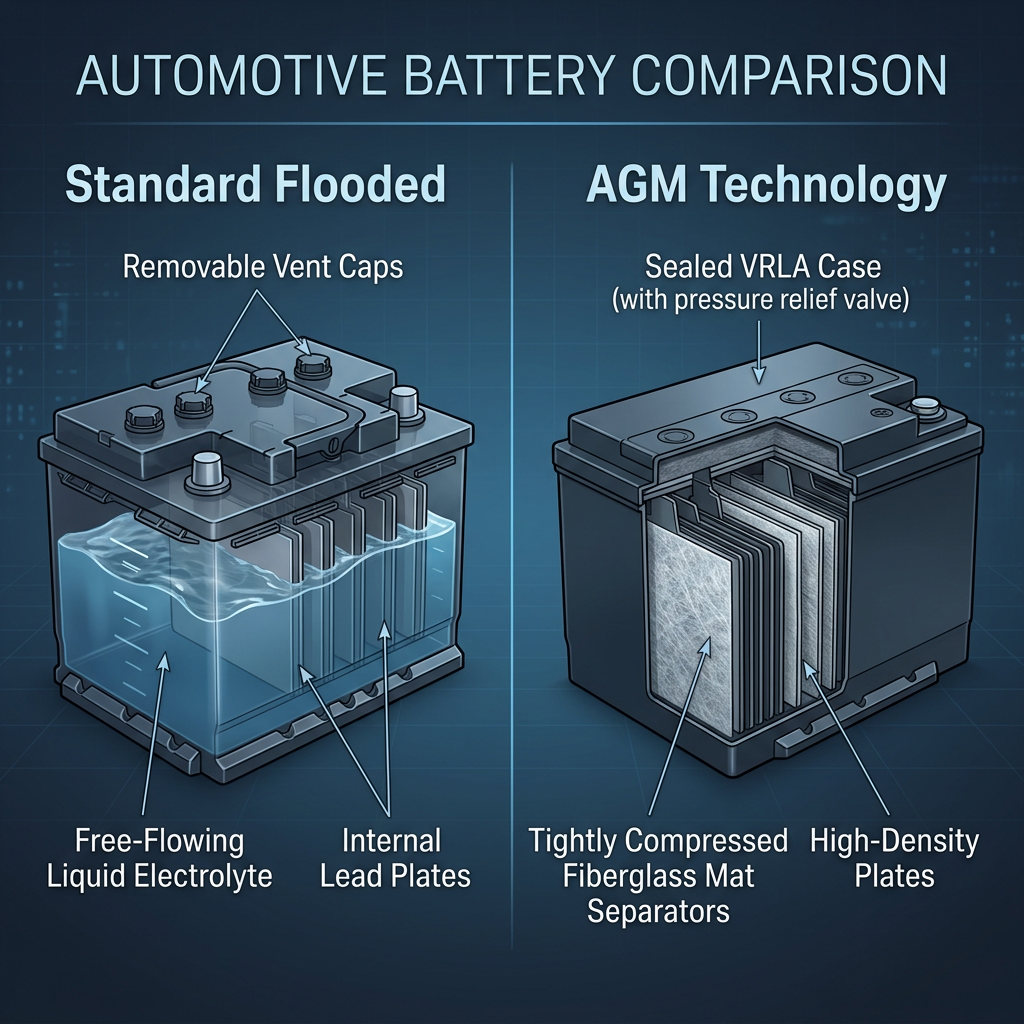
When replacing a battery at our Plainfield service center, Subaru owners frequently ask whether standard Flooded Lead-Acid (FLA) or Absorbent Glass Mat (AGM) battery technology is superior for Chicagoland winters. Understanding the structural differences clarifies why AGM has become the premium choice for modern Subaru vehicles.
Conventional Flooded Lead-Acid Batteries Flooded batteries feature free-flowing liquid electrolyte surrounding lead plates. While budget-friendly and adequate for mild conditions, FLA batteries suffer from several cold-weather vulnerabilities: • Slower charge acceptance in sub-freezing temperatures • Vulnerability to acid stratification during frequent short commutes • Higher rate of self-discharge when left parked in freezing weather • Risk of electrolyte freezing if stored in a discharged state
Absorbent Glass Mat (AGM) Technology AGM batteries suspend liquid electrolyte inside saturated fiberglass mat separators packed tightly between internal plates. This sealed, valve-regulated design provides exceptional engineering benefits for Northern Illinois winters: • 5x Faster Recharge Rate: AGM batteries accept charge from the alternator significantly faster during short winter trips around Naperville. • High Auto Start-Stop Endurance: Handles frequent engine restarts without severe voltage drop. • Vibration & Shock Resistance: Sealed design resists damage from freeze-thaw winter potholes on Route 59 and I-55.
If your Subaru features factory Auto Start-Stop technology or elevated electrical demands (heated wiper de-icers, steering wheel heaters, premium audio systems), upgrading to a Genuine Subaru AGM battery provides unparalleled peace of mind when temperature warnings hit Plainfield.
Chicagoland First Frost Warning: Preparing Your Subaru Battery and HVAC System for November
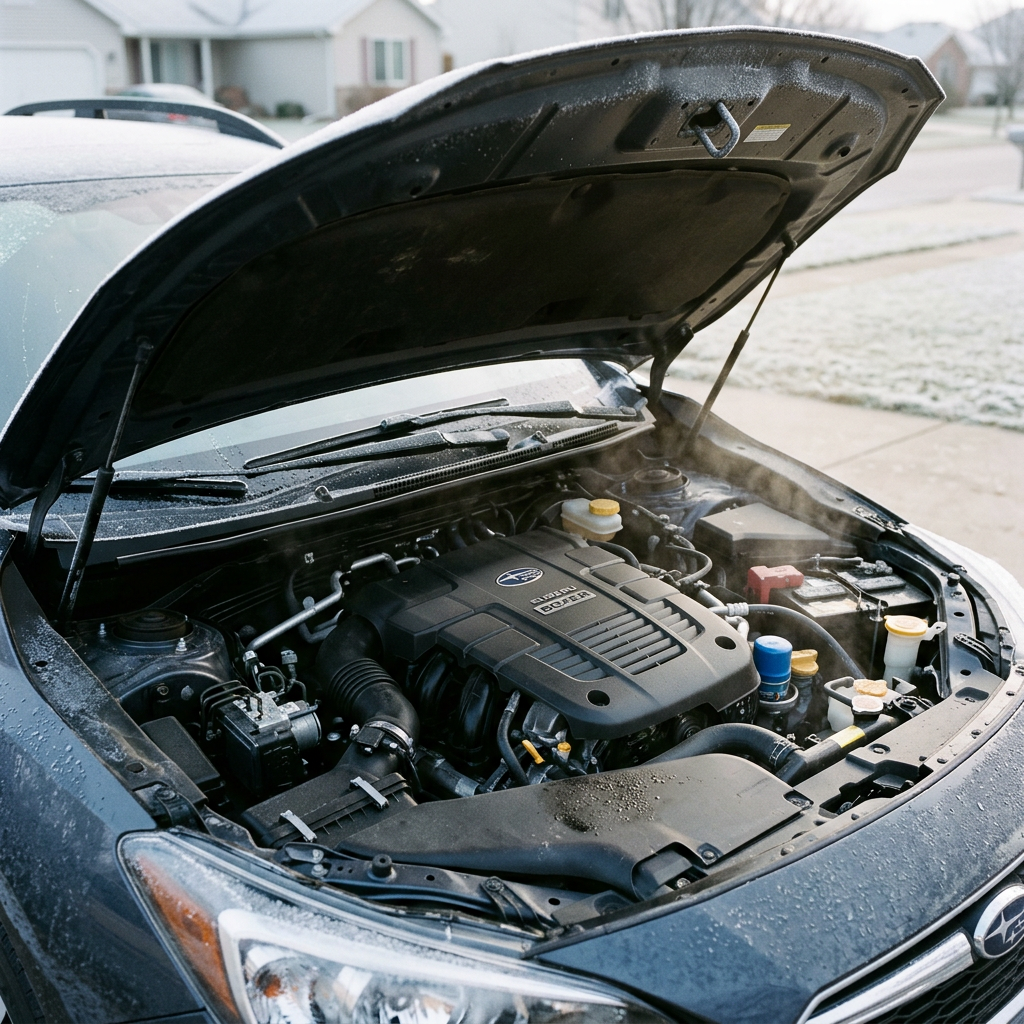
The transition from October to November in Northern Illinois brings rapid shifts in weather patterns. Sudden overnight temperature drops into the 20s act as a catalyst for vehicle electrical and climate system failures. Pre-winter maintenance performed before the first severe frost ensures uninterrupted reliability when you need your Subaru most.
Battery Terminal Cleaning & Corrosion Prevention White, powdery buildup on battery posts consists of lead sulfate or copper sulfate crystals caused by hydrogen gas venting. This corrosion acts as an insulator, restricting electrical flow from the alternator to the battery and increasing starter motor resistance. Clean terminals thoroughly using a wire brush and specialized neutralizing cleaner, then coat terminals with dielectric grease or anti-corrosion spray to seal out moisture.
Checking for Parasitic Electrical Draw Modern Subaru vehicles feature sophisticated telematics (such as Subaru STARLINK®), keyless entry proximity sensors, security alarms, and climate control modules that draw minute amounts of current while parked. If a module fails to enter sleep mode, a parasitic draw exceeding 50 milliamps (0.05A) will drain even a healthy battery overnight in cold weather. Having a technician check your vehicle's parasitic draw ensures your battery maintains full capacity while parked outdoors.
How Long Should You Warm Up a Cold Subaru Engine Before Driving in Freezing Temperatures?
Debunking the 15-Minute Idling Myth A persistent winter driving myth in the Midwest is that drivers must let modern cars idle in the driveway for 10 to 15 minutes before driving. While this was true for older carbureted vehicles, modern Subaru BOXER® engines equipped with Electronic Fuel Injection (EFI) and full synthetic 0W-20 or 0W-16 engine oil require only 30 to 60 seconds of idling after a cold start.
When you turn the key on a cold morning, engine sensors adjust the air-fuel mixture to keep the engine running smoothly. Synthetic 0W-20 motor oil is specifically engineered to flow immediately upon startup, lubricating critical camshafts, crankshaft bearings, and turbochargers within seconds—even at sub-zero temperatures. Prolonged idling actually washes unburned fuel down cylinder walls, diluting motor oil while wasting fuel and increasing catalytic converter wear.
The most efficient way to bring your Subaru BOXER engine, Lineartronic® CVT transmission, and Symmetrical All-Wheel Drive system to optimal operating temperature is to start the engine, wait 30 to 60 seconds for oil pressure to stabilize, and drive moderately until the blue engine coolant light turns off.
Need seasonal fluid checks or engine tuning before winter arrives? Consult the factory-trained specialists at Hawk Subaru in Plainfield, IL.
Does Running the Windshield Defroster Use the Subaru Air Conditioning Compressor?
Automatic AC Engagement
Yes, selecting windshield defrost automatically engages your Subaru vehicle's air conditioning compressor, even when you set the climate control temperature dial to maximum heat. This design feature is intentionally engineered by Subaru safety engineers to clear frost and condensation off glass as rapidly as possible.
Dehumidification Process
The AC evaporator core acts as a high-efficiency dehumidifier. As moist cabin air passes over the evaporator, humidity condenses into liquid water and drains out under the car. Warm, dry air is then blown across the inside of the windshield, evaporating interior fog and melting exterior ice quickly.
Compressor Load & Maintenance
Because defroster operation activates the AC compressor, a low refrigerant charge or failing compressor clutch will lead to slow glass clearing. Additionally, AC engagement adds mechanical drag to a cold engine during startup. If your windshield fogs up repeatedly, visit Parts Center for replacement belts or professional HVAC inspection.
Which HVAC Components Should Be Inspected on Your Subaru Before November Frost in Plainfield?
To guarantee reliable cabin comfort and clear visibility during freezing commutes on I-55 and Route 59, perform a thorough pre-winter inspection of these critical Subaru climate control components:
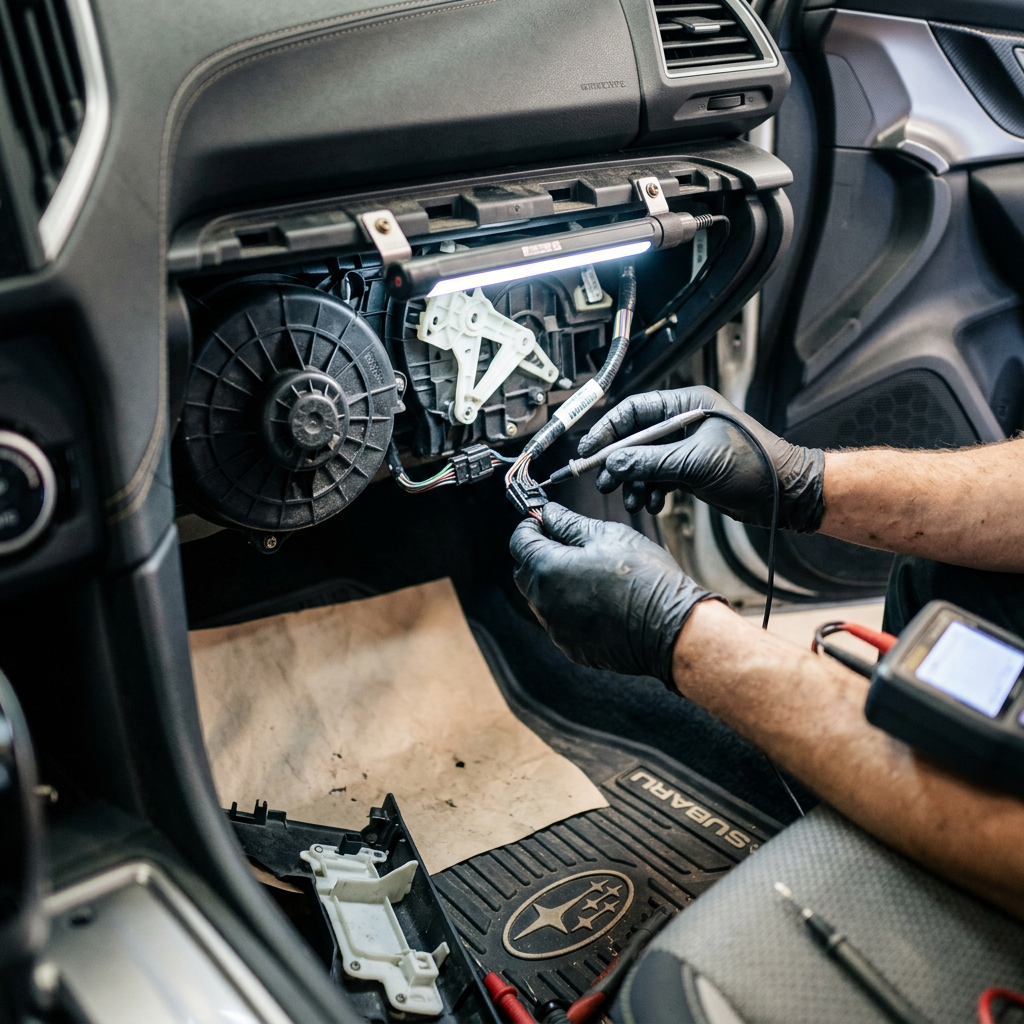
• Blower Motor & Resistor Pack: Tests airflow across all fan speed settings. Chirping noises or missing fan speeds indicate electrical resistor failure or worn motor bearings. • Blend Door Actuators: Small electric stepper motors control the mixing of hot and cold air inside the dash. Squeaking or clicking behind the glovebox signals actuator gear wear. • Heater Core Flush & Flow: Warm engine coolant flows through the internal heater core to heat cabin air. Sludge or old coolant restricts flow, leaving one side of the cabin cold. • Thermostat Opening Calibration: A thermostat stuck open prevents engine coolant from reaching 190°F operating temperature, resulting in lukewarm defroster air output.
Have your cabin heating system inspected by factory-certified technicians at Hawk Subaru in Plainfield before winter weather arrives.
How Can Fall Debris Affect Your Subaru's Cabin Heating and Defroster Performance?
Cowl Drain Blockages
In late autumn, leaves, pine needles, and maple seeds accumulate at the base of the windshield in the exterior cowl intake. When left uncleaned, organic debris clogs water drain channels, causing rain or melting snow to back up directly into the HVAC intake ducting.
Cabin Filter & Mold Risks
Trapped organic matter breaks down inside the fresh-air plenum, saturating your cabin air filter with moisture and mold spores. A clogged cabin filter severely restricts airflow to your defroster vents while spreading musty odors throughout the interior during heater operation.
Preventing Blower Burnout
When leaf debris restricts intake airflow, the electric blower motor must work significantly harder to force air through the heater core. This added static backpressure causes blower motor overheating and premature resistor burnout. Replacing your cabin air filter annually prevents costly HVAC repair bills.
How Do You Prepare Engine Coolant and Anti-Freeze for Severe Plainfield Freeze Warnings?
Measuring Coolant Protection Levels Engine coolant (antifreeze) serves two vital winter functions: preventing cooling liquid from freezing inside the engine block and inhibiting internal corrosion of aluminum cylinder heads. Distilled water freezes at 32°F (0°C) and expands by nearly 9% as it turns to ice. If weak coolant freezes inside your engine, expanding ice can crack the engine block, split radiator seams, and burst heater hoses.
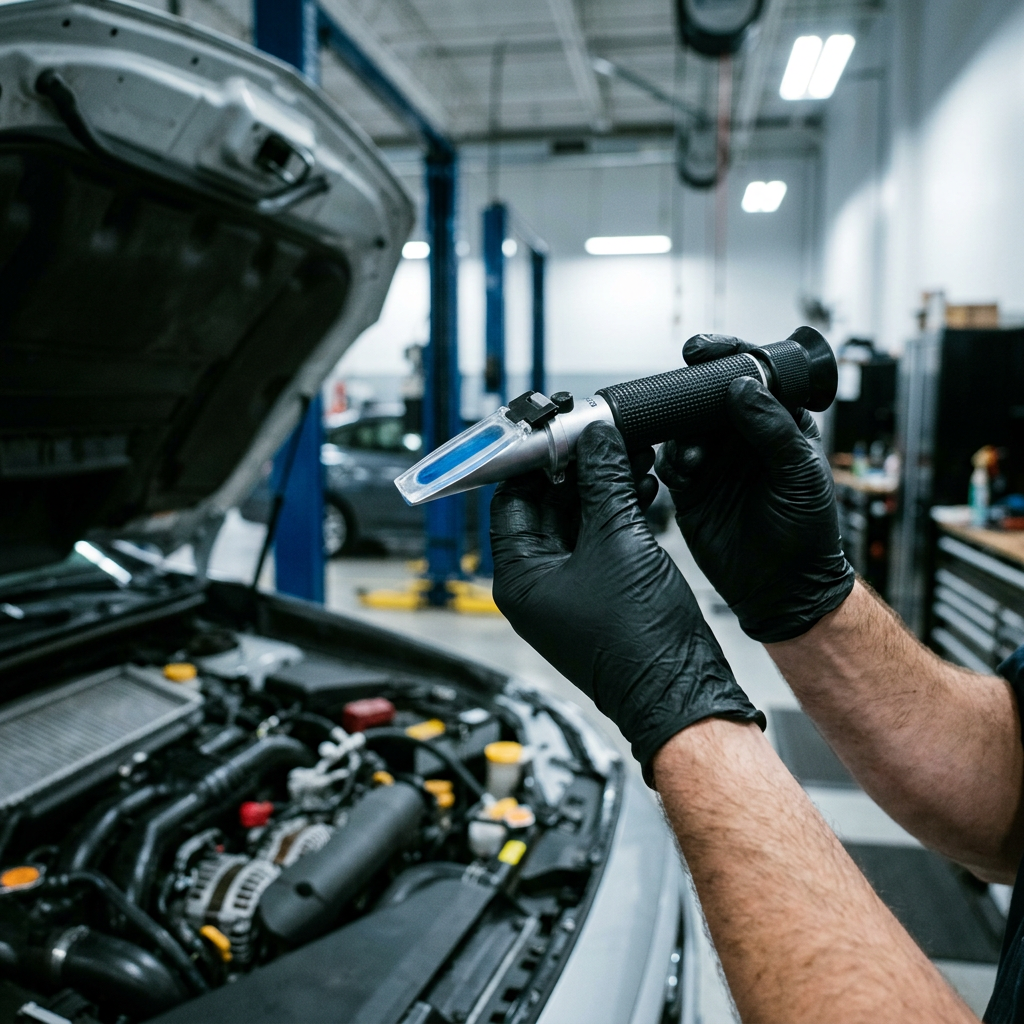
Using an optical refractometer or hydrometer, check the specific gravity of your cooling system. Pure Genuine Subaru Long Life Super Coolant mixed at a 50/50 ratio with deionized water provides freeze protection down to -34°F (-37°C) and boiling protection up to 265°F (129°C) under pressure.
Radiator Cap & Hose Elasticity Inspections Inspect upper and lower radiator hoses for micro-cracking, spongy soft spots, or hardened plastic feel. Check the radiator cap spring pressure; a failing cap seal lowers system pressure, boiling off coolant prematurely during cold-weather commutes.
Ensure your Subaru is fully prepared for upcoming severe freeze warnings with authentic Subaru fluids and factory inspection services.
Schedule Your Complimentary Winter Battery and HVAC Inspection at Hawk Subaru
At Hawk Subaru in Plainfield, we take the stress out of winter vehicle maintenance. Our state-of-the-art service facility features factory-trained Subaru master technicians equipped with specialized diagnostic toolsets specifically calibrated for Symmetrical All-Wheel Drive models.
Visit our Express Service bay for a fast, multi-point winter checkup that includes high-frequency conductance battery testing, terminal cleaning, alternator charging output verification, cabin filter check, and coolant refractometer analysis. Should your vehicle require a replacement, we stock Genuine Subaru replacement batteries backed by nationwide multi-year warranty coverage.
Relax in our comfortable customer lounge featuring complimentary Wi-Fi, premium coffee, and quiet workspaces while our team prepares your vehicle for Chicagoland's cold season.
Protect Your Subaru Against Winter Freezes at Hawk Subaru in Plainfield, IL
Don't wait for the first severe November freeze to find out if your battery can handle Chicagoland weather. Proactive seasonal maintenance is the key to effortless starting, clear visibility, and reliable heating all winter long. Drivers across Plainfield, Joliet, Naperville, and surrounding Will County communities count on Hawk Subaru for expert automotive care.