Do AGM Batteries Charge Faster in Cold Weather Than Flooded Lead-Acid Batteries?
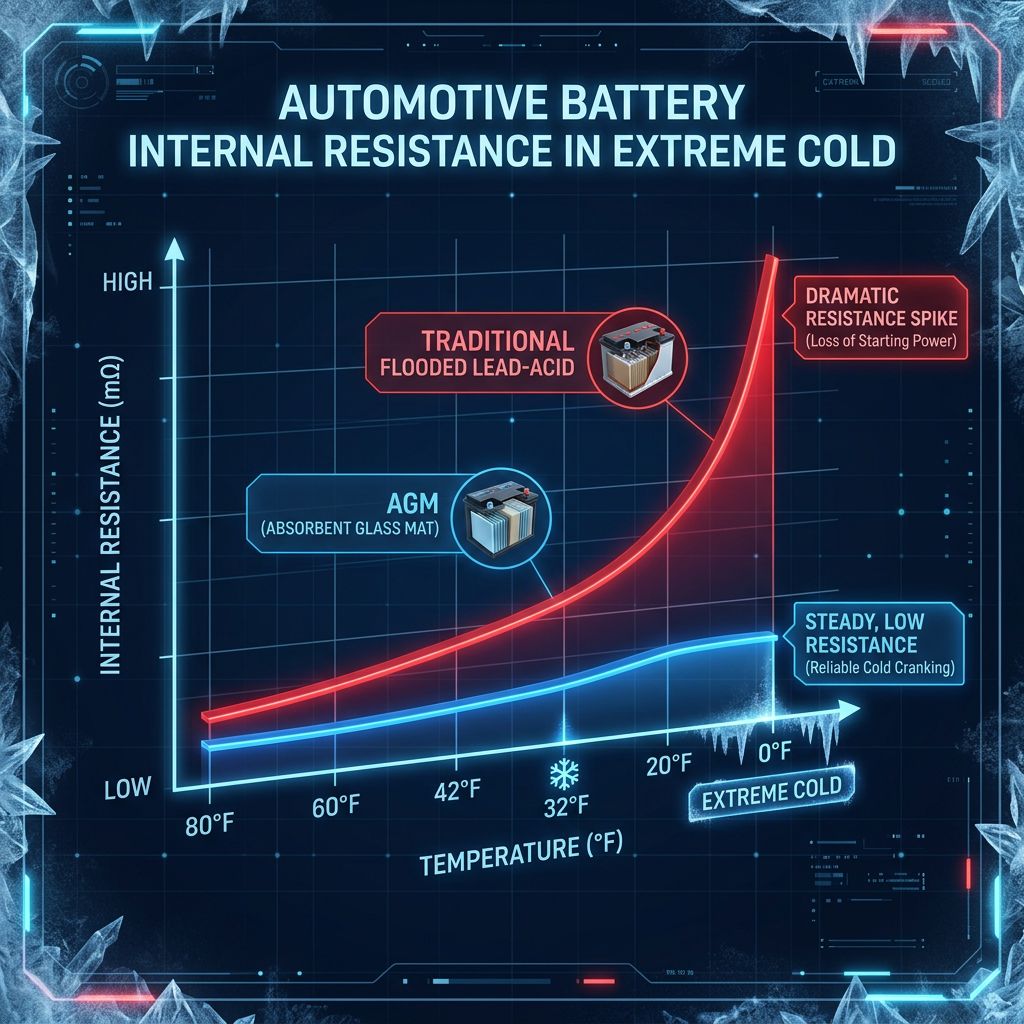
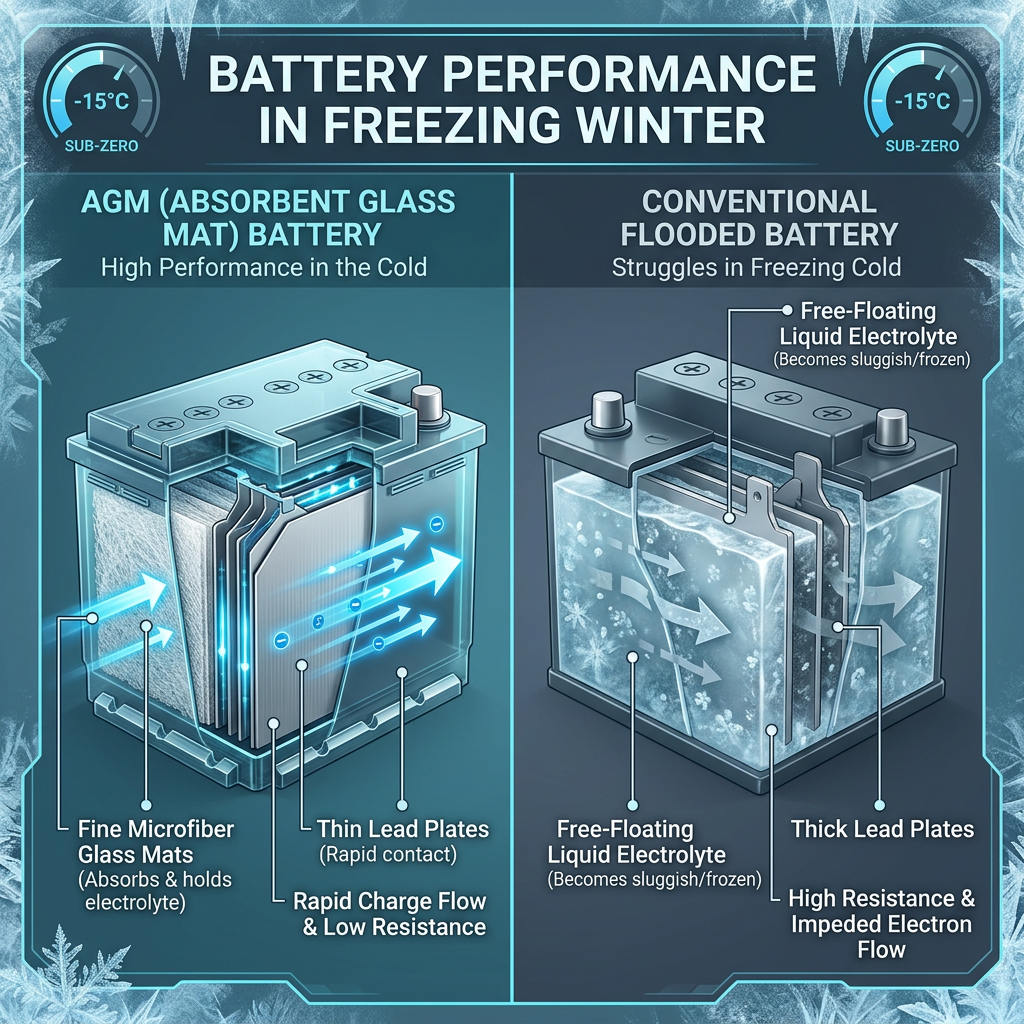
Yes, Absorbent Glass Mat (AGM) batteries charge up to 5 times faster in sub-zero cold weather than conventional flooded lead-acid batteries. When winter temperatures plunge across Plainfield, Joliet, and Naperville, the chemical reactions inside every car battery slow dramatically. However, AGM batteries feature micro-fiberglass matting that holds liquid electrolyte in permanent contact with thin, high-purity lead plates. This advanced construction produces exceptionally low internal resistance, allowing your vehicle's alternator to push current back into the battery rapidly—even during short, frigid winter commutes along I-55 and I-80. In contrast, traditional flooded lead-acid batteries rely on free-floating liquid electrolyte that thickens in sub-freezing weather. This fluid sluggishness causes internal electrical resistance to skyrocket when temperatures drop to 0°F or lower. Under these harsh conditions, standard flooded batteries resist accepting alternator charge current for the first 15 to 20 minutes of driving. If your daily commute consists of brief trips to local schools, train stations, or shopping centers, a standard battery will experience chronic undercharging, leading to rapid degradation and surprise dead-battery failures on freezing mornings.
How Do Sub-Zero Temperatures Affect Car Battery Capacity and Resistance?
Every automotive starter battery generates power through an electrochemical reaction between lead dioxide plates and sulfuric acid solution. Heat acts as a catalyst for this chemical reaction, while extreme cold acts as a physical brake. At 80°F, a fully charged automotive battery delivers 100% of its rated storage capacity. When ambient temperatures drop to 32°F, available chemical capacity decreases by roughly 20%. When Will County weather drops to 0°F or below, usable battery power plunges by up to 50%. At the exact same moment battery energy capacity drops by half, internal electrical resistance spikes exponentially. In standard flooded lead-acid batteries, cold temperatures cause the water-and-acid fluid mixture to increase in viscosity. Lead sulfate molecules formed during discharge become stubborn and sluggish, making it exceptionally difficult for electrons to pass through the liquid medium during both discharge and recharge cycles.
Because high internal resistance restricts current flow, an engine starter motor must work significantly harder to turn over freezing crankshafts while drawing from a diminished energy reservoir. If you drive a modern vehicle equipped with demanding safety sensors and digital displays, starting a car with a cold-chilled flooded battery can cause severe voltage sags. Modern drivers in Plainfield can explore options for heavy-duty power demands when they Browse New Inventory equipped with advanced high-output electrical management systems.
AGM vs. Flooded Lead-Acid: Cold-Weather Charge Acceptance Compared
Charge Acceptance at 32°F and 0°F
Charge acceptance measures how efficiently a battery converts incoming alternator amps back into stored chemical potential. At 32°F, a flooded battery absorbs less than half of its maximum charging current rating. At sub-zero temperatures (0°F), flooded charge acceptance drops near zero for initial driving minutes. Conversely, AGM technology maintains high charge acceptance across sub-zero thresholds. Glass mat separators maintain tight contact between electrolyte and lead plates, enabling high current uptake immediately upon engine ignition.
Internal Fiberglass Mat Physics
The secret to AGM performance lies in fine glass fiber mats saturated in pure sulfuric acid. Because there is no free liquid solution to freeze or stratify into separated layers of acid and water, electrolyte concentration remains perfectly uniform. This structural stability eliminates hot-spots and high-resistance zones, allowing electrons to move fluidly through the battery plate grid work even when ambient temperatures fall far below zero.
Short Winter Commute Recovery
Local driving around Plainfield, Joliet, and Naperville frequently involves trips under 15 minutes. A standard flooded battery cannot recharge energy spent during cold cranking within that brief window. Because AGM batteries absorb current up to 5 times faster, an alternator can restore 100% of cranking discharge during brief commuter runs, shielding the battery from progressive winter undercharging.
What Cold Cranking Amps (CCA) Rating Is Needed for Sub-Zero Winter Commutes?
Cold Cranking Amps (CCA) is an industry-standard rating defined as the total number of amperes a fresh 12-volt battery can deliver at 0°F (-18°C) for 30 seconds while maintaining a minimum operational voltage of 7.2 volts. For Northern Illinois commuters facing harsh Midwest winters, understanding CCA ratings is critical to avoiding breakdown emergencies. Standard compact or midsize passenger sedans require a minimum rating of 500 to 600 CCA. However, for dependable winter performance in crossover SUVs, all-wheel-drive vehicles, and multi-cylinder engines, automotive engineers strongly recommend 650 to 850 CCA. When sub-zero wind chills hit I-55, cold engine block metal thickens internal motor oil to syrup-like consistency. Turning over a frozen engine requires double the rotational torque compared to a warm summer morning.
AGM batteries excel in high-CCA applications because their thin, packed lead plates provide significantly more surface area than thick flooded plates. This delivers a massive burst of starting surge power without dropping system voltage below critical ECU thresholds. Drivers can Schedule Your Service Today at Hawk Subaru to get a precise digital load test of their battery's current CCA capacity.
How Does Sub-Zero Cold Affect Automotive HVAC and Defrosting Performance?
Vehicle heating and defrosting systems are heavy electrical consumers during Midwest winters. On a freezing Plainfield morning, a typical driver starts their vehicle and immediately activates maximum climate control features: high-speed front blower motors, electric rear window defrosters, heated side mirrors, heated seats, and heated steering wheels. Combined, these accessory loads can pull 60 to 90 amperes of continuous current from the electrical infrastructure. This intense electrical demand directly competes with your battery for power produced by the alternator. During idling or stop-and-go traffic on crowded arterial roads, alternators operate at lower RPMs and produce limited surplus amperage. If your car relies on a standard flooded battery with sluggish charge acceptance, the alternator's entire output goes toward powering the HVAC grid, leaving zero net current to recharge the depleted battery. Fast-charging AGM batteries resolve this continuous electrical bottleneck. Because AGM units absorb charge rapidly during brief moments of engine acceleration, they act as a stable electrical buffer. This prevents blower fan speed drops, keeps windshield defrosters clear, and ensures seat heaters warm up quickly without causing headlight flickering or low voltage alerts across dashboard instruments.
Why Does 0W-20 or 5W-30 Synthetic Oil Flow Better Than Conventional Oil in Freezing Weather?
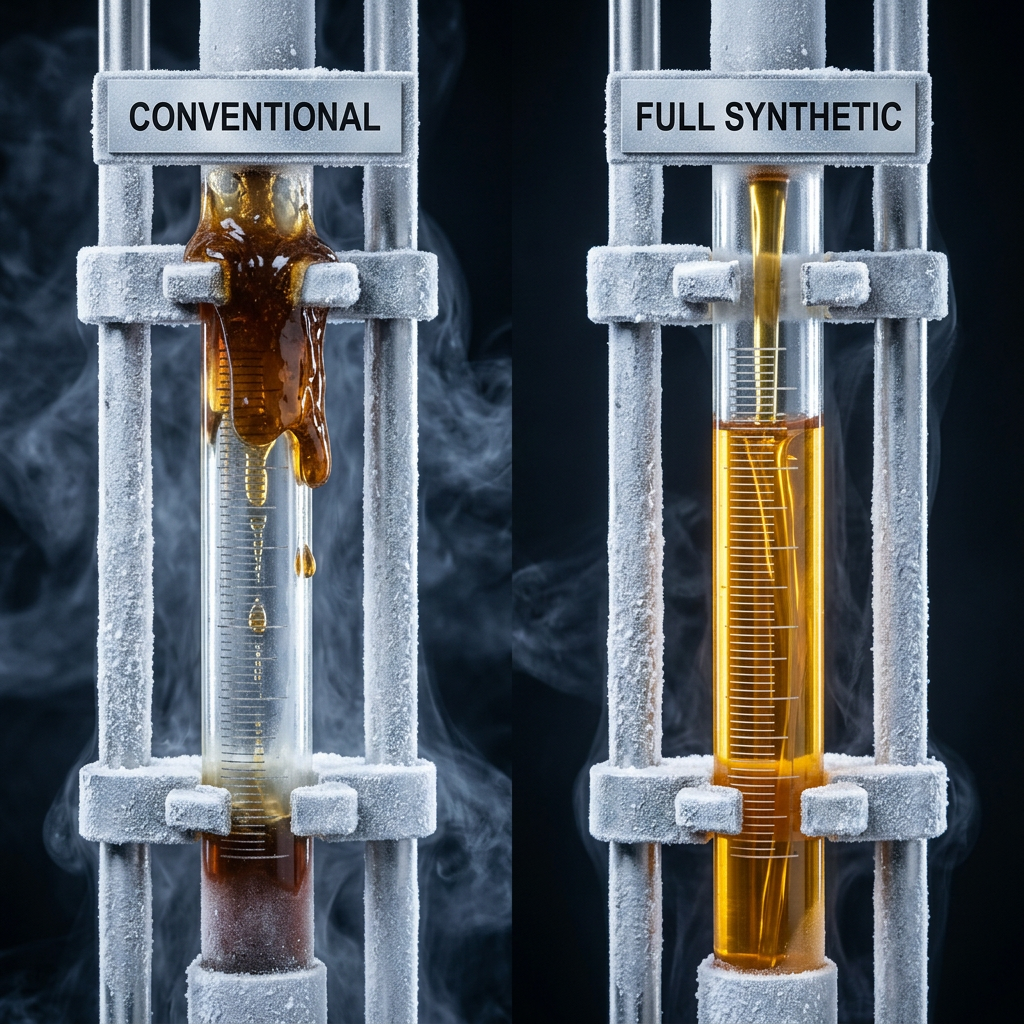
Engine oil viscosity plays a direct, measurable role in cold-weather battery health. When temperatures plunge below zero, conventional mineral-based motor oils thicken into semi-solid gel due to naturally occurring paraffin wax crystals. When you turn the ignition key, your starter motor must push engine pistons against this immense internal fluid drag. Full synthetic motor oils—such as 0W-20 or 5W-30 grades specified for modern Subaru engines—are engineered from uniform molecular base stocks containing zero paraffin wax. The '0W' or '5W' winter rating signifies exceptional fluid mobility at temperatures as low as -35°F (-37°C). Synthetic oil flows instantly upon cold startup, providing immediate lubrication to overhead camshafts and valve trains while reducing cranking torque resistance by up to 40%.
By minimizing initial cranking resistance, synthetic oil drastically decreases starter motor current draw from hundreds of amps down to normal operational levels. Less energy drawn during ignition means the battery experiences a shallower depth of discharge. Paired with a fast-charging AGM battery, synthetic oil enables near-instant engine starts and rapid voltage recovery during extreme winter conditions.
How Much Does It Cost to Replace a Car Battery with a Heavy-Duty Cold-Weather Battery?
Upfront Replacement Costs
Standard flooded lead-acid replacement batteries typically cost between $130 and $180, depending on group size and CCA rating. Heavy-duty AGM batteries range from $220 to $320. While AGM carries a higher initial investment, its advanced lead plate purity and acid-saturated mats yield double or triple the operational cycle life of flooded batteries in extreme climates.
Long-Term Value & Warranty
Flooded batteries in Northern Illinois usually last 3 to 4 years before suffering heat-aging and sub-zero voltage drops. Quality AGM batteries routinely provide 5 to 7 years of reliable service. AGM batteries come backed by longer full-replacement factory warranties (typically 36 to 48 months), eliminating towing fees and emergency jump-start costs on winter highways.
Factory Parts & Installation
Professional installation includes terminal anti-corrosion protection, battery tray cleanup, digital system registration, and computer memory retention. Drivers shopping for quality used vehicles should inspect battery history when they Browse Used Inventory. Visit our authorized dealership Parts Center to locate exact OEM-spec AGM replacement batteries for your vehicle model.
I-55 & I-80 Winter Commute Readiness: Sub-Zero Battery and HVAC Inspection Checklist
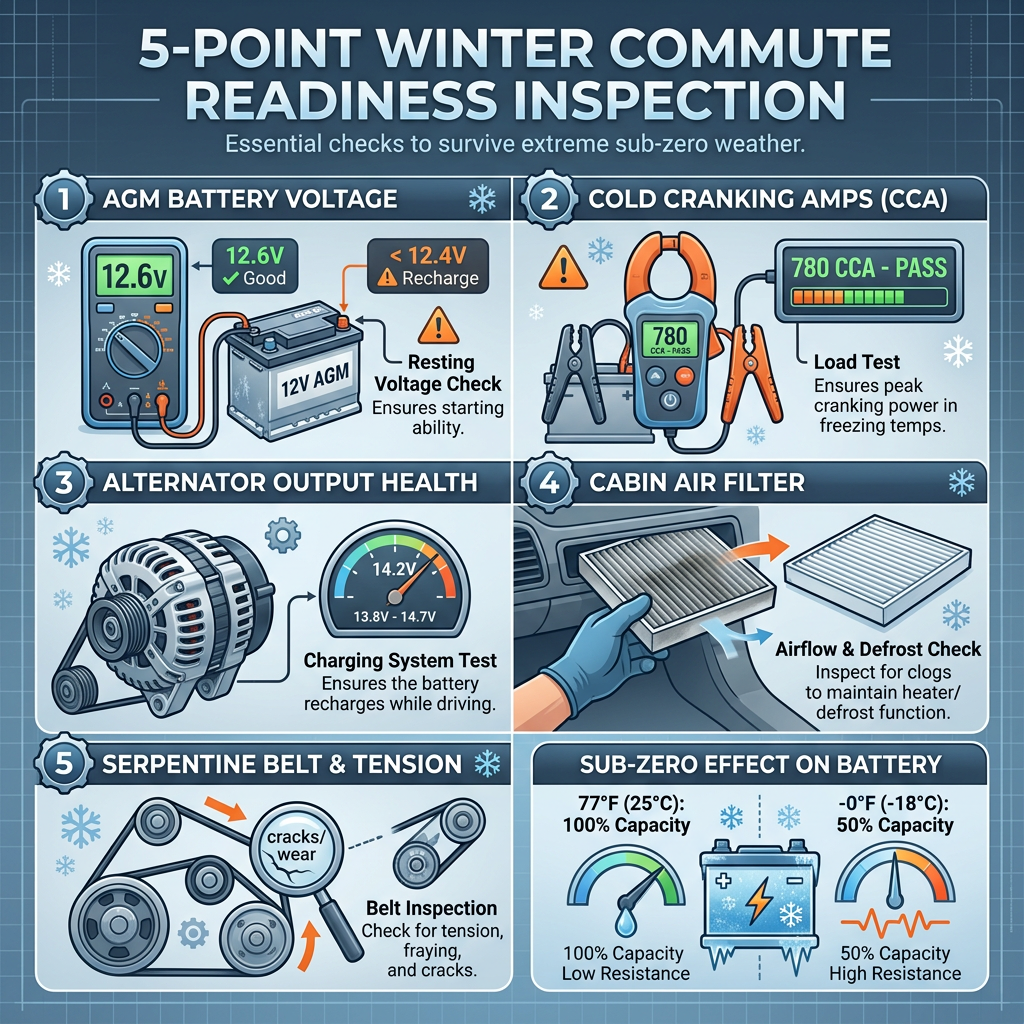
High-speed winter commuting along major corridors like I-55, I-80, and Route 59 demands zero tolerance for electrical component failure. A sudden battery death during rush hour in below-zero weather creates severe safety risks. Perform or request this essential 5-point inspection before peak winter weather strikes:
|
Inspection Point
|
Target Specification
|
Potential Failure Symptom
|
Recommended Corrective Action
|
|
1. Terminal & Post Condition
|
Clean metal, zero white powder
|
Slow crank, intermittent starting
|
Clean wire brushes & coat with grease
|
|
2. Open-Circuit Voltage
|
12.6V to 12.8V fully charged
|
Voltage drops under 12.2V at rest
|
Perform deep AGM smart recondition
|
|
3. Digital CCA Load Test
|
> 80% of original factory rating
|
Starter grinds or clicks in cold
|
Replace with high-CCA AGM battery
|
|
4. Alternator Output Voltage
|
13.8V to 14.7V under full load
|
Dimming headlights, battery icon
|
Inspect alternator belt & regulator
|
|
5. Cabin Air Filter & HVAC
|
Unrestricted airflow, clean filter
|
Foggy windows, weak blower output
|
Replace cabin filter & test defroster
|
How Can Plainfield Drivers Check Whether a Battery Is Ready for Sub-Zero I-55 and I-80 Commutes?
Digital Multimeter Voltage Testing
Drivers can perform a preliminary battery check using a basic digital multimeter set to DC volts. Measure state of charge after the engine has been turned off for at least 4 hours: • 12.6V to 12.8V: 100% Fully Charged (Ready for sub-zero weather) • 12.4V: 75% Charged (Acceptable, monitor closely) • 12.2V or lower: 50% or less (High risk of freezing and failure) Next, have an assistant crank the engine while observing multimeter voltage. If cranking voltage dips below 9.6 volts at freezing temperatures, internal plate degradation has occurred.
Recognizing Warning Signs & Battery Age
Pay close attention to subtle vehicle warning signs during early morning starts. A hesitant 'rrm-rrm-rrm' cranking rhythm, flickering interior instrument panels, erratic power window speeds, or delayed EyeSight system startup indicate low system voltage. Check the date stamp sticker on top or side of your battery casing. If your standard flooded battery is past its 36-month mark in Will County, upgrading before severe winter freezes arrive is the safest strategy. Drivers looking to trade up to modern AWD reliability can Value Your Trade-In online in minutes.
Preventing Winter Sulfation: Best Practices for AGM Battery Maintenance
Understanding Lead Sulfation
Lead sulfation is the primary killer of automotive batteries. Whenever a battery remains partially discharged below 12.4 volts, soft lead sulfate crystals harden on internal plates. In cold weather, chronic undercharging accelerates crystal crystallization, permanently blocking plate surface area and destroying reserve capacity.
Using Smart AGM Chargers
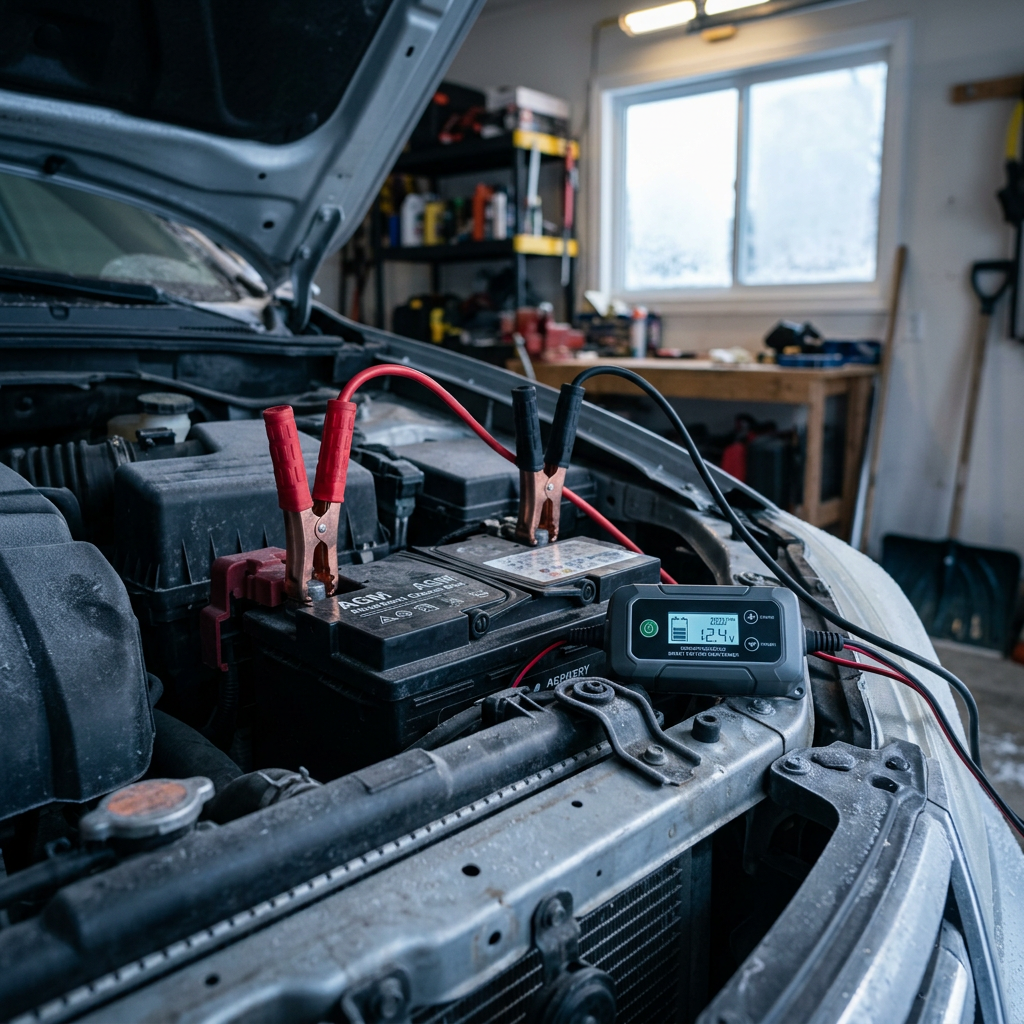
If your vehicle remains parked in an unheated garage during extended cold spells, connect an automatic smart battery maintainer equipped with a dedicated AGM charging profile. Smart maintainers supply microprocessor-controlled float voltage (13.5V to 13.8V) that keeps electrolyte activated without overcharging delicate glass mats.
Avoid taking frequent 2-minute trips without occasional longer highway drives along I-55. Periodic diagnostic health checks prevent unexpected failures. Schedule Your Service Today for professional state-of-health diagnostics.
Subaru All-Wheel Drive and Electronic Systems: Why AGM Is Ideal for Modern Vehicles
Modern Subaru vehicles are renowned for their legendary Symmetrical All-Wheel Drive (AWD), EyeSight® Driver Assist Technology, and advanced safety features. However, driving all four wheels continuously while processing real-time stereo camera imagery and electronic stability management creates continuous electrical baseline loads. Additionally, Auto Start-Stop technology turns the engine off at traffic stops around Plainfield to conserve fuel and lower emissions. Restarting the engine dozens of times during a single cross-town drive requires rapid, high-amperage power discharge followed immediately by instant battery recharge.
Conventional flooded lead-acid batteries simply cannot handle the high-frequency charge/discharge cycles demanded by modern Auto Start-Stop and AWD control modules in cold weather. Voltage drops caused by weak flooded batteries can trigger spurious dashboard warning indicators or disable driver assist features. AGM batteries are designed specifically for high-load, cyclic vehicle architectures. Their superior charge acceptance ensures your Subaru Symmetrical AWD and safety suites remain fully operational, even in sub-zero winter storms. If you are shopping for a late-model vehicle equipped with these capabilities, explore our selection and Explore Certified Pre-Owned Vehicles today.
Schedule Your Winter Battery and HVAC Inspection at Hawk Subaru in Plainfield
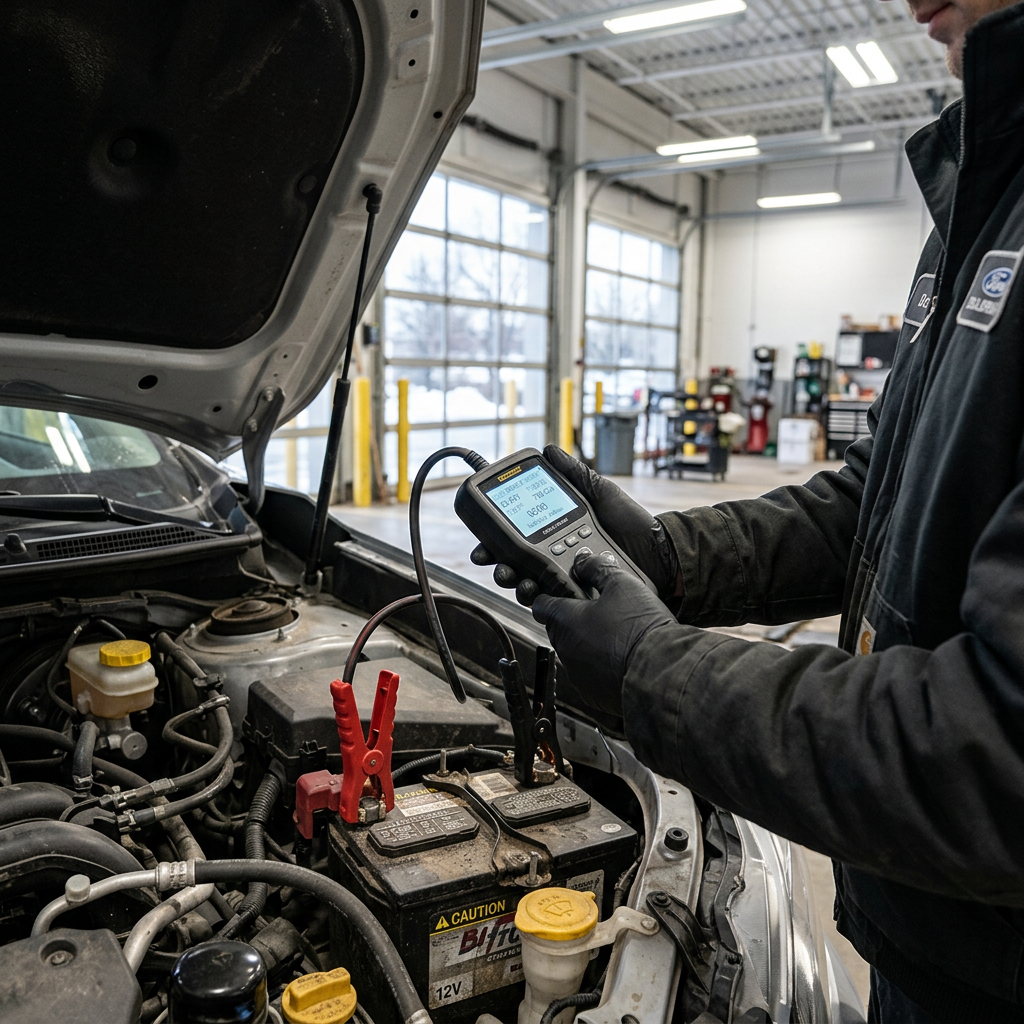
Don't let sub-zero Midwest weather leave you stranded on I-55 or I-80 this winter. The factory-certified service team at Hawk Subaru is here to ensure your vehicle starts reliably every morning. Our technicians use advanced conductance analyzers to evaluate your battery's true Cold Cranking Amps, internal resistance, and overall charging system health. Whether you need a heavy-duty AGM battery upgrade, a synthetic oil change, or a complete HVAC defrosting inspection, Hawk Subaru provides top-tier automotive care for drivers across Plainfield, Joliet, and Naperville. Planning for your next vehicle purchase? You can Get Pre-Approved for Financing online before your service appointment. Visit our state-of-the-art service facility at 2401 Rte 59, Plainfield, IL 60586 or Call us at (815) 725-3789. Click below to Get Directions to Hawk Subaru and experience winter driving peace of mind.