How Subaru Symmetrical AWD Mastered Wet Fall Leaves and Autumn Rain in Illinois
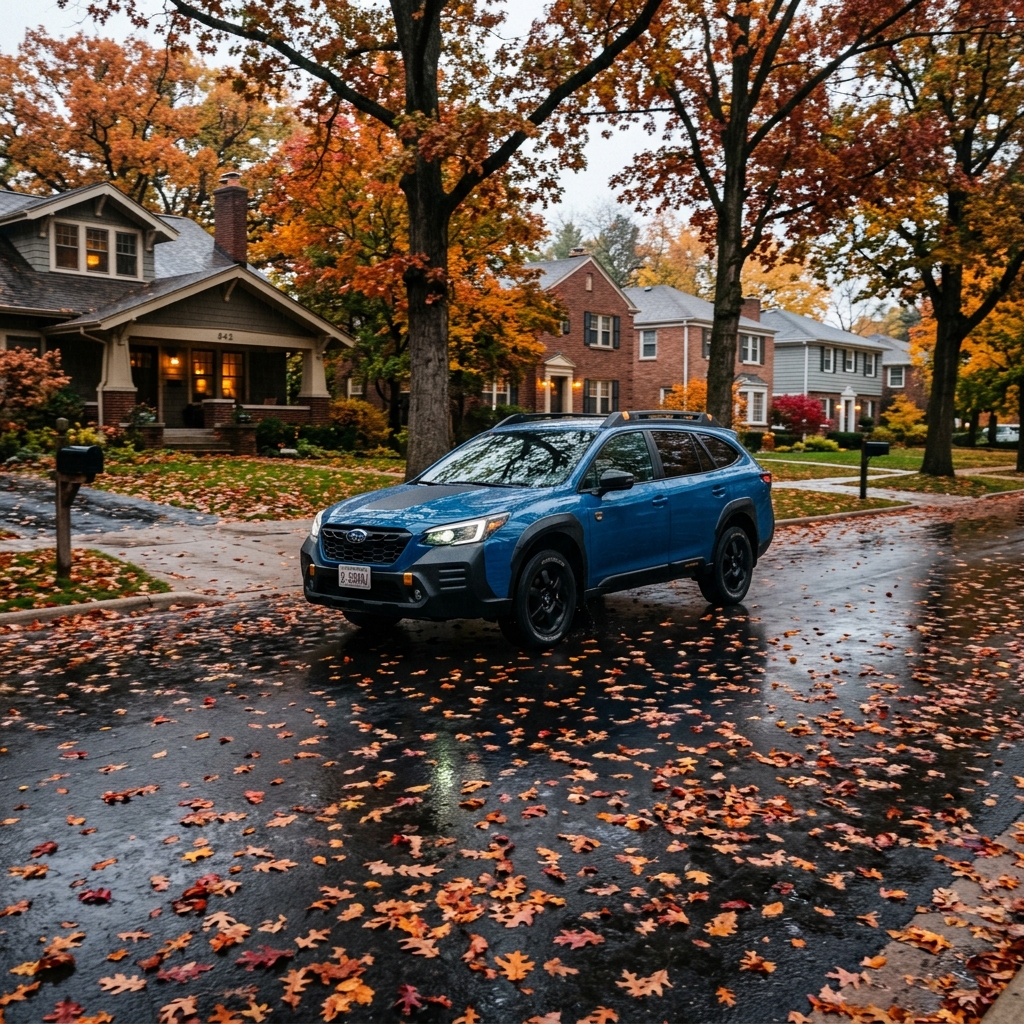
As autumn unfolds across Northern Illinois, the landscape transforms into a stunning display of crimson, gold, and amber. However, for drivers commuting along Route 59, Lincoln Highway, or I-55 in Will County, fall brings a unique set of hazardous driving conditions. Rainfall combined with decaying fallen leaves creates a treacherous surface that can severely compromise tire traction without warning.
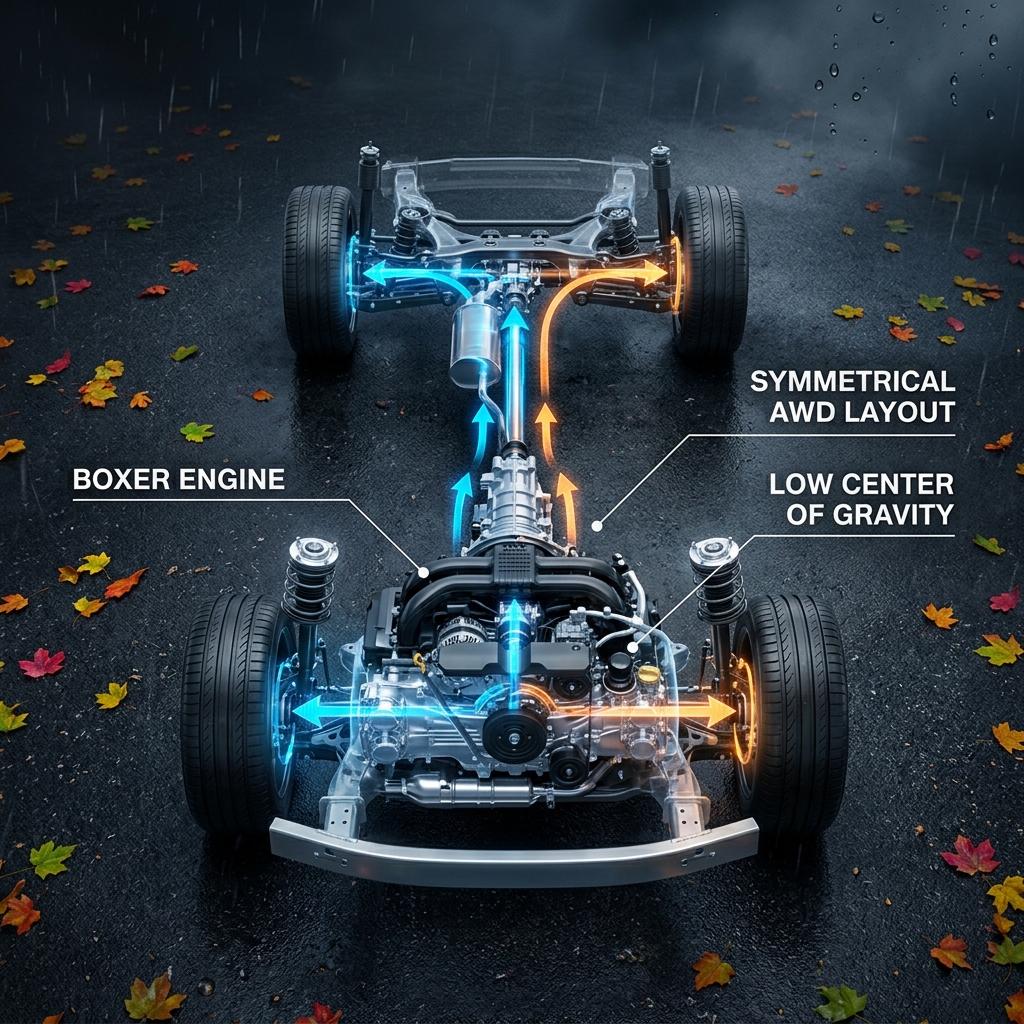
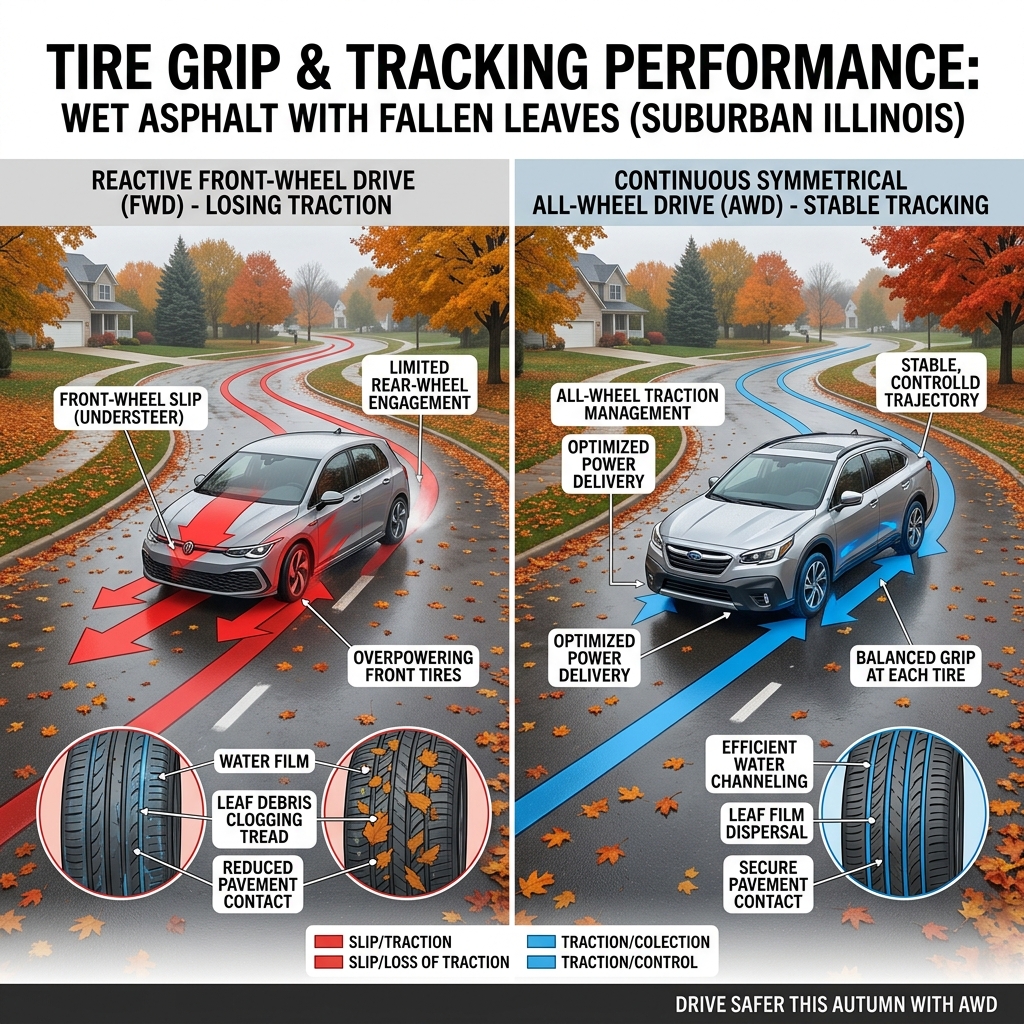
Subaru Symmetrical All-Wheel Drive (AWD) delivers superior, continuous traction on wet fall foliage and autumn rain through its balanced, linear layout. Unlike traditional part-time or reactive AWD systems that wait for a wheel to slip before routing power, Subaru’s full-time system continuously distributes energy to all four wheels simultaneously. This proactive approach prevents slippage before it starts, giving drivers in Plainfield, Naperville, and Joliet unmatched stability and peace of mind during unpredictable Midwestern autumn weather.
Why Wet Fallen Leaves Are as Slippery as Ice for Drivers in Will County
Many drivers underestimate wet leaves, assuming they are merely a cosmetic autumnal nuisance. In reality, automotive safety experts compare driving over wet fallen foliage to driving on a sheet of black ice. When leaves blanket the roads around Will County—especially under mature oak and maple canopies in established neighborhood developments—they trap moisture between the pavement and the tire tread. Furthermore, as fallen leaves decompose, they release natural oils and tannic acid. When mixed with rain water, this chemical combination produces a slimy micro-thin film on asphalt. This dramatically reduces the coefficient of friction, lengthening stopping distances by up to 40% and making quick lane changes or tight cornering hazardous.
Key Autumn Traction Hazards in Northern Illinois: • Hidden Road Hazards: Leaves mask severe potholes, deep puddles, and curb edges on local municipal streets. • Sudden Friction Drops: Moving from bare pavement to leaf-covered intersections causes instant wheel slip. • Tannic Acid Film: Organic breakdown creates a slick chemical barrier that prevents rubber tires from biting into pavement. • Morning Frost Fusion: Late October temperatures often freeze damp leaves overnight, turning residential turns into sheer ice patches. Understanding these physical friction changes underscores why mechanical traction control and intelligent AWD engineering are non-negotiable for autumn safety.
The Engineering Behind Subaru Symmetrical All-Wheel Drive Continuous Traction
The mechanical foundation of Subaru Symmetrical AWD lies in structural symmetry and balance. Unlike transverse-engine AWD setups—which bolt heavy secondary transfer cases onto one side of the engine bay—the entire Subaru powertrain is laid out along the vehicle's centerline. At the heart of this system is the Subaru BOXER engine. Horizontal piston movement allows the engine to sit low in the chassis, dramatically lowering the center of gravity. When traveling down slick, rain-soaked roads along the DuPage River corridor, a lower center of gravity reduces body roll and weight transfer, keeping tire contact patches firmly pressed against wet pavement.
Subaru utilizes an electronically controlled variable transfer clutch that actively monitors wheel speed, throttle position, steering wheel angle, and yaw rate. Power is dynamically routed between front and rear axles in real time. If front wheels cross a slick leaf patch, torque is instantly shifted rearward to maintain uninterrupted forward momentum without violent slippage or vehicle instability.
What Subaru Driving Modes Help with Slippery Fall and Early Winter Conditions in Plainfield?
Subaru equips its crossovers with advanced driver assistance software designed to tackle unpredictable autumn terrain across Will and DuPage counties.
Standard X-MODE®
Takes control of engine output, transmission ratio, and AWD torque split at low speeds. Ideal for navigating leaf-covered driveways, neighborhood streets, and wet unpaved park paths.
Dual-Function X-MODE®
Offers specialized settings for 'Snow/Dirt' and 'Deep Snow/Mud'. The Deep Mud setting allows intentional wheel spin to cut through thick layers of wet, decaying foliage and soft earth.
Vehicle Dynamics Control (VDC)
Monitors sensors to detect deviation between driver steering input and vehicle direction. Applies individual wheel brakes to pull the car back on line if wet leaves cause sideways sliding.
How Subaru EyeSight Detects Hazards in Autumn Fog or Heavy Rain
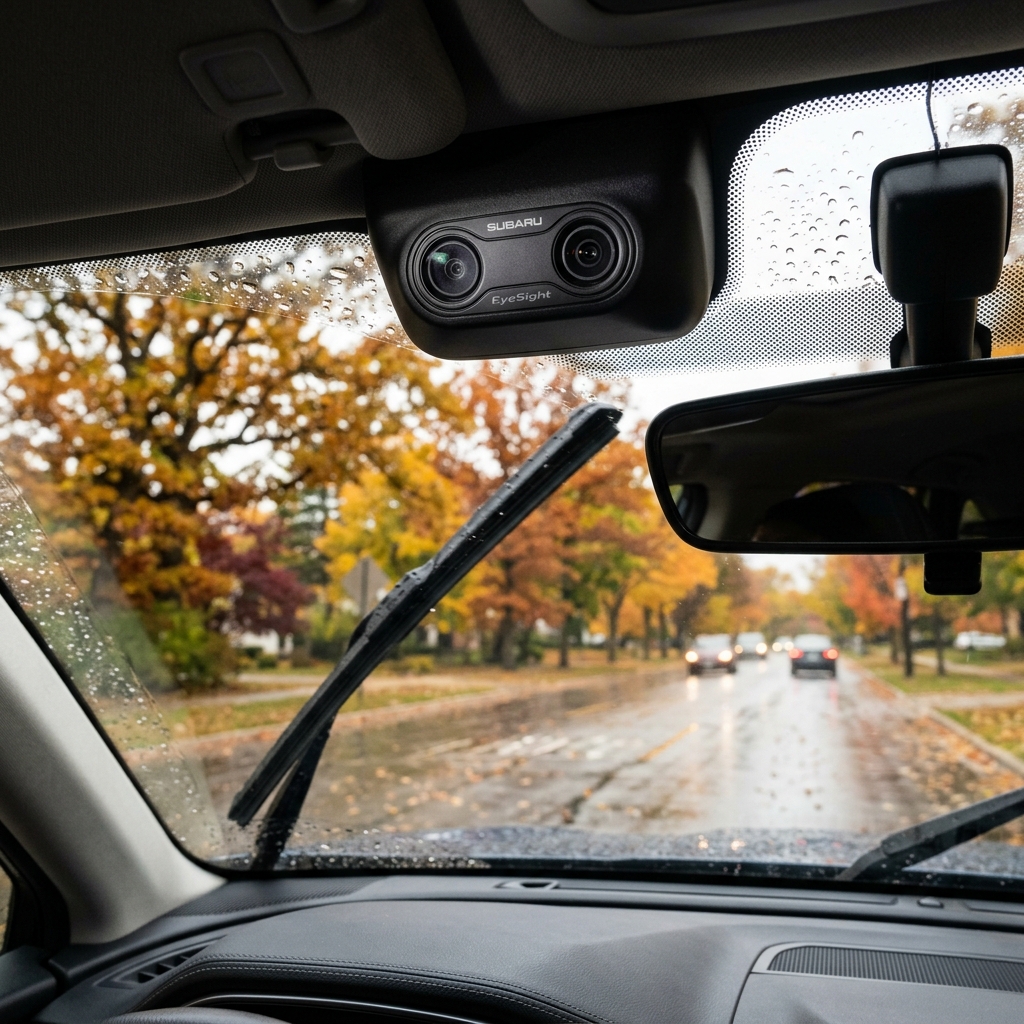
Autumn in Northern Illinois brings dense morning fog along low-lying river routes and sudden heavy rainstorms during evening commutes. Subaru’s award-winning EyeSight® Driver Assist Technology acts as an extra pair of eyes focused on the road ahead. Dual color stereo cameras mounted near the rearview mirror continuously process 3D video image streams. Advanced processing algorithms identify brake lights, pedestrians, lane markings, and obstacles ahead even when heavy rain or fog reduces human visibility.
Key safety protections include: • Pre-Collision Braking: Applies full braking power if an sudden stop occurs ahead on wet asphalt. • Adaptive Cruise Control with Lane Centering: Maintains safe distance from vehicles ahead during blinding autumn cloudbursts. • Automatic Emergency Steering: Helps steer around obstacles when collision is imminent on slick surfaces.
Do You Need Special Tires for Fall Driving in Illinois with a Subaru?
Even the most sophisticated All-Wheel Drive system relies on tire rubber to connect with the road. Autumn in Chicagoland introduces temperature shifts that directly impact tire flexibility and traction.
The 45°F Threshold
When ambient temperatures drop below 45°F, summer and standard touring tire rubber compounds begin to harden. Hard rubber loses its ability to conform to surface irregularities, reducing grip on wet pavement and cold fallen leaves.
Tread Depth Requirements
Driving through standing rain puddles requires deep tread channels to evacuate water. A minimum tread depth of 4/32” is essential for fall in Illinois; anything lower risks hydroplaning over wet leaf layers.
All-Weather vs Winter Tires
Many Subaru owners transition to All-Weather tires (rated with the 3-Peak Mountain Snowflake symbol) which remain pliable in cold fall wetness without needing early spring swaps.
Navigating Chicagoland Fall Commutes: Plainfield, Naperville, and Joliet Routes
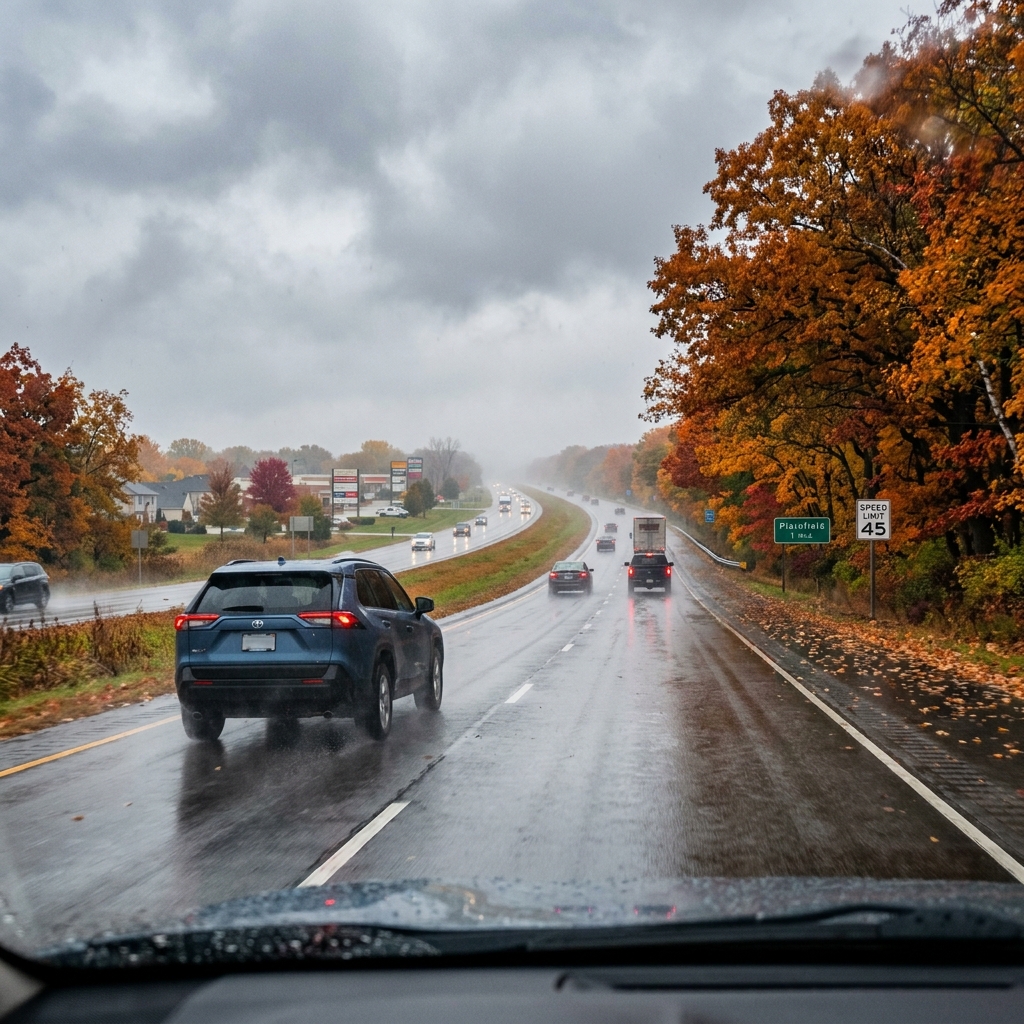
Commuting through the southwestern suburbs of Chicago presents specific seasonal challenges. Heavy agricultural and commercial vehicle traffic along Route 59 and I-55 packs down wet foliage into dense, slick mats on exit ramps and intersection turn lanes. Meanwhile, heavily tree-lined residential corridors—such as 95th Street connecting Plainfield and Naperville—accumulate thick drifts of damp leaves that conceal road markers and curb lines.
To ensure smooth commutes during fall rainstorms, local drivers should maintain increased follow distances, smooth out steering inputs, and rely on Subaru's responsive drivetrain. If you ever need expert safety advice or vehicle maintenance, visit Hawk Subaru located at 2401 Rte 59 in Plainfield. Get Directions to Hawk Subaru to test drive a model today, or Call us at (815) 725-3789 with any questions.
Which Crossover Offers More Cargo Space for Fall Road Trips and Outdoor Gear?
Planning an autumn weekend camping trip to Starved Rock State Park or loading up tailgate supplies for a local high school football game? Subaru offers versatile crossover options with water-resistant interior materials and rugged roof rails.
|
Subaru Model
|
Max Cargo Volume (Seats Down)
|
Roof Rail Load Capacity
|
Key Autumn Utility Feature
|
|
Crosstrek
|
54.9 cu. ft.
|
Up to 700 lbs static
|
Compact size with 8.7 in. ground clearance
|
|
Forester
|
74.2 cu. ft.
|
Up to 800 lbs static
|
Extra-wide rear gate opening for bulky gear
|
|
Outback
|
75.6 cu. ft.
|
150 lbs dynamic / crossbars built-in
|
StarTex® water-repellent upholstery available
|
|
Ascent
|
75.6 - 86.5 cu. ft.
|
150 lbs dynamic
|
Standard 3-row seating for up to 8 passengers
|
Whether you choose the compact Crosstrek or the spacious 3-row Ascent, every Subaru model provides standard Symmetrical AWD and low lift-over height for easy loading of wet hiking boots, jackets, and camping gear. You can Browse New Inventory or Explore Certified Pre-Owned Vehicles online to compare models.
Essential Autumn Vehicle Maintenance Checklist for Illinois Drivers
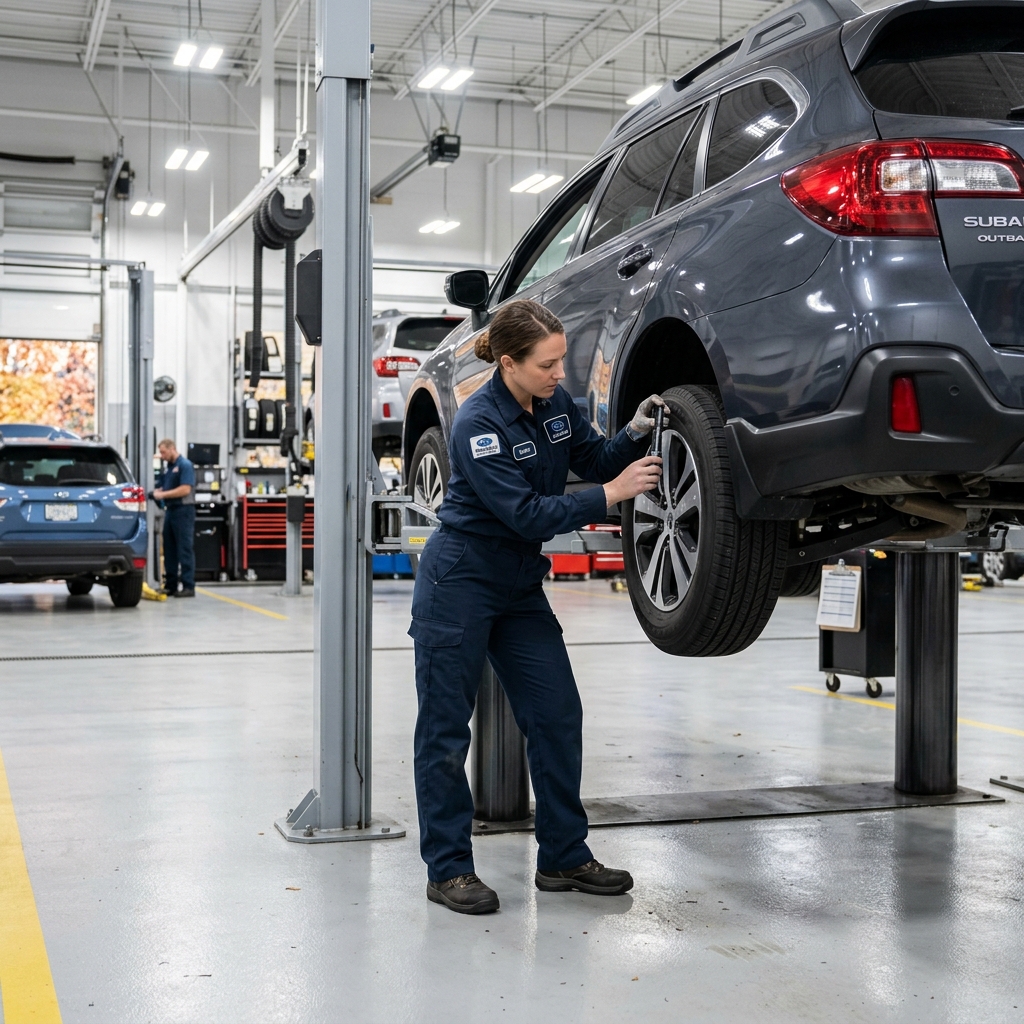
Preparing your vehicle for fall rain and upcoming winter freezes prevents unexpected breakdowns on cold mornings. Our factory-trained technicians recommend reviewing this simple autumn checklist: 1. Inspect Wiper Blades: Summer sun degrades rubber blades, causing streaking during heavy autumn rain. Replace with winter-rated beam blades. 2. Test Battery Health: Cold temperatures strain battery capacity. Ensure clean terminals and strong cold-cranking amps (CCA). 3. Check Brake Pads & Rotors: Crisp braking response is crucial when stopping on slick leaves. 4. Inspect All Lighting: Shorter daylight hours require clear headlights, taillights, and fog lights. 5. Verify HVAC & Defroster: Ensure cabin air filters are clean to prevent window fogging during humid fall rains.
Need replacement wiper blades or genuine Subaru accessories? Visit our Parts Center or schedule your seasonal checkup online.
What Fall Finance Rate Specials and Trade-In Offers Are Available on New Subaru Models?
Competitive Autumn Financing & Lease Specials
Fall is an exceptional season to upgrade your vehicle. Hawk Subaru offers low promotional APR financing rates on select new Outback, Forester, and Crosstrek models, as well as attractive low-monthly-payment lease options tailored to Chicagoland drivers. You can easily Get Pre-Approved for Financing online from the comfort of your home to streamline your buying experience.
Top Dollar for Your Trade-In Vehicle
Pre-owned vehicle demand remains high throughout Will County. If you currently drive a front-wheel-drive sedan or older vehicle and want the safety of Symmetrical AWD before winter hits, now is the ideal time to swap. Use our digital trade valuation tool to get a fast, market-reflective estimate for your current vehicle.
Real-World Performance: Comparing Symmetrical AWD to Front-Wheel Drive Competitors
Not all All-Wheel Drive systems are created equal. Understanding how Subaru’s full-time system compares to slip-first reactive systems and traditional front-wheel drive highlights its immense safety advantage on wet autumn roads.
|
Drivetrain Type
|
Wet Leaf Traction Response
|
Cornering Stability on Wet Asphalt
|
Power Delivery Mechanism
|
|
Subaru Symmetrical AWD
|
Immediate – Power is continuously fed to all 4 wheels before slip occurs
|
High – Symmetrical weight distribution minimizes understeer
|
Full-time continuous active torque split
|
|
Part-Time Reactive AWD
|
Delayed – Front wheels must slip first before rear axle engages
|
Moderate – Sudden torque shifts during turns can unsettle balance
|
Front-wheel-drive biased until slippage is detected
|
|
Standard Front-Wheel Drive (FWD)
|
Poor – Front steering wheels double as drive wheels, causing spin on leaves
|
Lower – Prone to severe understeer on slick surfaces
|
Power routed exclusively to front axle
|
Drivers upgrading from front-wheel-drive vehicles frequently express astonishment at how effortless wet cornering and acceleration feel in a Subaru. Explore our Browse Used Inventory to see reliable AWD options across all budget ranges.
Experience Subaru Symmetrical All-Wheel Drive at Hawk Subaru in Plainfield
Don't let wet leaves and autumn downpours compromise your family's safety on Illinois roads. The best way to understand the engineering advantage of Subaru Symmetrical All-Wheel Drive is to experience it yourself behind the wheel. Visit Hawk Subaru today in Plainfield, IL. Our knowledgeable team is ready to help you explore our full lineup of new and certified pre-owned AWD crossovers, appraise your current trade-in, and guide you through customized finance offers.