Why Fall Temperature Drops Cause Rapid Tire Pressure Loss
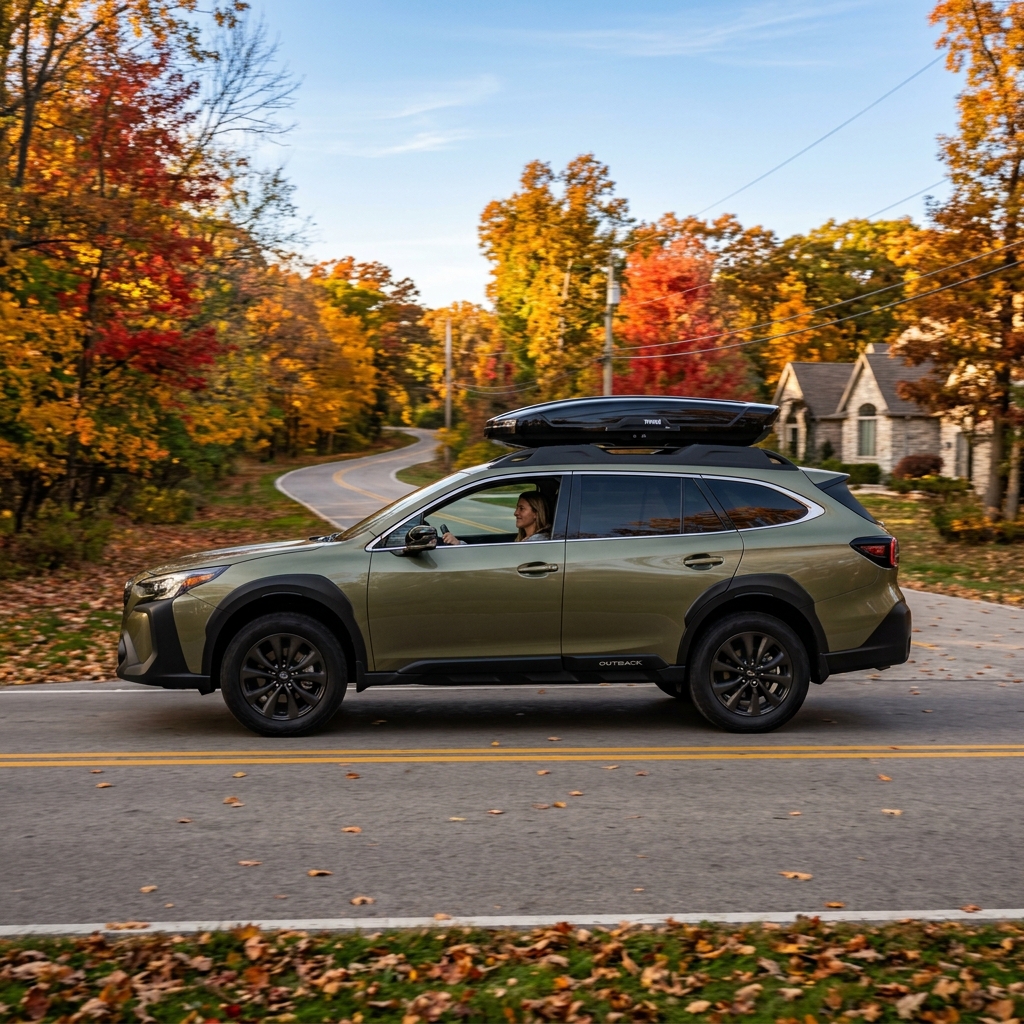
As autumn approaches in Northern Illinois, drivers across Plainfield, Joliet, and Naperville encounter a sudden seasonal shift in climate. While crisp autumn mornings and changing leaves are welcome signs of the season, the accompanying dip in ambient temperature introduces a silent threat to your vehicle's safety, efficiency, and overall performance: rapid tire pressure loss. For every 10°F drop in outside temperature, your tires lose approximately 1 Pound per Square Inch (PSI) of internal air pressure due to thermal contraction. When overnight temperatures plunge from brisk September evenings into October freezes, your tires can easily drop 3 to 5 PSI overnight without a single puncture or leak.
Driving on soft or underinflated tires severely compromises your Subaru's handling dynamics, emergency stopping distances, fuel economy, and long-term tread longevity along high-speed corridors like Interstate 55 and Interstate 80. A tire underinflated by just 20 percent increases braking distance on slick asphalt, accelerates shoulder tread wear, and reduces overall vehicle stability. Proactively monitoring your Tire Pressure Monitoring System (TPMS) and performing monthly cold inflation checks ensures your vehicle remains safe, efficient, and fully prepared before winter snow falls. At Hawk Subaru, we recommend checking cold tire pressure as soon as seasonal temperatures start fluctuating.
The Physics of Autumn Temperature Drops and Tire Inflation
Understanding why tire pressure plunges during fall comes down to fundamental thermodynamics and the Ideal Gas Law. Air inside your tire is a combination of nitrogen, oxygen, and trace gases. When thermal energy decreases during crisp autumn evenings, air molecules slow down and draw closer together, occupying less physical volume. Because the rigid rubber structure of your tire maintains a constant interior volume, this contraction of air directly translates to a reduced internal pressure pushing against the tread compound.
In Will County and surrounding areas, mid-autumn daily weather swings can be dramatic—daytime highs in the 65°F range followed by sudden overnight freezes reaching 35°F or lower. This 30-degree thermal drop compresses tire air enough to trigger dashboard warning lights first thing in the morning. Driving on underinflated tires causes excessive sidewall flexing, generating internal heat that can lead to premature tire carcass fatigue.
Many local commuters incorrectly assume their tires have developed a slow puncture when the low pressure indicator illuminates on a frosty October morning. While wheel rim bead corrosion or nail penetrations can certainly cause air loss, thermal contraction is far and away the primary driver of autumn pressure drops. When the air temperature warms back up in the afternoon, tire pressure rises slightly, but often remains below the vehicle manufacturer's recommended cold baseline.
Maintaining accurate pressure prevents tread squirm, preserves sharp steering feedback, and prevents uneven edge wear on wet highway commutes. To maintain ideal tire life and safety, visit our experts or Parts Center for OEM-approved pressure gauges and high-grade tire valve caps.
How Subaru Tire Pressure Monitoring Systems (TPMS) Alert You
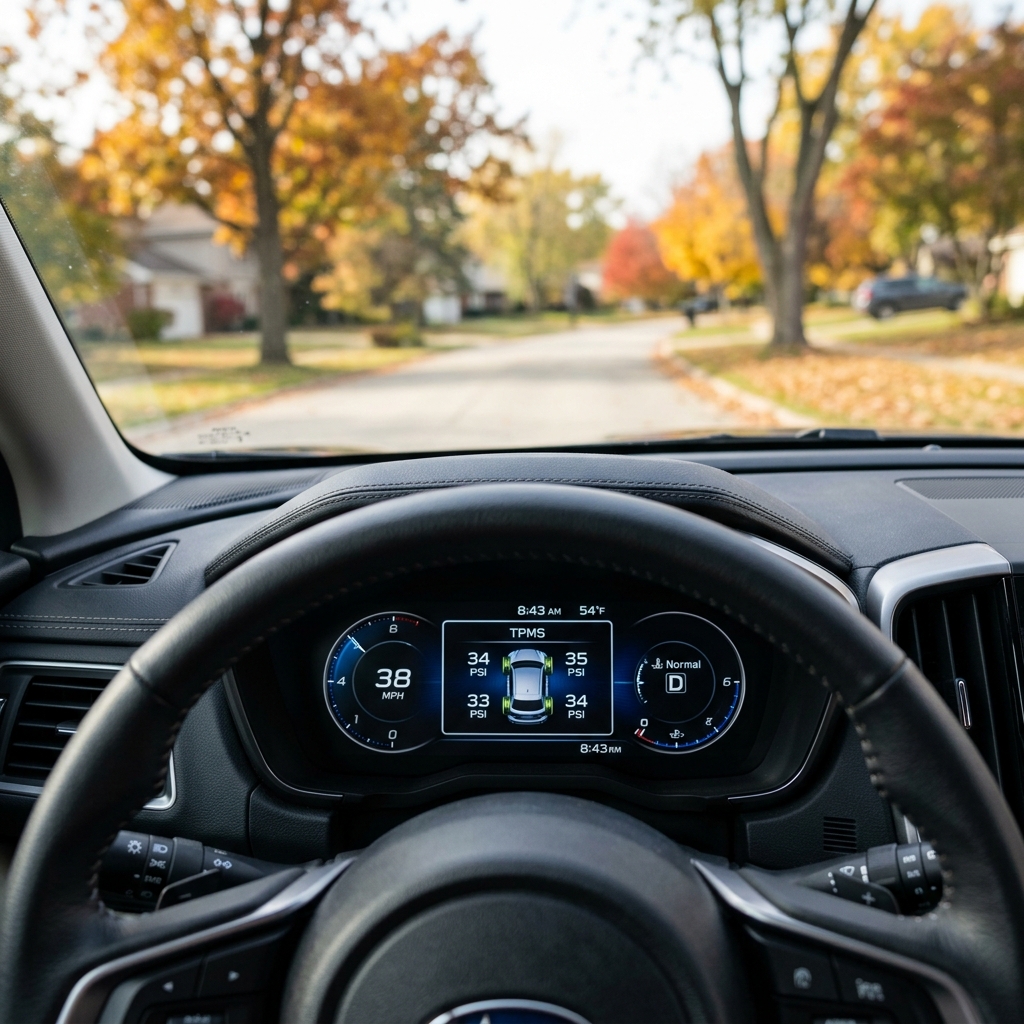
Modern Subaru vehicles come equipped with advanced Direct Tire Pressure Monitoring Systems (TPMS). Unlike older indirect systems that measured wheel speed differences through ABS sensors, Subaru direct TPMS uses radio frequency sensors mounted inside each wheel hub to measure exact real-time cold PSI levels across all four tires.
When pressure in any individual tire drops roughly 25% below the factory specification printed on your driver-side B-pillar door jamb label, the yellow TPMS warning horseshoe icon illuminates on the multi-information instrument display. Newer Subaru Outback, Forester, Crosstrek, and Ascent trims display exact PSI values per wheel, making it easy to identify which corner requires attention.
Remember that cold PSI represents your tire pressure before driving, after the vehicle has sat parked for at least three hours. Driving generates tire friction, expanding compressed air and artificially raising PSI by 2 to 4 units. Always set baseline tire inflation when the rubber is completely cold.
How Subaru's EyeSight Driver Assist Features Handle Heavy Traffic Stop-and-Go Commuting on Highways Like I-55 and I-80
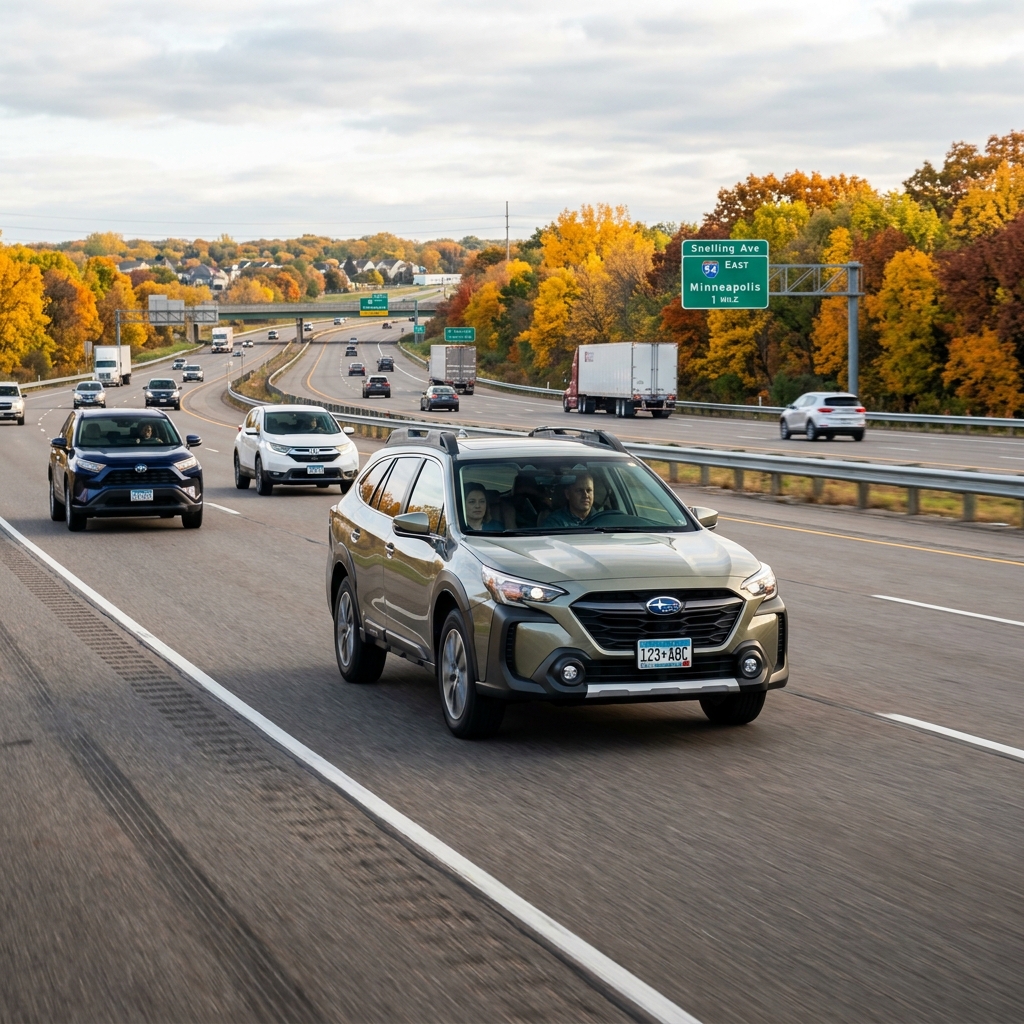
Subaru's acclaimed EyeSight Driver Assist Technology functions as a second pair of eyes on the road, utilizing dual optical stereoscopic cameras mounted behind the rearview mirror to monitor traffic movement, optimize Adaptive Cruise Control, and execute Pre-Collision Braking when sudden hazards arise along heavily congested stretches of Interstate 55 and Interstate 80.
However, driver assistance active safety features rely heavily on mechanical grip. EyeSight precise calculations for emergency braking distances and smooth adaptive slowing assume that your tires maintain a proper full contact patch with the roadway surface. Underinflated tires reduce tread center stiffness and alter the tire surface shape, which directly increases stopping distances when emergency braking is automatically engaged during stop-and-go highway traffic.
By combining proper seasonal cold tire inflation with Subaru's Symmetrical All-Wheel Drive and EyeSight suite, commuters enjoy maximum protection during sudden highway deceleration, rain-soaked road conditions, and autumn leaf-covered roadway hazards across Northern Illinois.
Back-to-School Commute Readiness: Preparing Your Subaru for I-55 and I-80 Traffic
1. Tire & Tread Safety
Inspect tire tread depth using a digital depth gauge or penny test. Ensure tread remains above 4/32 inches for safe wet traction on rain-slick autumn roads. Check sidewalls for cracks, bulges, or irregular shoulder wear from underinflation.
2. Fluids & Visibility
Top off washer fluid with freeze-resistant autumn windshield formula. Replace worn wiper blades that chatter or leave streaks during heavy rainfall, and check coolant reservoir levels prior to cooler morning starts.
3. Battery & Brakes
Cooler temperatures demand higher cranking power from your 12V battery. Have Hawk Subaru test battery voltage and clean terminal corrosion while checking brake pad thickness for reliable stop-and-go school zone driving.
Do Plainfield Subaru Dealerships Focus on Safety Features for Family Buyers?
Absolutely. Hawk Subaru in Plainfield places family occupant safety at the center of every customer interaction. Suburban drivers navigating school drop-offs along Route 59, Weber Road, and local Plainfield/Naperville thoroughfares require complete confidence in their vehicle safety systems.
Every core Subaru model features a Ring-Shaped Reinforcement Frame structure engineered with high-tensile steel, standard Symmetrical All-Wheel Drive, intuitive lower LATCH child seat safety anchor connectors, and award-winning EyeSight driver assistance. If you are looking for top safety picks, Browse New Inventory to explore models with top crash safety ratings.
In addition to active active safety systems, Hawk Subaru provides complimentary seasonal safety checks and tire condition evaluations for local families. We help parents ensure that child seat safety, tire inflation levels, brake systems, and headlamps are in top operating condition prior to seasonal weather changes.
Is Wireless Apple CarPlay and Android Auto Standard on Newer Subaru Models?
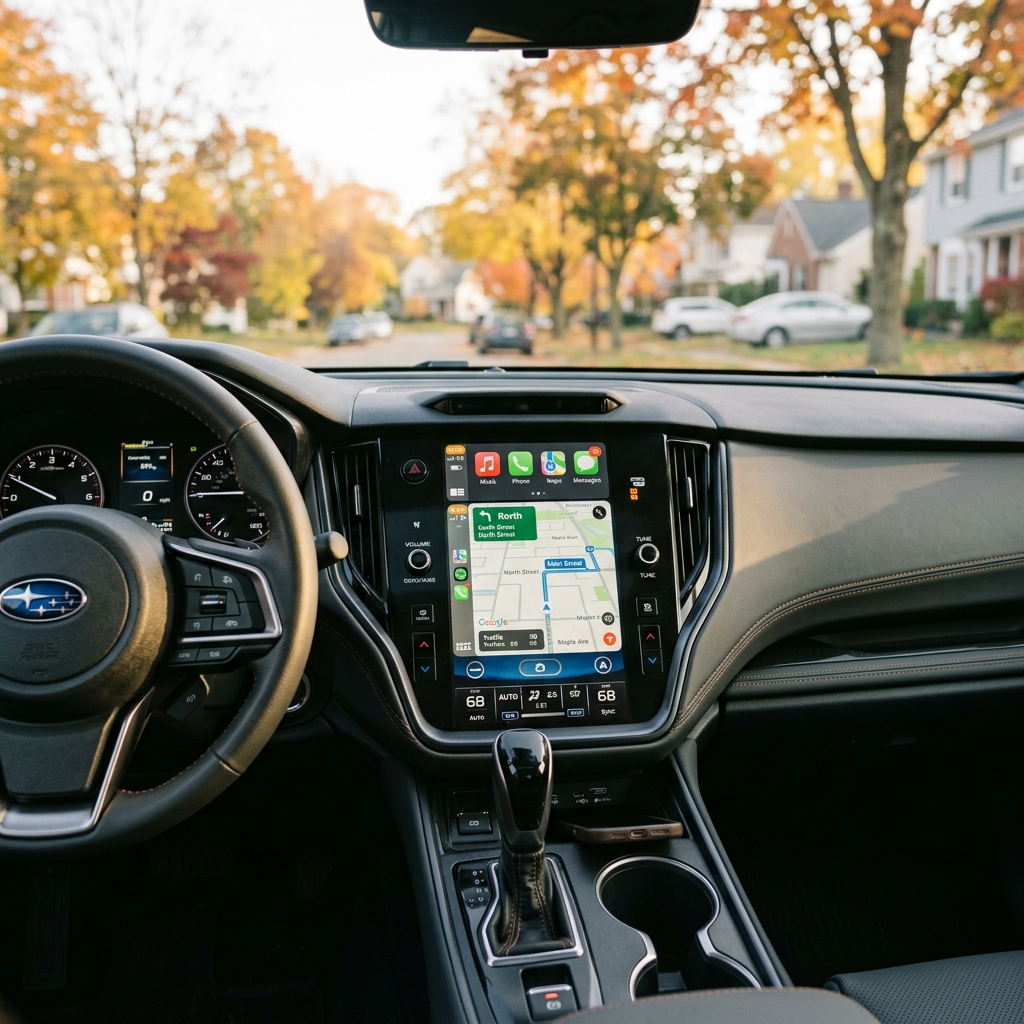
Yes, wireless Apple CarPlay® and wireless Android Auto™ integration are standard equipment on virtually all current Subaru models equipped with the high-resolution Subaru STARLINK® 11.6-inch Multimedia system. This standard connectivity eliminates messy charging cables while seamlessly pairing your smartphone as soon as you step into the vehicle.
By pairing hands-free turn-by-turn navigation via Apple Maps, Google Maps, or Waze directly to the center console touchscreen, commuters can easily navigate traffic slowdowns along I-55 without taking their eyes off the road. Voice activation allows you to dictate messages, manage music, and check real-time weather updates safely.
How Do Interior Cabin Noise Levels in the Outback Compare to the CR-V and RAV4 at 70 mph?
When cruising at 70 mph along Interstate 55, cabin quietness plays a vital role in driver comfort and fatigue reduction. The Subaru Outback utilizes acoustic laminated windshield glass, thick sound-dampening floorboard insulation, liquid-filled engine mounts, and isolated subframes to deliver an exceptionally quiet ride environment that rivals premium luxury crossovers.
|
Vehicle Model
|
Cabin Noise @ 70 mph
|
Acoustic Laminated Glass
|
Subframe Isolation
|
|
Subaru Outback
|
65.5 dBA (Quiet Best-in-Class)
|
Standard Front & Side
|
Dual-Isolated Frame
|
|
Honda CR-V
|
67.2 dBA
|
Windshield Only
|
Standard Bushings
|
|
Toyota RAV4
|
68.4 dBA
|
Select Trims Only
|
Standard Bushings
|
Proper tire pressure plays an essential role in preserving cabin silence. Underinflated tires cause localized tread block distortion, creating noticeable high-speed harmonic road hum and vibration. Maintaining baseline cold PSI keeps tire contact friction uniform and cabin noise minimal.
How Much Horsepower and Torque Does the 2026 Subaru Outback Have?
The 2026 Subaru Outback offers two proven powertrain choices engineered for optimal balance between everyday highway efficiency and confident merging acceleration:
• 2.5-Liter Direct-Injection Subaru BOXER® 4-Cylinder: Produces 182 horsepower@ 5,800 RPM and 176 lb-ft of torque@ 4,400 RPM. Offers up to 32 MPG highway and 2,700 lbs towing capacity.
• 2.4-Liter Turbocharged Subaru BOXER® 4-Cylinder (XT & Wilderness Trims): Delivers an impressive 260 horsepower@ 5,600 RPM and 277 lb-ft of torque @ 2,000–4,800 RPM, expanding maximum towing capacity up to 3,500 lbs.
To deliver this power efficiently through Symmetrical AWD, properly inflated tires are mandatory. Incorrect inflation increases rolling resistance, wasting horsepower and diminishing overall torque delivery to the ground. If you want to check out pre-owned models, feel free to Explore Certified Pre-Owned Vehicles at Hawk Subaru.
What Routine Maintenance Should I Prioritize on My Subaru for Daily Interstate Commuting?
Monthly Inflation & 6k Rotation
Check cold tire pressures monthly and perform tire rotations every 6,000 miles to ensure consistent tread depth across all four wheels, protecting the AWD transfer clutch from unnecessary heat stress.
Wheel Alignment & Brakes
Potholes along I-55 and I-80 knock wheel alignment out of spec. An annual four-wheel alignment check prevents uneven tire cupping, while routine brake pad inspection maintains stopping performance.
Fluids & Battery System
Prioritize regular synthetic oil changes, engine air filter replacements, and 12-volt battery health tests before harsh Chicago winter cold snaps arrive. You can easily Schedule Your Service Today online.
Step-by-Step Guide to Correctly Checking and Inflating Cold Fall Tires
Follow these simple steps to ensure accurate cold tire pressure readings throughout autumn:
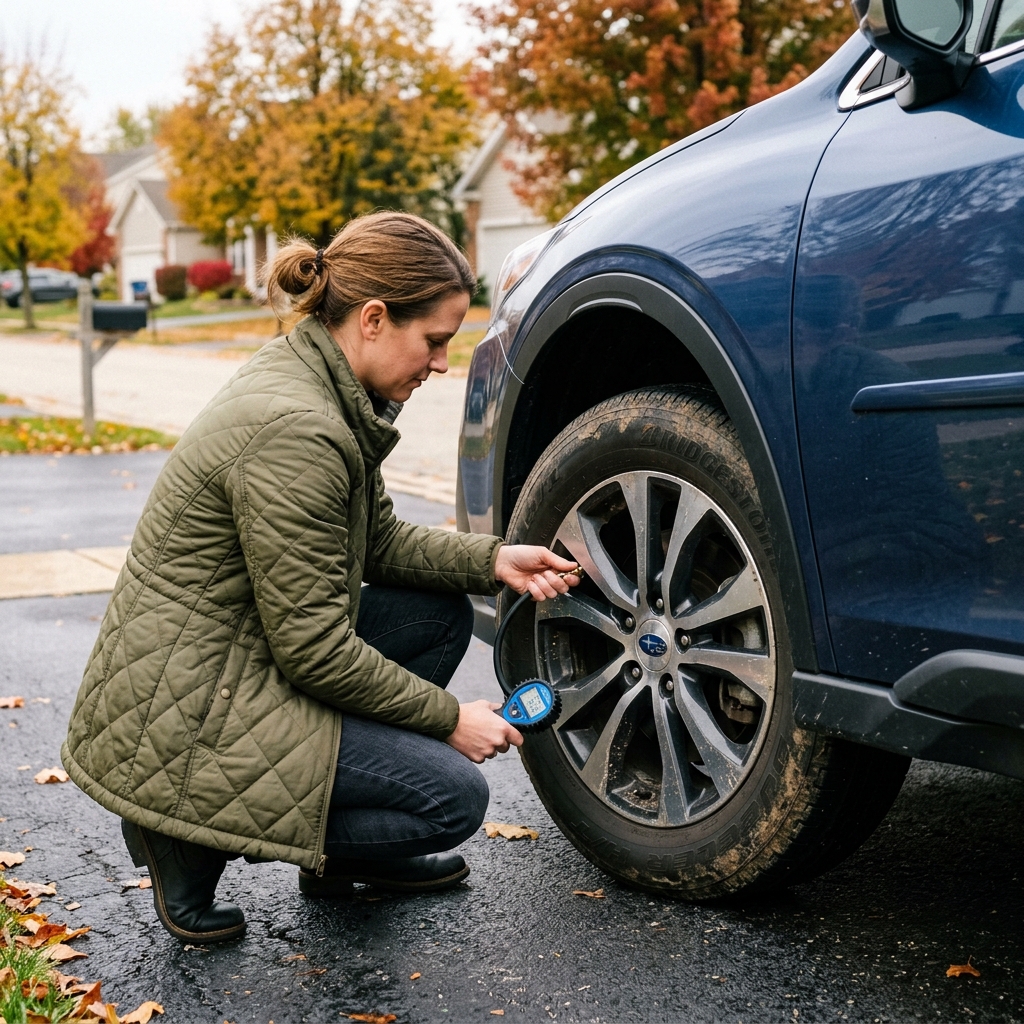
1. Locate OEM PSI Sticker: Open your driver's door and inspect the vehicle placard on the B-pillar. Note the recommended cold PSI specification for both front and rear tires.
2. Measure Prior to Driving: Measure inflation early in the morning before driving, or after the car has been parked for at least 3 hours.
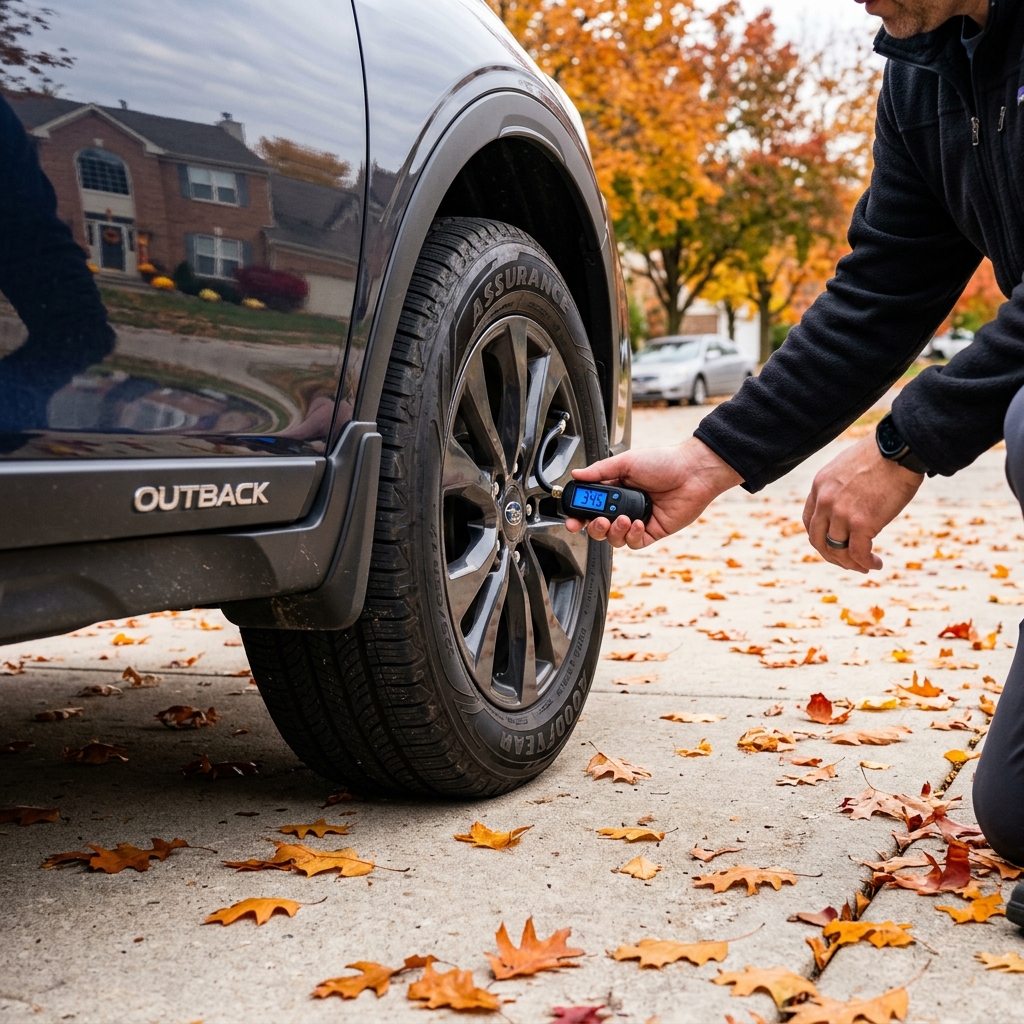
3. Use Digital Gauge: Unscrew the valve stem cap, press a calibrated digital tire gauge firmly onto the valve stem, and note the reading.
4. Inflate to Specification: Add compressed air until reaching the exact placard rating. Avoid overinflating beyond recommendation.
5. Re-check & Reset: Re-test PSI with your gauge, replace stem caps, and drive at speeds over 20 mph for a few minutes to complete TPMS sensor recalibration.
Seasonal Tire Services and Genuine Subaru Parts in Plainfield and Naperville
Hawk Subaru operates a state-of-the-art certified service center conveniently located in Plainfield, serving drivers from Joliet, Naperville, and surrounding Will County communities. Our factory-trained technicians utilize genuine OEM Subaru TPMS replacement sensors, factory-approved tire brands, and specialized diagnostic tools.
Whether you require a quick seasonal inflation adjustment, professional tire balancing, puncture repair, or complete winter tire and wheel package installations, our team ensures your Subaru performs at factory standards. If you are upgrading your vehicle this autumn, you can also Value Your Trade-In online or Browse Used Inventory.
We offer a price match guarantee on eligible replacement tires, ensuring local drivers receive maximum value alongside factory-trained Subaru expertise. Maintain complete road confidence by letting Hawk Subaru handle your autumn vehicle inspection.
Schedule Your Autumn Subaru Service Inspection at Hawk Subaru in Plainfield Today
Don't wait for sudden autumn weather cold snaps to compromise your highway safety, fuel efficiency, or tire tread longevity. Visit Hawk Subaru today for full tire service, complimentary safety inspections, and expert autumn vehicle care. You can also explore flexible financing options when upgrading by applying to Get Pre-Approved for Financing.