How Often to Check Tire Pressure and Tread for Fall Highway Commuting Around Plainfield, IL
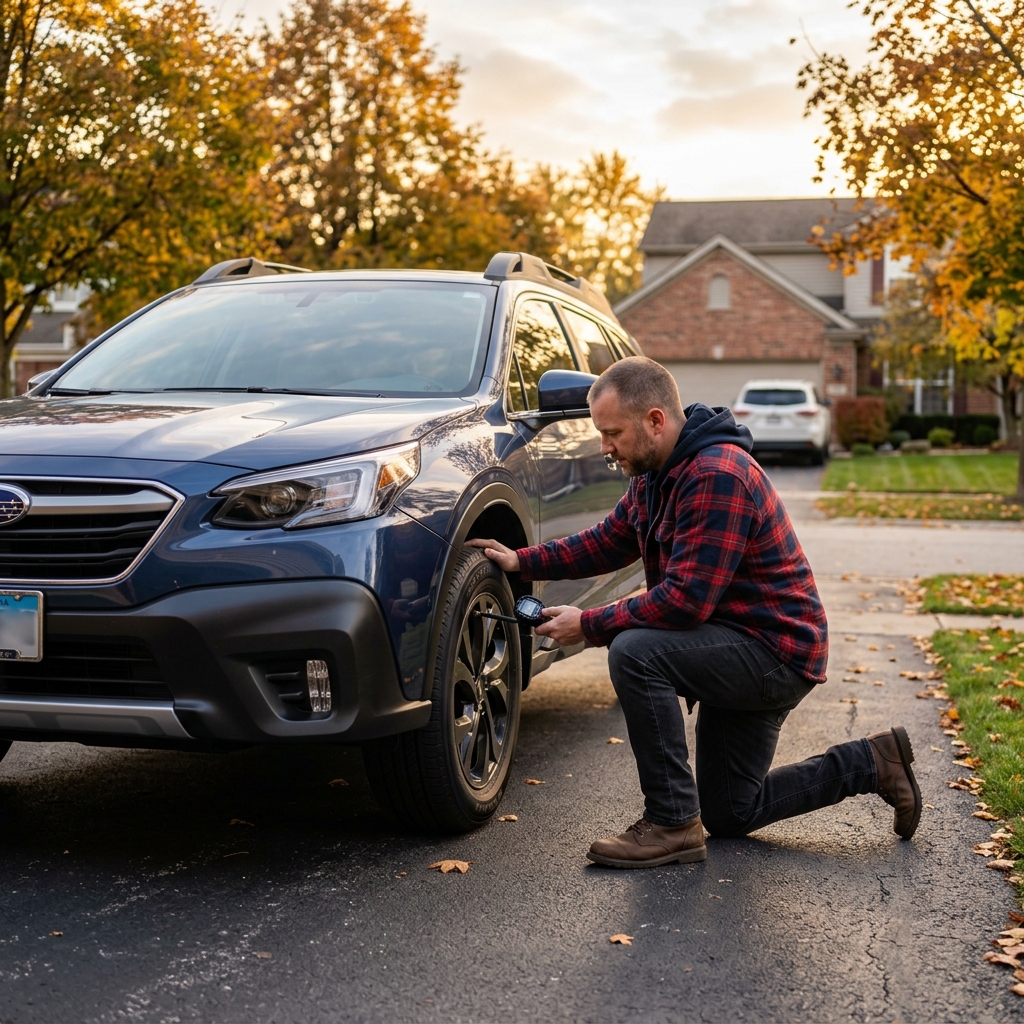
As late August transitions into September across Will and Kendall Counties, daily highway commuters traveling along Interstate 55, Route 59, and Lincoln Highway face a subtle but critical shift in vehicle dynamics. If you navigate the daily corridor between Plainfield, Joliet, and Naperville, the direct answer to your seasonal tire maintenance schedule is clear: you should check your tire pressure every two weeks—and immediately following any overnight temperature drop of 10 degrees Fahrenheit or more—while inspecting your tire tread depth at least once per month throughout the early autumn season.
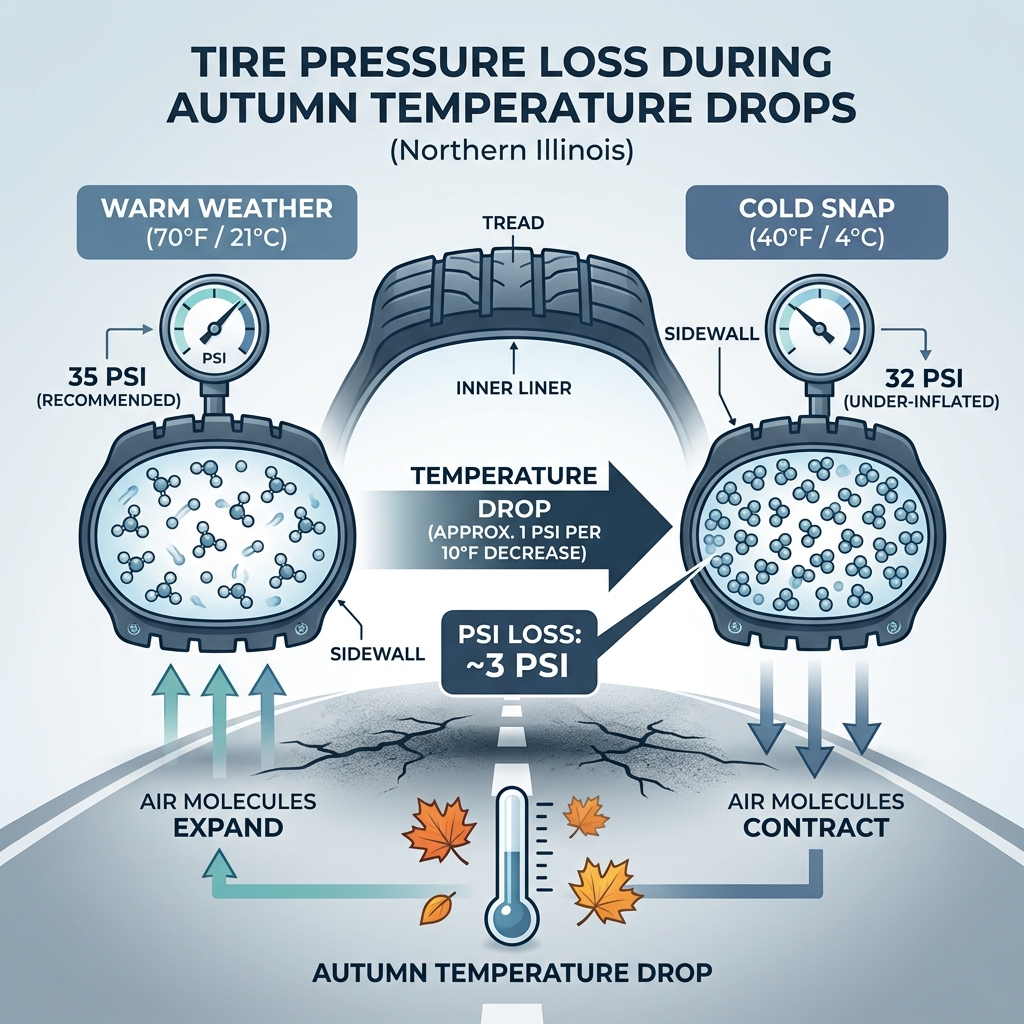
During early fall, chilly Northern Illinois mornings regularly start in the upper 40s or low 50s before afternoon sunshine drives temperatures back into the high 70s. This rapid diurnal swing causes air inside your tires to contract overnight, leaving you underinflated precisely when you merge onto high-speed I-55 traffic. Maintaining your recommended cold Inflation Pressure—typically found on the yellow-and-white tire placard inside your driver’s door pillar (usually between 32 and 36 PSI for most Subaru sedans and crossovers)—is your primary defense against premature tread wear, poor fuel economy, and sudden high-speed blowouts. To ensure your vehicle is fully prepared for upcoming weather shifts, you can Schedule Your Service Today with our factory-trained technicians.
For tread depth, while Illinois law considers 2/32 inches the absolute legal minimum, seasonal commuters need significantly more rubber. Early fall rains combined with oily road residue and fallen leaves turn Route 59 and I-80 into slick surfaces. A minimum tread depth of 4/32 inches is strongly recommended for autumn driving to effectively channel water away from the contact patch and prevent dangerous hydroplaning during heavy morning rush-hour traffic.
Why Early Fall Temperature Drops Cause Rapid Tire Pressure Losses on Will County Roads
The physics behind autumn tire pressure loss comes down to ideal gas laws: for every 10 degrees Fahrenheit drop in ambient air temperature, the pressure inside a pneumatic tire drops by approximately 1 to 2 pounds per square inch (PSI). When a crisp Canadian high-pressure system sweeps through Will County in early September, dropping overnight lows from 68°F to 48°F, your tires automatically lose 2 to 4 PSI before you even turn the ignition key.
Driving on soft tires during high-speed highway commutes creates severe mechanical stress. As an underinflated tire rotates at 70 mph on Interstate 55, the sidewalls flex far beyond their engineered parameters. This excessive flexing generates internal friction and excessive heat buildup. Paradoxically, while the morning air is cold, the structural rubber inside an underinflated tire reaches hazardous thermal levels, accelerating tread degradation and increasing the risk of structural ply separation.
Furthermore, running underinflated tires directly penalizes your wallet at the pump. According to the U.S. Department of Energy, tires underinflated by just 4 PSI lower fuel economy by roughly 1% across all driving conditions, while causing increased rolling resistance that burdens your engine during stop-and-go congestion near Plainfield Central high school zones and Route 59 intersections.
Back-to-School Commute Readiness: Early Fall Vehicle Maintenance for I-55 and I-80 Drivers
The return of school buses and university commuters transforms traffic patterns across Will and Kendall Counties almost overnight. Corridors that enjoyed relatively breezy summer transit—such as Route 59 past 135th Street, Caton Farm Road, and the I-55/I-80 interchange in Joliet—experience sudden surges in volume. Sudden braking events, tight merging maneuvers, and extended idling become daily guarantees. If you are considering upgrading your primary family vehicle before peak fall conditions set in, you can Browse New Inventory to explore the latest Subaru models equipped with advanced EyeSight Driver Assist Technology.
Early fall rain combined with decaying organic matter (leaf slime) produces a slippery road emulsion that rivals winter ice in reduced friction coefficients. At 60 mph on wet asphalt, a vehicle with tires inflated to proper PSI and possessing 10/32 inches of tread stops in roughly 145 feet. However, if those same tires are underinflated by 6 PSI and worn down to 3/32 inches, that stopping distance expands dramatically to over 210 feet—more than four car lengths farther! That additional distance is often the difference between a safe panic stop on I-55 and a multi-vehicle rear-end collision.
Step-by-Step Guide: How to Check Tire Tread Depth and Read Wear Patterns Correctly
1. Coin Tests (Quick Check)
Insert a Washington quarter upside down into the tread groove. If the top of Washington’s head is covered, you have at least 4/32” of tread—sufficient for autumn wet weather. If you use a Lincoln penny and the top of Abe’s head is visible, your tread is at or below 2/32”, making the tire legally worn out and dangerous.
2. Digital Gauge Measurement
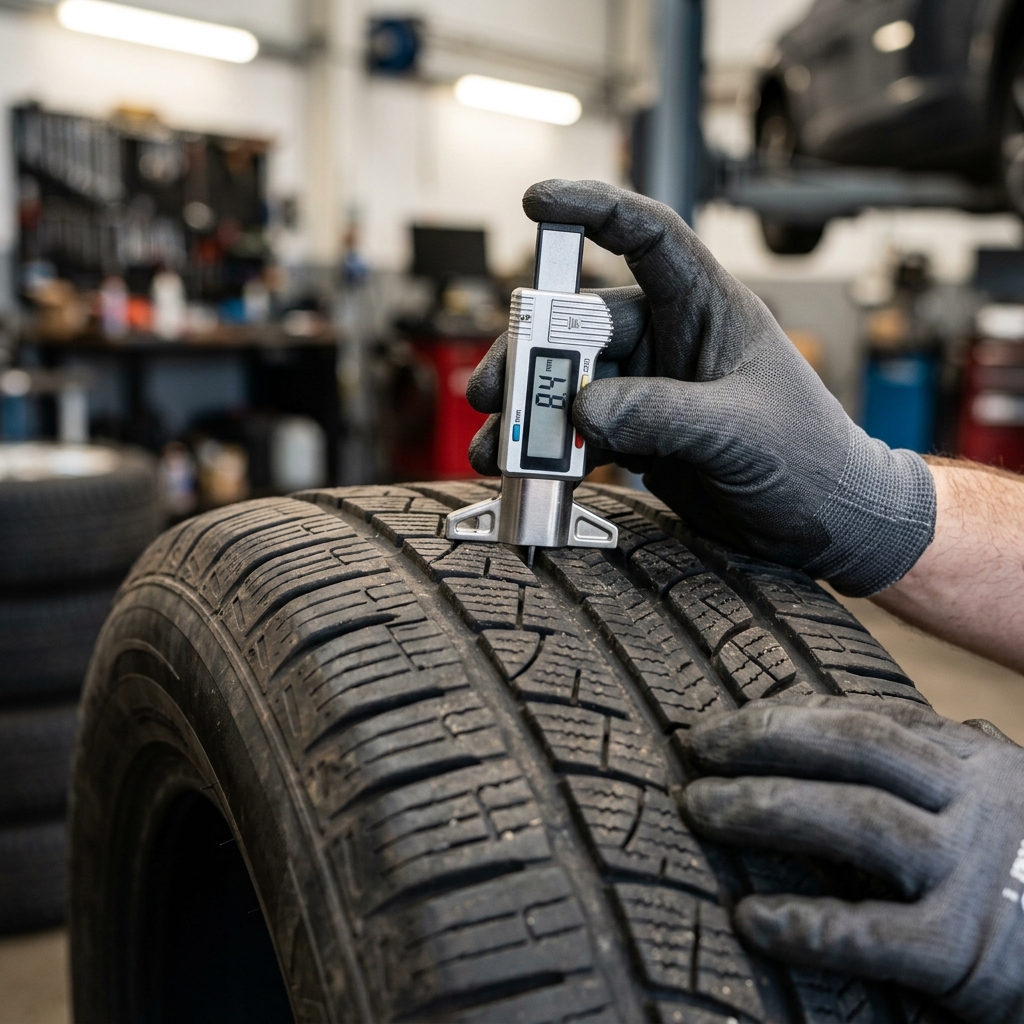
For exact precision, press a depth gauge into three distinct locations across each tire: the outer shoulder, the center channel, and the inner shoulder. Comparing these three numbers across all four tires reveals hidden wheel alignment or inflation problems early.
3. Identifying Wear Anomalies
Look for specific red flags: Center wear indicates chronic overinflation. Shoulder wear on both edges points to underinflation. Feathering or cupping (scalloped dips along the edges) indicates bent suspension components or severe misalignment from summer pothole strikes.
How Far Ahead of the First School Day Should You Book Your Fall Vehicle Service?
Every year across Plainfield, Naperville, and Shorewood, service center scheduling bottlenecks sharply during the final two weeks of August. As parents finalize school supply lists and prepare for daily drop-off routines at schools like Plainfield East or Neuqua Valley, automobile maintenance suddenly becomes a top priority. Waiting until the morning your dashboard light turns on often results in multi-day appointment delays.
To secure your preferred drop-off time slot—especially highly sought-after Saturday mornings or early weekday express windows before work—we strongly recommend scheduling your seasonal vehicle inspection 2 to 3 weeks ahead of the back-to-school rush. Booking early guarantees that if your vehicle requires specialized parts, new tires, or a four-wheel alignment, the work is completed smoothly without disrupting your family's weekly schedule. If you prefer to speak directly with an advisor, feel free to Call us at (815) 725-3789.
Which Vehicle Fluids Are Most Important to Check Before the New School Year Starts?
Engine Oil & Brake Fluid
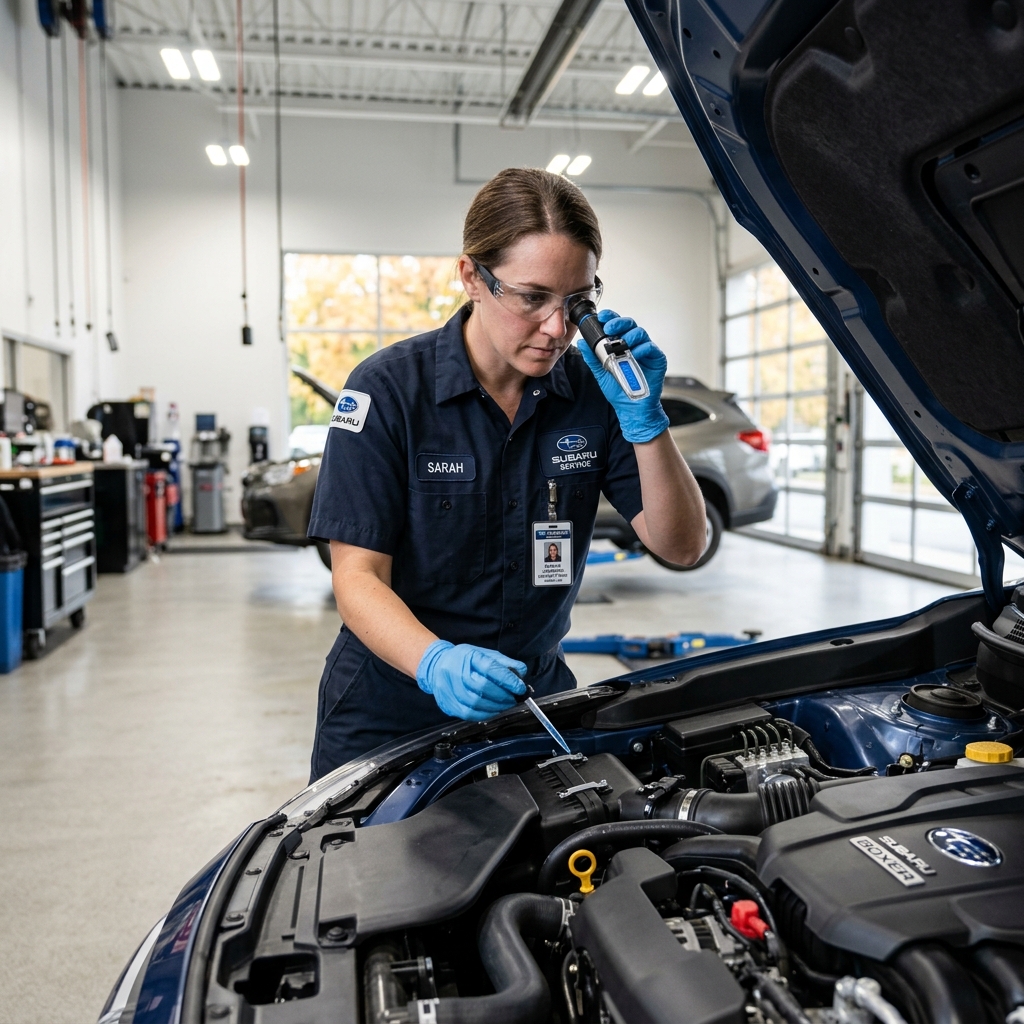
Summer vacation road trips degrade engine oil through high thermal shear. Fresh full-synthetic oil ensures rapid lubrication during cold morning restarts. Meanwhile, brake fluid absorbs ambient humidity over summer; testing for moisture content prevents vapor lock and spongey pedal feel during emergency stops on wet pavement.
Coolant & Washer Fluid
Engine coolant (antifreeze) must maintain a strict 50/50 water-to-glycol mixture to prevent freeze-ups when Northern Illinois temperatures dip below 32°F. Additionally, replace summer bug wash with winter-grade de-icing washer fluid to clear morning frost and diesel exhaust residue along I-55.
AWD Differentials & CVT Fluid
Front and rear differential fluids safeguard high-speed gear meshes in all-wheel-drive systems. Checking transmission and differential fluid health before heavy fall traffic prevents overheating and gear binding. If you like doing maintenance yourself, visit our Parts Center for genuine OEM fluids.
Is It Worth Paying for the Full Recommended Fall Maintenance Package or Just the Basics?
When budgeting for seasonal automotive care, many commuters wonder if a quick $50 al-la-carte oil change is sufficient, or if investing in a comprehensive $150-$200 fall maintenance package provides real value. While a basic oil change addresses internal engine lubrication, it leaves critical safety components unexamined right when weather conditions deteriorate.
A full seasonal package bundles a synthetic oil service with a professional multi-point inspection: digital battery cranking health test, tire rotation and dynamic balancing check, brake pad and rotor thickness measurement, suspension bushing inspection, and wiper blade replacement. Catching a weak 12-volt battery or uneven tire wear pattern in September prevents costly emergency towing situations on cold November mornings. Maintaining complete service records also protects your long-term equity if you choose to Value Your Trade-In down the road.
How Much Does End-of-Summer Maintenance Cost and Which Services Add the Most Value?
Typical Service Costs
|
Service Item
|
Est. Cost
|
|
Tire Rotation
|
$25 - $45
|
|
Four-Wheel Alignment
|
$109 - $149
|
|
Cabin / Engine Air Filters
|
$45 - $85
|
|
Brake Service (per axle)
|
$199 - $299
|
Highest ROI: Wheel Alignment
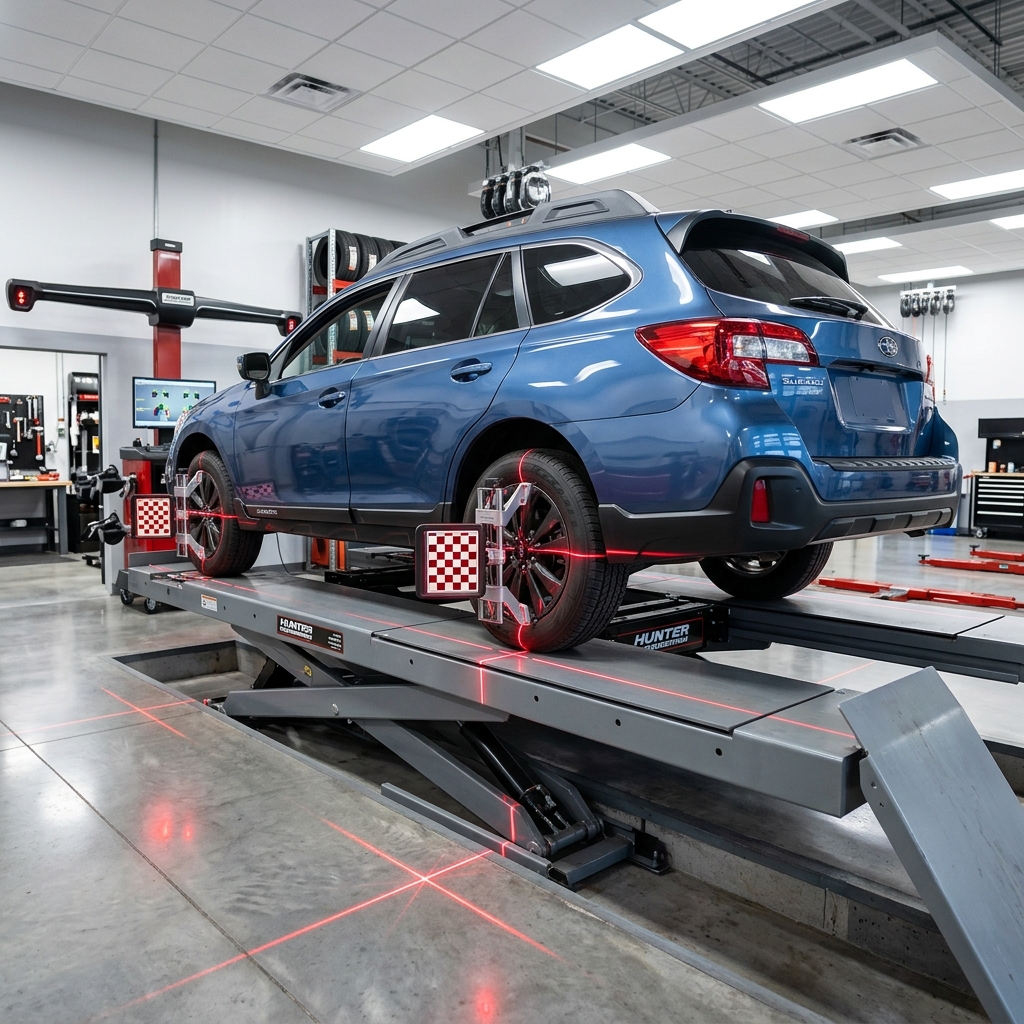
A $129 wheel alignment delivers tremendous return on investment. Driving with misaligned wheels scrub tires sideways down I-55, destroying a $800 set of radial tires in under 10,000 miles while increasing fuel consumption.
Tire Rotation & Cabin Filters
Rotating tires every 5,000 to 7,500 miles evens out wear between front steering wheels and rear axles. Replacing dusty summer cabin filters guarantees clear windshield defogging when autumn humidity spikes. If you are exploring pre-owned vehicle options, you can Browse Used Inventory for models with fully documented service histories.
Special Considerations for Subaru Symmetrical All-Wheel Drive Tire Circumference
Subaru Symmetrical All-Wheel Drive is widely considered one of the most capable, balanced AWD systems on the market. However, its mechanical sophistication requires strict attention to tire circumference. Subaru factory specifications require that all four tires maintain matched tread depths within 2/32 inches of one another (or within 1/4 inch of total rolling circumference).
If one tire becomes significantly worn due to neglect, or if a single un-matched tire is replaced following a road hazard puncture, the smaller tire must rotate faster than the other three to keep pace at 70 mph on Interstate 55. This rotational variance forces the center differential or multi-plate transfer clutch pack to constantly slip and work overtime, generating intense heat that can damage expensive mechanical drivetrain components over time. Drivers interested in late-model AWD reliability can Explore Certified Pre-Owned Vehicles backed by factory powertrain warranties.
Where Can I Find Back-to-School Vehicle Inspection Services Near Plainfield, IL?
For drivers seeking certified autumn maintenance in Will County, Hawk Subaru offers a convenient, state-of-the-art regional facility located right on Route 59. Situated at 2401 Rte 59, Plainfield, IL 60586, our service center provides rapid access for residents across Plainfield, Joliet, Naperville, and Shorewood. You can quickly Get Directions to Hawk Subaru to plan your visit.
Our service department features factory-trained master technicians equipped with computerized tire diagnostics, laser alignment racks, and genuine OEM replacement parts. Furthermore, our 30-Day Tire Price Match Guarantee ensures you receive competitive pricing on top tire brands like Yokohama, Michelin, Continental, and Bridgestone. If you are planning a vehicle purchase alongside seasonal service, you can also Get Pre-Approved for Financing online in just a few minutes.
Essential Autumn Glove-Box Checklist for Suburban Highway Commuters
Tire Measurement Tools
• Calibrated digital air pressure gauge
• Pocket tread depth gauge (in 1/32” increments)
• Laminated driver’s door tire placard PSI reference card
Roadside Safety Gear
• Portable 12V tire inflator / compressor
• Heavy-duty jumper cables or lithium jump pack
• LED flashlight with spare batteries & high-vis vest
Documentation & Contacts
• Hawk Subaru Service phone number: (815) 725-3789
• Current proof of vehicle insurance & registration
• Subaru Roadside Assistance contact card
Schedule Your Fall Tire & Safety Inspection at Hawk Subaru in Plainfield Today
Don’t wait for the first severe temperature drop or heavy autumn rainstorm to discover your tires are soft or worn. Protecting your family during daily commutes along I-55, I-80, and Route 59 starts with a quick professional evaluation at Hawk Subaru. Whether you need a simple pressure check, wheel alignment, or a complete seasonal maintenance package, our factory-certified team is ready to serve you.