All-Wheel Drive vs. Front-Wheel Drive: Preparing Your Chicago Metro Commute for Illinois Seasonal Weather
AWD vs. FWD in Chicago Winters: Key Takeaways for Your Commute
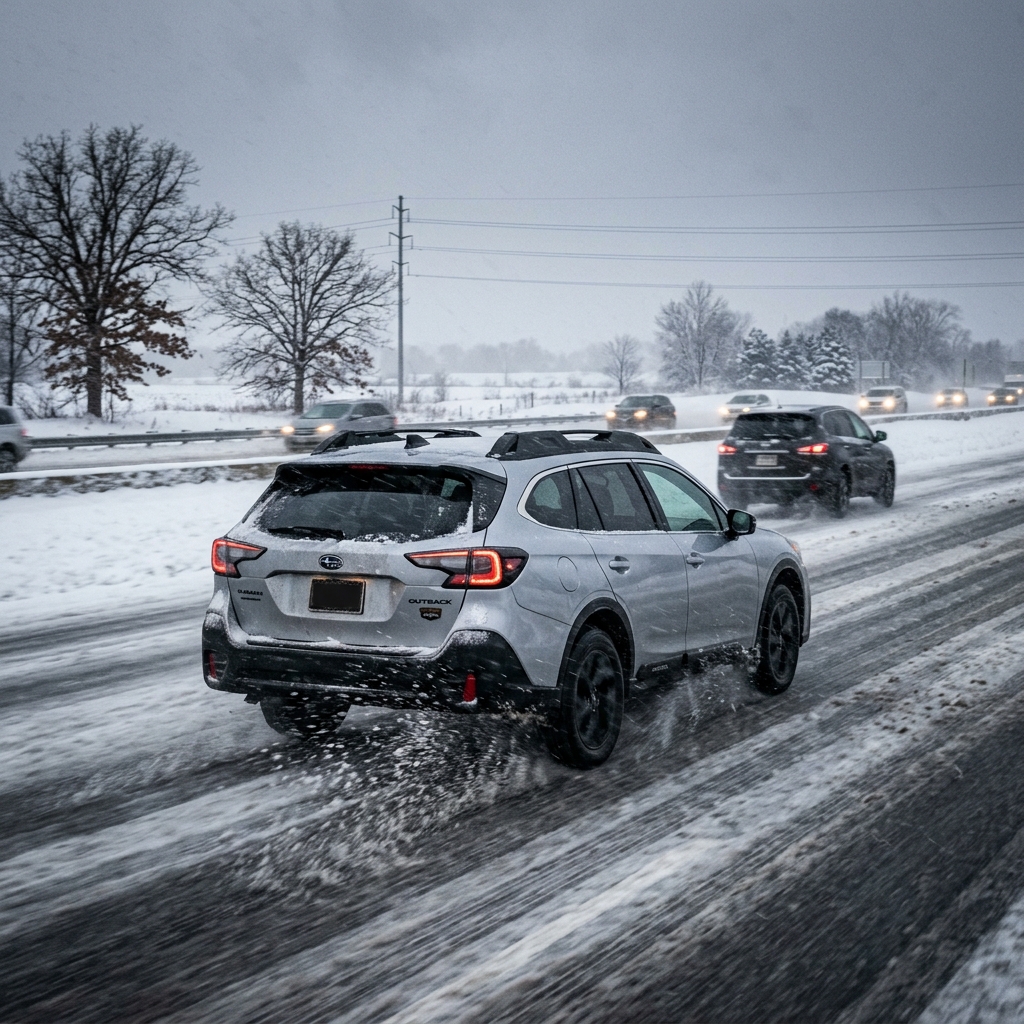
Navigating a daily winter commute across the Chicago metropolitan area—whether you are traveling down Interstate 55 from Plainfield, maneuvering through dense traffic on Route 59, or commuting along the Stevenson Expressway into downtown Chicago—presents a unique set of meteorological and mechanical challenges. The battle between All-Wheel Drive (AWD) and Front-Wheel Drive (FWD) is central to how northern Illinois drivers prepare for snow, slush, black ice, and sub-zero temperatures. Understanding the fundamental differences in how these two drivetrains handle unpredictable Midwestern winter roads allows you to make informed decisions regarding vehicle selection, tire outfitting, and seasonal safety maintenance.
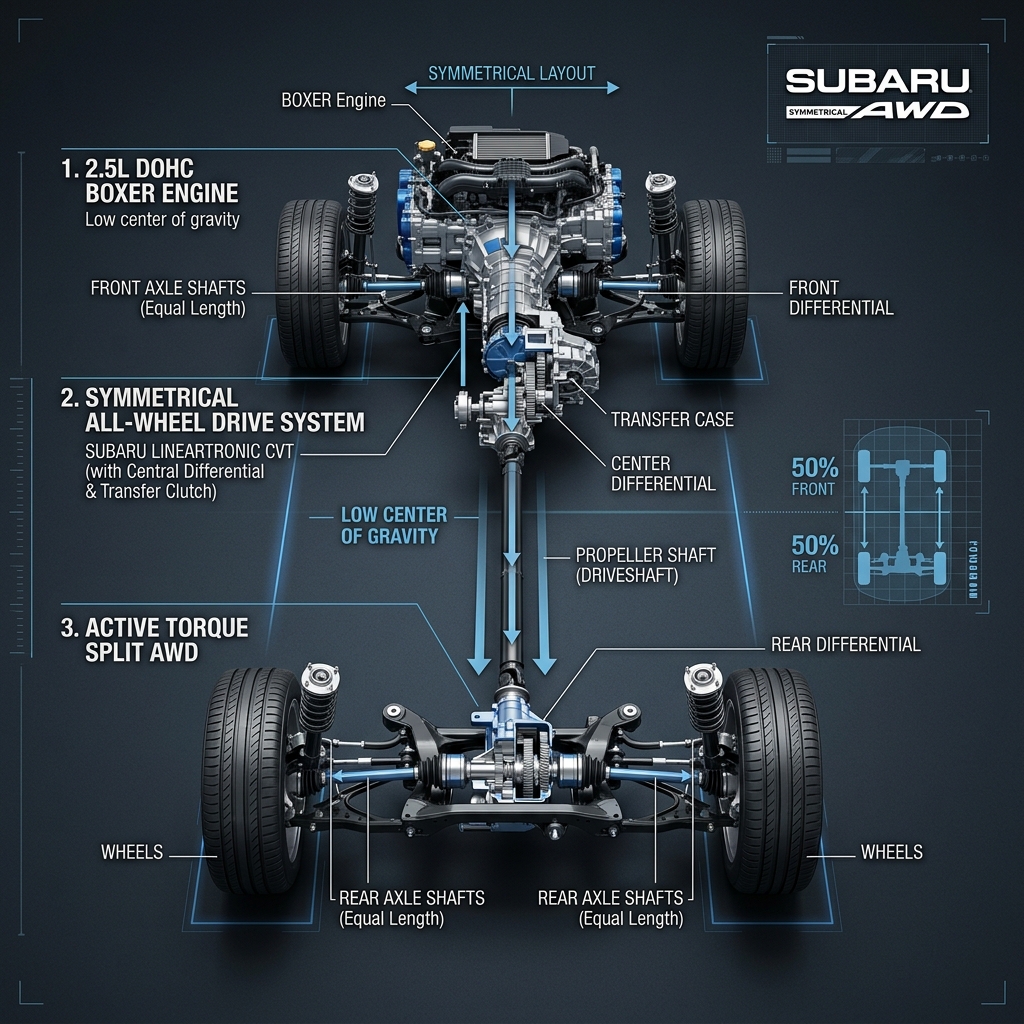
The fundamental distinction between AWD and FWD comes down to how engine torque is distributed to the road surface during acceleration. Front-Wheel Drive vehicles push power strictly to the two front wheels, which must simultaneously handle steering vectors and propulsive force. While FWD benefits from having the heavy engine block situated directly over the drive axle—providing decent baseline traction on lightly dusted roads—it quickly reaches its physical limit when encountering heavy slush, unplowed side streets, or steep highway ramps. In contrast, All-Wheel Drive systems continuously send torque to all four wheels, either on-demand or through full-time engagement like Subaru Symmetrical All-Wheel Drive. This dramatic increase in contact area allows AWD vehicles to launch smoothly from a complete stop on icy intersections, climb packed snowbanks, and maintain directional control when lane-changing through heavy slush windrows.
However, a critical safety misconception persists among many Chicagoland drivers: assuming that an AWD vehicle magically stops faster on ice or grips better in high-speed turns than a FWD car. The physical reality of vehicle dynamics dictates that drivetrain configuration primarily governs acceleration and directional stability under power. When it comes to decelerating, emergency braking, and lateral cornering grip, every four-wheeled passenger vehicle on the road utilizes four-wheel braking regardless of whether it is AWD, FWD, or RWD. Consequently, dedicated winter tires—engineered with specialized flexible rubber compounds and high-density sipes—remain essential for stopping distance and cornering safety on ice, regardless of which wheels receive engine power.
How All-Wheel Drive Differs from Front-Wheel Drive in Winter Weather
To appreciate how these systems perform on winter roads in Plainfield and Naperville, one must examine their mechanical torque distribution. In a standard Front-Wheel Drive layout, the engine's power travels through a transaxle directly to the front drive shafts. When the front tires lose grip on a patch of black ice or slick slush, an open differential will route power along the path of least resistance—meaning the wheel with the least traction spins uncontrollably while the wheel with grip receives almost no torque. Modern traction control systems mitigate this by applying individual wheel brakes or reducing engine throttle, but the core limitation remains: you only have two tires attempting to transfer energy to the pavement.
All-Wheel Drive systems overcome this bottleneck by integrating a center differential, viscous coupling, or electronically controlled multi-plate clutch pack. Advanced full-time systems, such as Subaru Symmetrical AWD, maintain continuous power flow to both front and rear axles simultaneously. When active sensors detect that a front wheel is slipping during acceleration, the system instantaneously redistributes mechanical torque to the rear wheels that still enjoy firm traction. This active redistribution prevents front-wheel spin and maintains linear forward momentum even on severely compromised road surfaces.
Furthermore, FWD vehicles suffer from heavy steering interference during slippage, known as torque steer or understeer. When accelerating through an icy corner, a FWD car's front tires can become overwhelmed by trying to steer and pull at the same time, causing the front end to push straight toward the outside of the turn. An AWD setup balances these vector forces across all four contact patches, dramatically improving stability and driver control.
How Much Extra Traction Does All-Wheel Drive Provide in Snow and Ice?
Quantifying the performance differential between AWD and FWD reveals stark contrasts during severe Midwestern winter conditions. Under controlled automotive testing on packed snow, an All-Wheel Drive vehicle can generate up to 100% to 150% more usable launch traction compared to a Front-Wheel Drive vehicle equipped with identical all-season tires. Here is how that extra traction translates into everyday commuter scenarios across the Chicago suburban landscape:
Dead-Stop Acceleration
When stopping at an icy traffic signal on Route 59 or Weber Road, FWD cars frequently experience front wheel spin, causing anxiety and delays as traffic behind builds up. AWD vehicles engage four contact patches simultaneously, converting engine power into immediate forward velocity with minimal wheel spin.
Unplowed Subdivisions
Municipal plows prioritize major arteries like I-55 long before reaching residential neighborhood streets in Plainfield and Joliet. Navigating through 6 to 8 inches of unplowed wet snow requires the persistent push and pull of all four wheels to prevent high-centering or getting stuck.
Slick Highway On-Ramps
Merging onto high-speed expressways via curved, elevated overpasses along I-80 presents elevated risk. Elevated structures freeze much faster than ground-level asphalt. AWD maintains torque distribution across both axles, keeping the chassis balanced as you accelerate up icy inclines.
Will Winter Tires on a FWD Car Outperform All-Season Tires on an AWD Car?
This is one of the most widely debated engineering questions among northern vehicle owners. The short answer is a resounding **yes when it comes to stopping and turning**, but **no when it comes to launching in deep snow**. Understanding this nuanced dynamic is vital for making sound safety investments.
In brake testing conducted on hard-packed snow and glare ice from 30 mph to zero, a Front-Wheel Drive car equipped with dedicated winter tires (such as Bridgestone Blizzak or Michelin X-Ice) will consistently stop **25% to 35% shorter** than an All-Wheel Drive car fitted with standard factory all-season tires. On ice, that reduction in braking distance can equal two to three full vehicle lengths—the difference between stopping safely before a red light and sliding helplessly into an intersection.
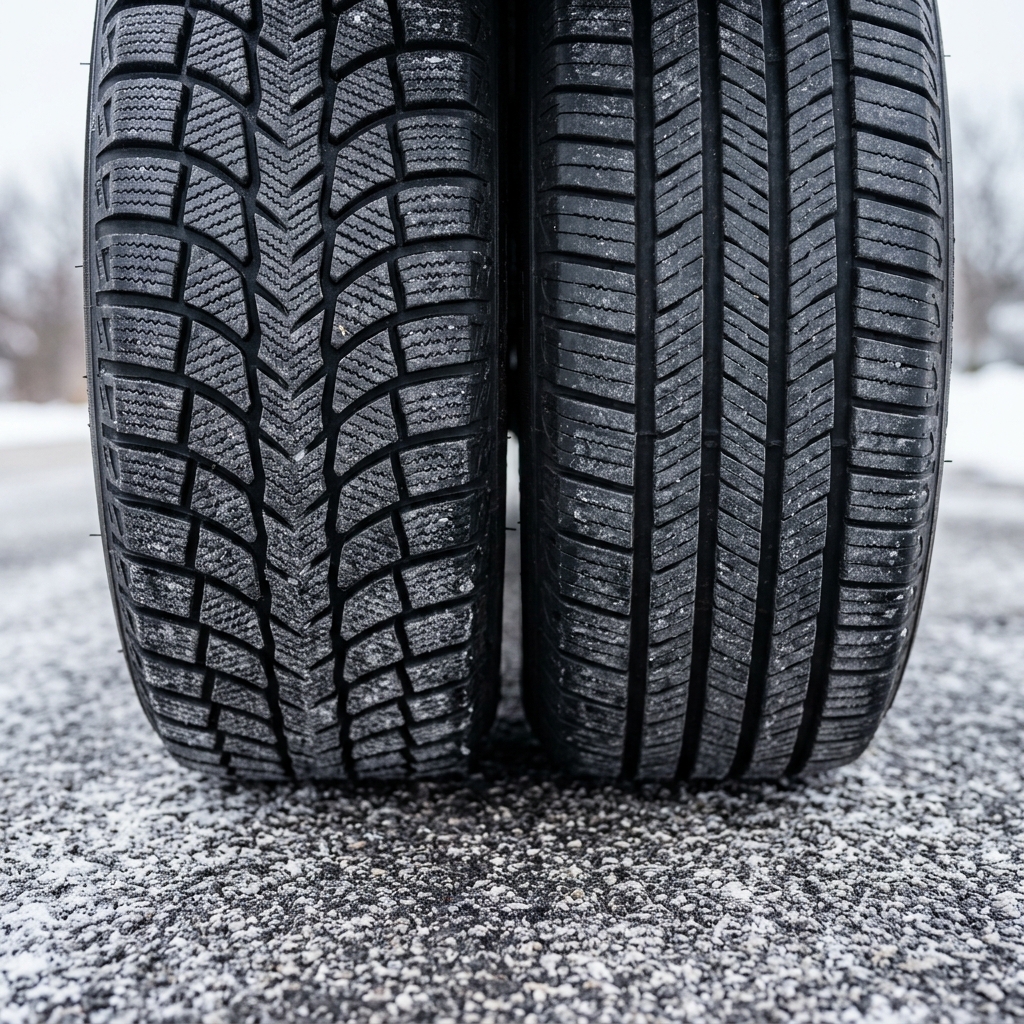
Similarly, lateral grip in cornering favors dedicated winter rubber. Winter tires feature specialized silica compound formulations that remain flexible below freezing, while all-season rubber hardens into a hockey-puck consistency. However, for sheer accelerating out of deep snowdrifts or climbing unplowed hills, the AWD car on all-season tires will still move forward more easily than the FWD car on winter tires. For the ultimate peace of mind, pairing Subaru Symmetrical AWD with certified winter tires delivers unbeatable performance. You can consult with factory-trained technicians at our Parts Center to select optimal tire packages.
Why Winter Tires Are Critical for Braking Safety Regardless of Drivetrain
To understand why drivetrain configuration cannot overcome poor tire friction during braking, one must look at polymer chemistry and basic physics. Standard all-season tire compounds are formulated to provide acceptable tread wear and fuel economy during warm weather conditions. However, when ambient temperatures drop below **45°F (7°C)**, the synthetic rubber polymers inside standard tires undergo a physical transformation known as the glass transition phase. The rubber stiffens significantly, losing its elastic flexibility and ability to conform to small road surface irregularities.
Winter tires utilize high-silica tread compounds engineered to maintain structural elasticity even in sub-zero Chicago deep freezes. In addition, winter tire treads feature thousands of micro-grooves called **sipes**. As the tire rotates, these sipes open up to bite into packed snow and expel micro-thin layers of surface water created by friction melting, creating mechanical interlock with ice.
When you depress the brake pedal emergency-style on Route 30 or the Tri-State Tollway (I-294), your vehicle's Anti-Lock Braking System (ABS) rapidly pulses mechanical pressure to all four brakes. ABS prevents wheel lockup, but it cannot create friction out of thin air. If your tires are rigid and slick, ABS will simply cycle frantically while your vehicle continues skidding forward. This is why having AWD does not shorten stopping distance: whether you have 2WD or 4WD, emergency braking relies 100% on the friction coefficient between your four contact patches and the road.
Drivers who want to maintain optimal safety for their families during Will County winter storms should view drivetrain and tire selection as complementary tools rather than interchangeable alternatives. You can easily Schedule Your Service Today with our certified technician team to inspect tread depth and order winter packages.
When Chicago-Area Drivers Notice the Biggest Real-World Difference Between AWD and FWD
Slush Lane Changing
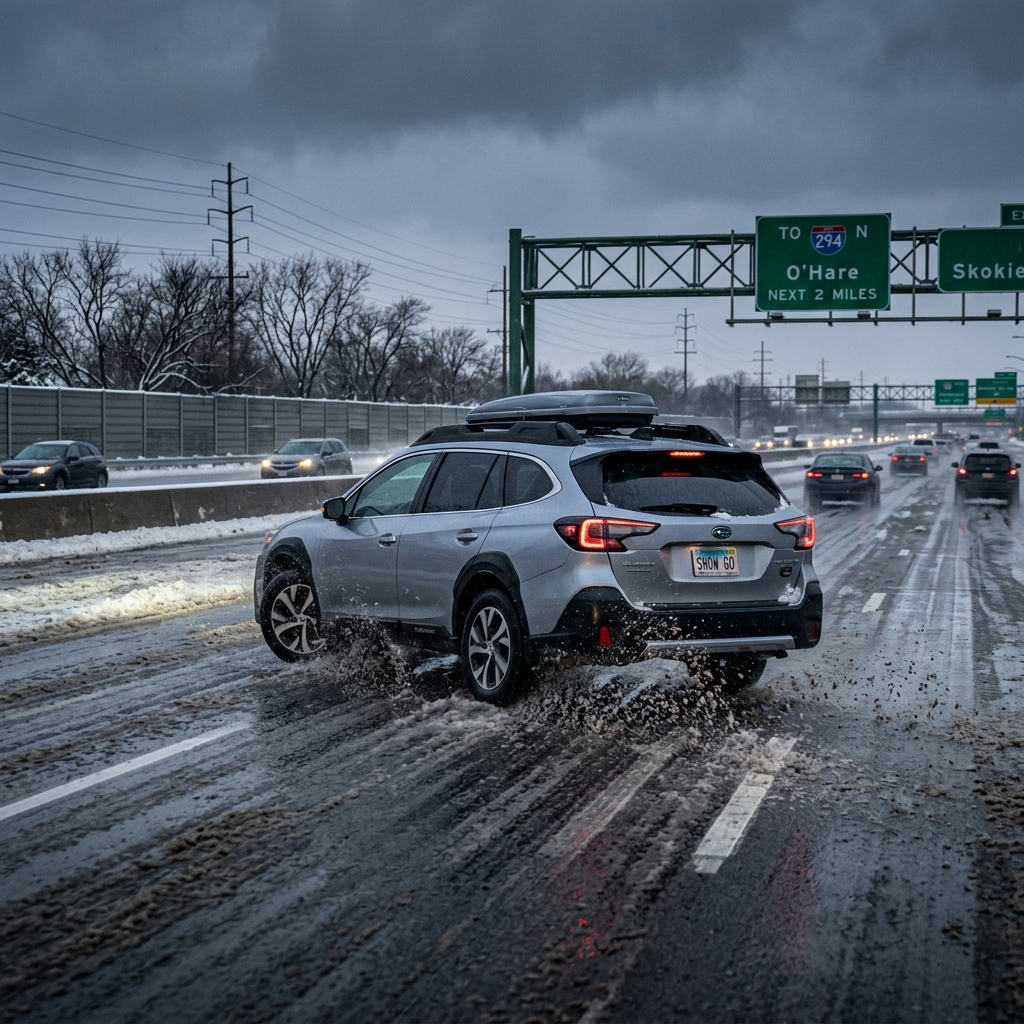
On high-speed corridors like I-55 or I-80, snowplows push heavy slush into windrows between highway lanes. Crossing these slush ridges at 45-55 mph in a FWD car often causes sudden drag on front tires, creating unsettling yaw or pulling sensations. AWD maintains steady power to the rear wheels, stabilizing the chassis as you cross slush lines.
Snowbank Street Parking
Parallel parking in downtown Naperville, Joliet, or downtown Chicago after municipal plows pass often forces cars over 12-inch mounds of packed snow. FWD vehicles easily get high-centered or spin their front tires uselessly against the snow curb. AWD engages all four corners to climb over snowbanks effortless.
Stop-and-Go Incline Creep
During rush-hour traffic jams on icy overpasses or sloping bridge approaches, creeping forward at 2 mph requires smooth torque delivery. FWD cars often spin front tires and slide backward slightly before gaining traction, whereas AWD seamlessly moves forward without dramatic wheel spin or panic.
How Often Does Chicago Weather Truly Require AWD During Winter Commutes?
According to historical meteorological data for the Chicago metropolitan area and Will County, northern Illinois experiences an average of **28 to 35 distinct snow precipitation events** between November and April each year. Furthermore, the region logs roughly **40 to 50 days per winter** where ambient temperatures remain continuously below freezing, creating widespread risks of black ice, refrozen snowmelt, and morning frost on bridge decks.
While major interstate highways like I-55, I-355, and I-80 receive top priority from Illinois Department of Transportation (IDOT) salt trucks, local arterial roads, suburban side streets, corporate parking lots, and residential driveways remain covered in snow or slush for hours—and sometimes days—following major winter storms. For commuters who must report to work on fixed schedules early in the morning before municipal plows clear residential subdivisions in Plainfield or Shorewood, having All-Wheel Drive transitions from a convenience to a necessity.
Even during mild winters, lake-effect snow squalls and sudden drop-offs in temperature can create hazardous driving environments in a matter of minutes. Drivers who value stress-free travel and consistent schedule reliability find that Subaru's full-time Symmetrical AWD provides invaluable confidence throughout the entire Midwestern winter calendar. You can explore modern AWD models by exploring our updated online showroom to Browse New Inventory today.
Fuel Economy, Maintenance, and Ownership Cost Differences Between AWD and FWD
When deciding whether an AWD upgrade fits your lifestyle, evaluating total cost of ownership is essential. Historically, legacy AWD systems carried noticeable fuel economy penalties due to drivetrain parasitic drag and added mechanical weight. However, modern Subaru engineering—incorporating Lineartronic CVT transmissions and highly efficient BOXER engines—has reduced the fuel efficiency gap to just **1 to 2 MPG** compared to equivalent FWD competitors.
Regarding long-term maintenance, AWD vehicles feature rear differentials and transfer cases that require fluid inspection and replacement at scheduled service intervals. Tire rotations are also paramount on AWD vehicles to ensure uniform tread wear across all four positions, as significant variations in tire circumference can cause driveline stress.
Crucially, Subaru AWD vehicles retain higher resale values in northern snow-belt states like Illinois, offsetting initial acquisition costs when it comes time to upgrade.
|
Ownership Factor
|
Front-Wheel Drive (FWD)
|
Subaru Symmetrical AWD
|
|
Highway Fuel Economy
|
Baseline Efficiency
|
~1-2 MPG Difference
|
|
Tire Rotation Frequency
|
Every 5,000-7,500 Miles
|
Every 5,000-6,000 Miles (Critical)
|
|
Driveline Maintenance
|
Front Transaxle Fluid Only
|
Front/Rear Differential Fluid Services
|
|
Resale Value Retention in IL
|
Standard Market Retention
|
Exceptional Snow-Belt Resale Value
|
|
Deep Snow Launchability
|
Moderate (Requires Momentum)
|
Superior (Four Active Contact Points)
|
What Emergency Supplies Should Be Kept in a Car During an Illinois Winter?
No matter how advanced your vehicle's drivetrain is, unexpected highway closures, severe accidents, or sudden blizzard conditions can leave commuters stranded on I-55 or remote country roads in Will or Kendall County. Packing a dedicated winter safety kit ensures you remain warm, visible, and mobile until emergency roadside assistance arrives.
Warmth & Survival
• Heavy wool thermal blankets or sub-zero sleeping bag • Extra fleece gloves, winter hats, and wool socks • Chemical hand warmers and body warmers • Non-perishable protein bars and sealed water bottles
Vehicle Recovery Gear
• Collapsible aluminum snow shovel • Portable traction mats or bag of coarse cat litter/sand • Heavy-duty recovery tow strap • Portable lithium-ion jump starter battery pack
Tools & Visibility
• Heavy-duty ice scraper with brass blade or broom • High-lumen LED flashlight with fresh batteries • Emergency roadside LED flares or reflector triangles • High-capacity phone power bank and charging cables
Seasonal Winterization Checklist: Preparing Your Vehicle for Plainfield Winters
Preparing your vehicle for extreme winter conditions requires proactive inspection before cold snaps arrive. Freezing temperatures put immense strain on electrical systems, cooling loops, and rubber components. Follow this step-by-step checklist to safeguard your drive:
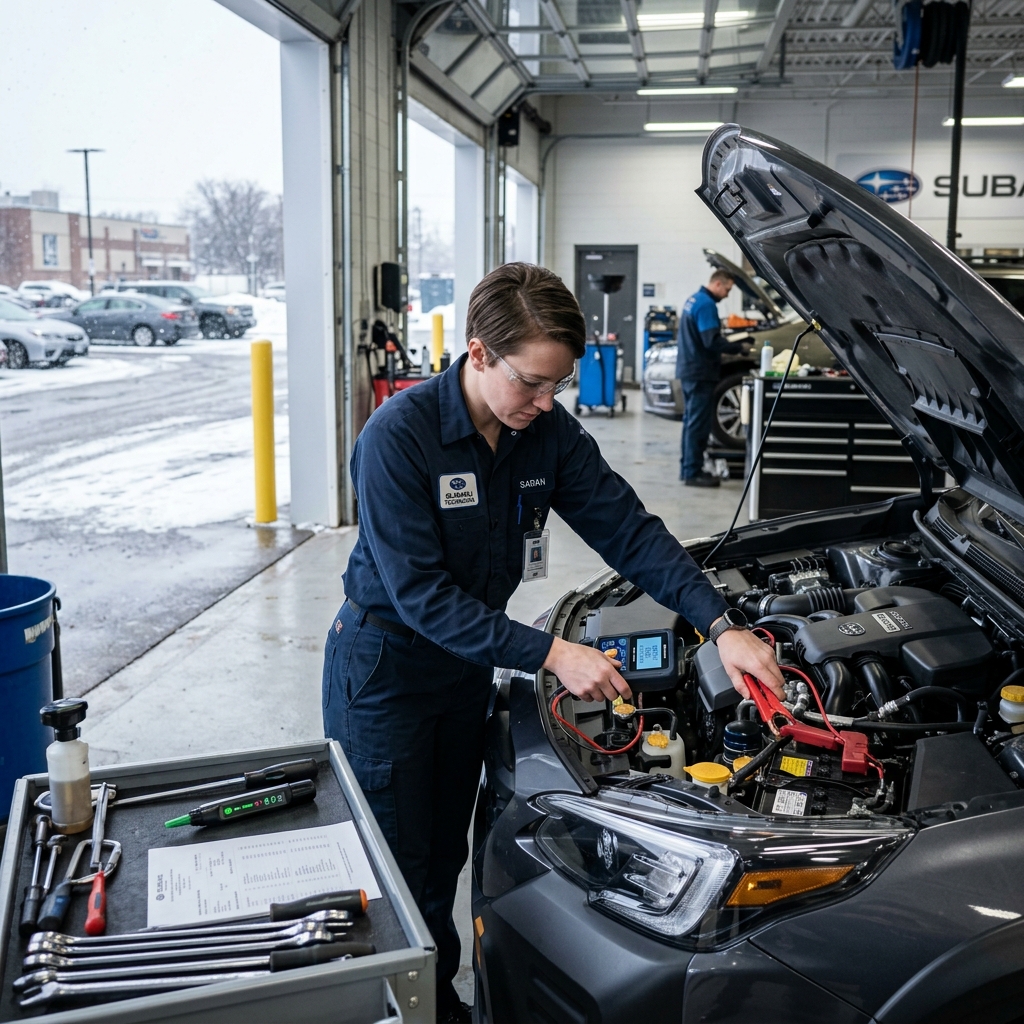
1. **Battery Conductance Test:** Cold temperatures reduce 12V battery chemical efficiency by up to 50%. Have a technician perform a load test to ensure cold cranking amps (CCA) meet factory specs. 2. **Coolant Freeze-Point Verification:** Inspect engine coolant concentration to ensure protection down to at least -30°F. 3. **Heavy-Duty Beam Wiper Blades:** Replace worn rubber blades with winter-grade beam wipers designed to resist ice buildup. 4. **Sub-Zero Washer Fluid:** Refill reservoir with winter washer fluid rated for -20°F or lower. 5. **Tire Tread Depth Inspection:** Ensure minimum tread depth of 5/32" for winter traction (6/32"+ recommended for snow tires).
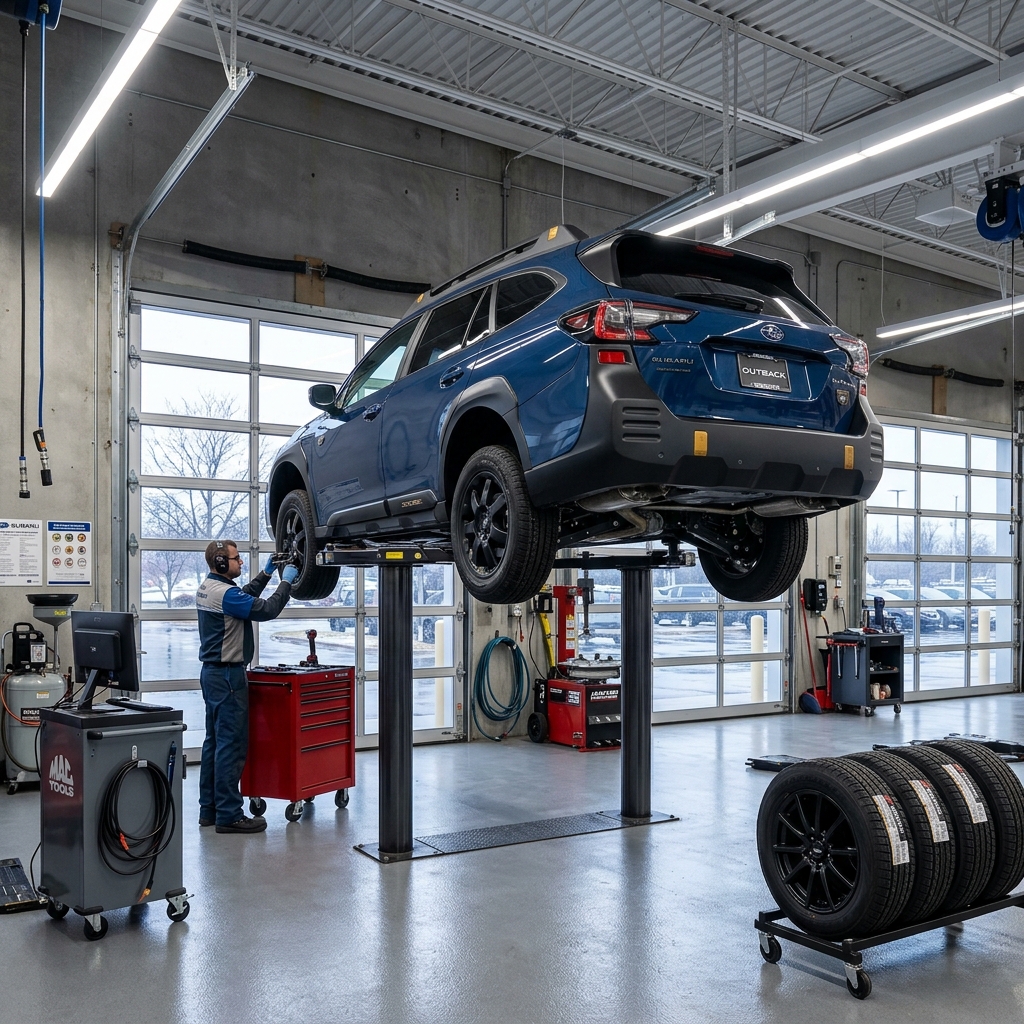
Our service center at Hawk Subaru is fully equipped to perform complete pre-winter multi-point inspections. If you are considering trading in your vehicle for a modern AWD Subaru, you can easily Value Your Trade-In online in just a few clicks.
Should You Upgrade to AWD or Outfit Your Current Vehicle with Winter Tires?
When Outfitting FWD with Winter Tires Makes Sense
• **Low Annual Mileage:** If your daily commute is short and limited to well-plowed municipal arteries near Plainfield, a dedicated set of winter tires on your existing FWD vehicle offers excellent stopping safety with minimal upfront capital investment. • **Budget Constraints:** Buying a dedicated tire and wheel package is significantly less expensive than purchasing a new vehicle. • **Seasonal Storage Capability:** You have garage space available to store your off-season all-season tire set during winter months.
When Upgrading to an AWD Vehicle Makes Sense
• **High Mileage / Long Commutes:** If you drive 20+ miles each way along I-55, I-80, or Route 59 during early morning hours before plows operate, AWD provides unmatched launching confidence and highway slush stability. • **Year-Round Versatility:** Subarus with Symmetrical AWD also deliver superior handling on rain-slick spring roads and loose gravel camping trails during summer. • **Hassle-Free Maintenance:** Avoid seasonal bi-annual tire swaps and tire storage logistics by relying on full-time AWD capabilities.
Prepare Your Commute for Winter at Hawk Subaru in Plainfield
At Hawk Subaru, we understand the rigorous demands that Illinois seasonal weather places on daily commuters across Plainfield, Naperville, Joliet, and the wider Chicago metropolitan area. Whether you are seeking a brand-new Subaru Outback, Forester, Crosstrek, or Ascent equipped with standard Symmetrical All-Wheel Drive, or looking to equip your existing vehicle with specialized winter tires and factory inspection services, our dedicated team is here to assist you.