How Much Does a Complete Pre-Winter AWD Service and Tire Installation Cost in the Chicago Area?
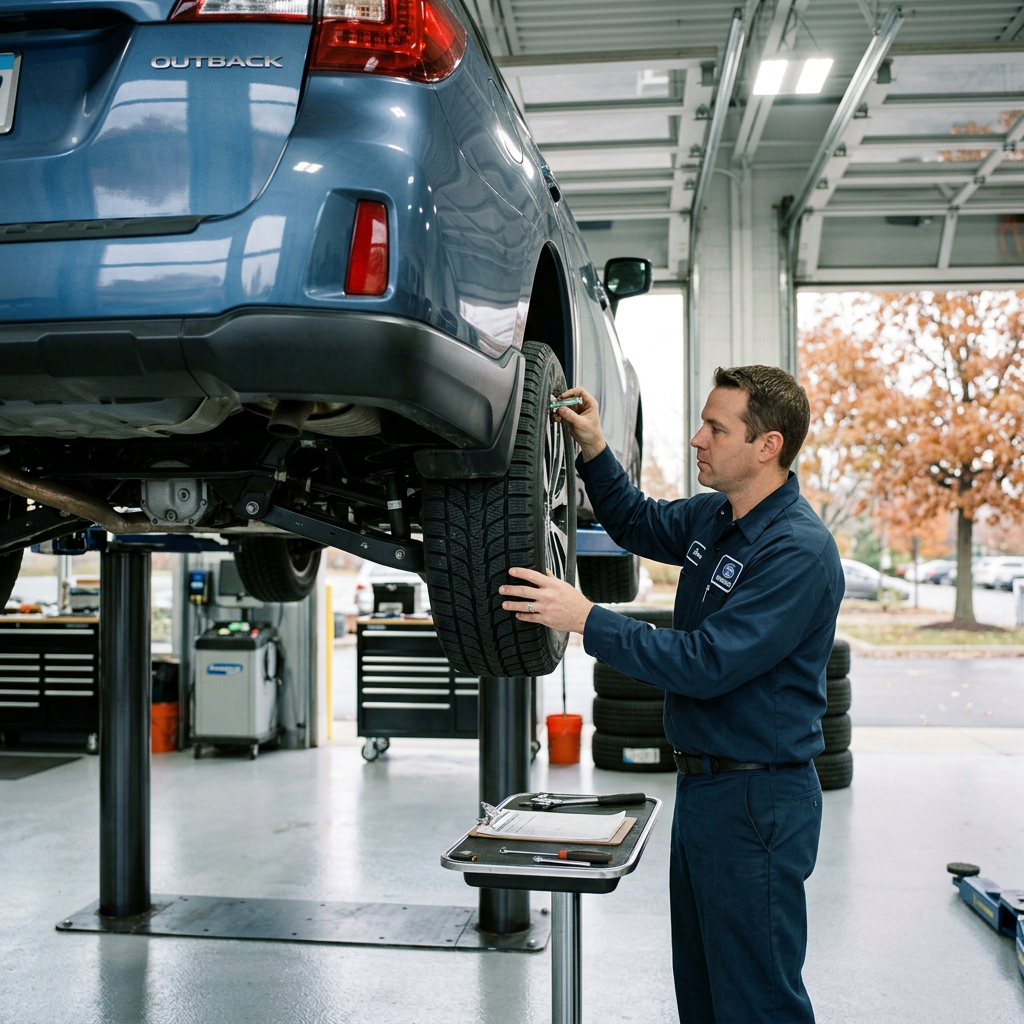
Direct Answer Key Takeaway: A comprehensive pre-winter AWD service and winter tire installation in the Chicago area typically ranges between $350 and $1,400 total. A standard AWD pre-winter fluid check, differential service, and multi-point inspection costs $150 to $350, while mounting, balancing, and wheel alignment run $100 to $250. Purchasing a full set of new winter or 3-Peak Mountain Snowflake (3PMSF) rated all-weather tires adds $500 to $1,000+ depending on your wheel size, speed rating, and tire manufacturer.
Navigating winters in northern Illinois presents a unique set of harsh driving challenges. Between sudden lake-effect blizzards rolling off Lake Michigan, persistent freeze-thaw cycles along Route 59, and heavily salted interstates like I-55 and I-80, your vehicle's drivetrain and tires take a severe beating. While All-Wheel Drive (AWD) systems like Subaru's Symmetrical AWD deliver superior mechanical grip, their operational integrity relies entirely on fresh fluid viscosity, healthy differential gears, and dedicated cold-weather tire tread.
At Hawk Subaru in Plainfield, IL, local drivers frequently ask us how to budget for seasonal winter preparation. Investing in timely maintenance before the first sub-zero arctic blast sweeps across Will and Cook counties prevents costly mechanical breakdowns, premature tire wear, and hazardous highway failures. Below, we break down every line item, pricing variable, and practical maintenance tip so you can prepare your vehicle for maximum safety and winter resilience.
|
Service Category
|
Typical Cost Range (Chicago Area)
|
Primary Benefits & Included Services
|
|
AWD Drivetrain Fluid Maintenance
|
$150 – $350
|
Front & rear differential fluid exchange, transfer case check, gear inspection
|
|
Tire Mounting & Balancing
|
$60 – $140
|
Precision dynamic balancing, bead seating, valve stem replacement
|
|
Four-Wheel Precision Alignment
|
$99 – $169
|
Laser toe, camber, and caster calibration for even tread wear
|
|
Set of 4 Winter / 3PMSF Tires
|
$500 – $1,100
|
Deep siping, pliable low-temp compound, snow/slush ejection channels
|
|
Full Pre-Winter Safety Package
|
$350 – $1,400+
|
Complete fluid refresh, tire installation, battery test, brake system flush
|
Detailed Breakdown of Chicago Pre-Winter AWD Service Costs
Differential & Transfer Case Fluid Exchanges ($120 – $240): An All-Wheel Drive vehicle relies on front and rear differentials to distribute engine torque evenly to all four wheels. Over time, heat, condensation, and microscopic metal shavings degrade gear oil performance. In sub-zero Chicagoland temperatures, old or contaminated differential fluid thickens, creating severe internal drag and acceleration friction. Replacing differential fluid with fresh synthetic gear lubricant ensures smooth power transfer, protects ring and pinion gears, and prevents costly AWD transfer case replacement down the road.
Subaru Symmetrical AWD Inspection ($45 – $90): Subaru's continuous, balanced AWD system features a center differential and electronically controlled multi-plate transfer clutch pack. A specialized pre-winter AWD inspection verifies clutch pack engagement, CV axle boot seals, driveshaft universal joints, and electronic control unit (ECU) wheel-speed sensor signals to guarantee immediate torque vectoring on icy pavement.
Brake System Evaluation & Moisture Flush ($69 – $150): Moisture naturally accumulates in brake fluid over time due to atmospheric humidity. During extreme winter freezing snaps in Joliet and Plainfield, trapped water in brake lines can form ice crystals or vaporize under heavy emergency braking, causing pedal fade or complete hydraulic pressure loss. A pre-winter brake check measures pad thickness, rotor corrosion from road salt, and fluid boiling point.
Battery Cold-Cranking Capacity & Wiper Prep ($40 – $90): Low winter temperatures reduce battery output by up to 50% while requiring more energy to crank cold engine oil. A digital conductance test checks Cold Cranking Amps (CCA) reserves. Pair this with heavy-duty beam wiper blades and sub-zero rated windshield washer fluid (-20°F rated) to handle sudden snow squalls along Route 59.
Winter Tire Installation Pricing and Package Costs in Plainfield and Joliet
Loose Tire Swap Costs
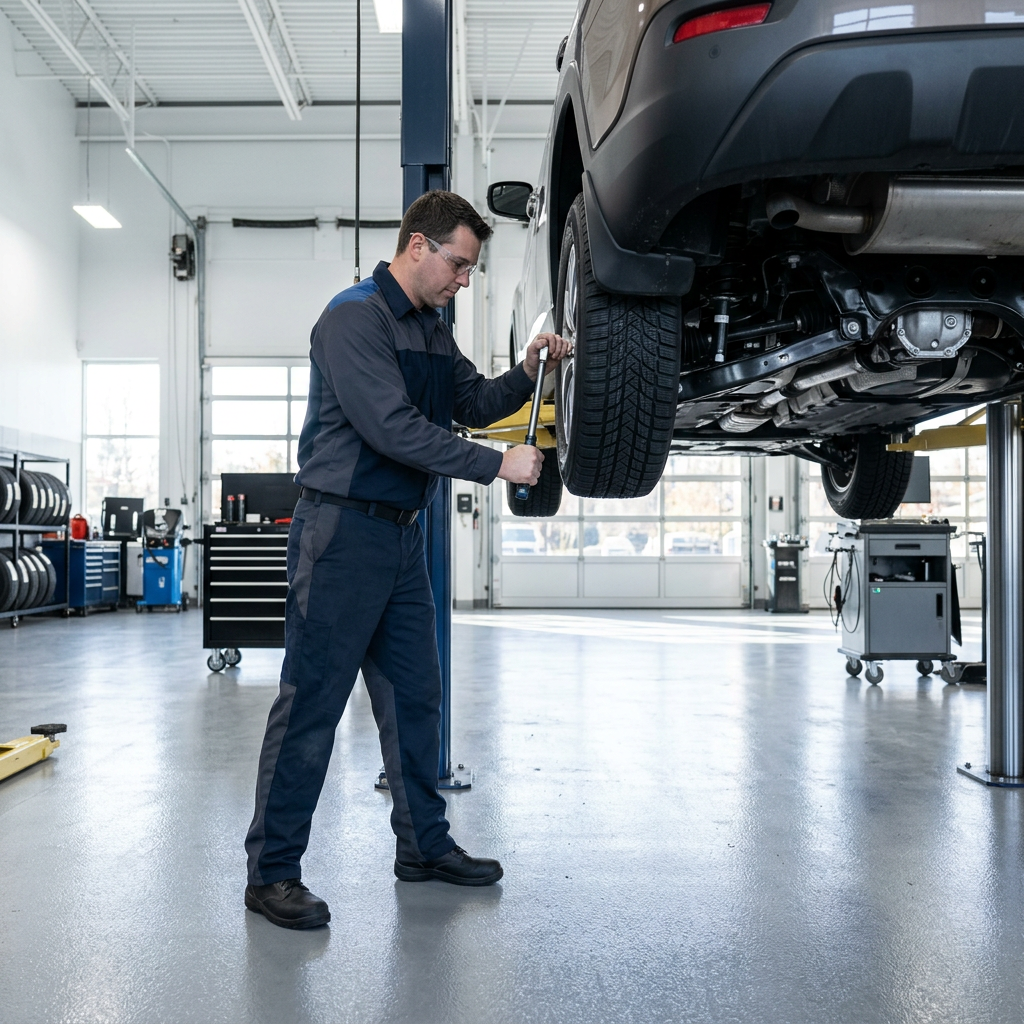
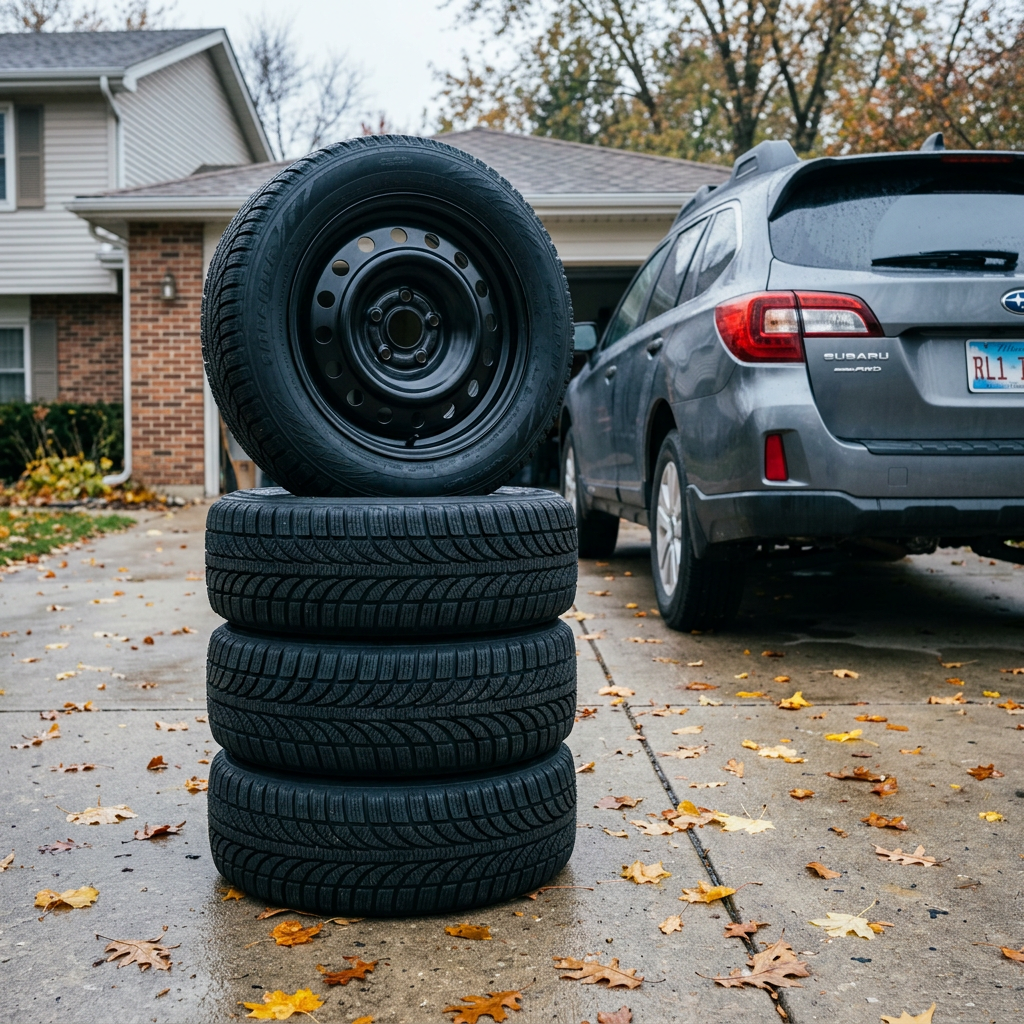
Mounting and balancing loose winter tires on your existing wheels costs between $100 and $180 per season. This process requires dismounting your summer or all-season tires, installing winter rubber, dynamic balancing, and resetting the Tire Pressure Monitoring System (TPMS). Doing this twice a year adds up to $200–$360 annually in labor fees.
Dedicated Wheel & Tire Packages
Purchasing pre-mounted winter tires on dedicated steel or alloy wheels costs $800 to $1,600 total up front. However, seasonal wheel swap labor drops to just $40 to $70 per visit. Dedicated winter wheel setups pay for themselves within 3 to 4 years while protecting your factory aluminum alloy wheels from harsh road salt corrosion.
TPMS & Disposal Fees
Additional winter tire installation line items include TPMS sensor cloning or electronic recalibration ( $25 – $60) and environmental scrap tire disposal fees ( $3 – $6 per tire). Hawk Subaru offers factory-approved tire packages, certified lug nut torque checks, and seasonal tire storage assistance for local Plainfield and Joliet commuters.
Chicagoland Pre-Winter AWD & Winter Tire Service Guide for I-55 and I-80 Commuters
Driving along major Will County high-speed corridors like I-55, I-80, and Route 59 during winter demands exceptional vehicle preparation. Interstate driving at 65+ mph amplifies traction loss, sudden lane drift on slush-filled ruts, and crosswind instability during Midwest winter storms. Bridges spanning the Des Plaines and DuPage rivers freeze long before surrounding pavement, creating treacherous black ice traps for unprepared drivers.
Proactive winter maintenance and dedicated tire traction transform your daily commute from a nerve-wracking ordeal into a controlled, confident drive. Ensuring your Subaru's AWD differentials, braking components, and tires are fully inspected before severe cold hits eliminates high-speed winter breakdown risks. You can Schedule Your Service Today online with our factory-certified master technicians.
Does AWD Help Your Vehicle Stop Faster on Icy Roads?
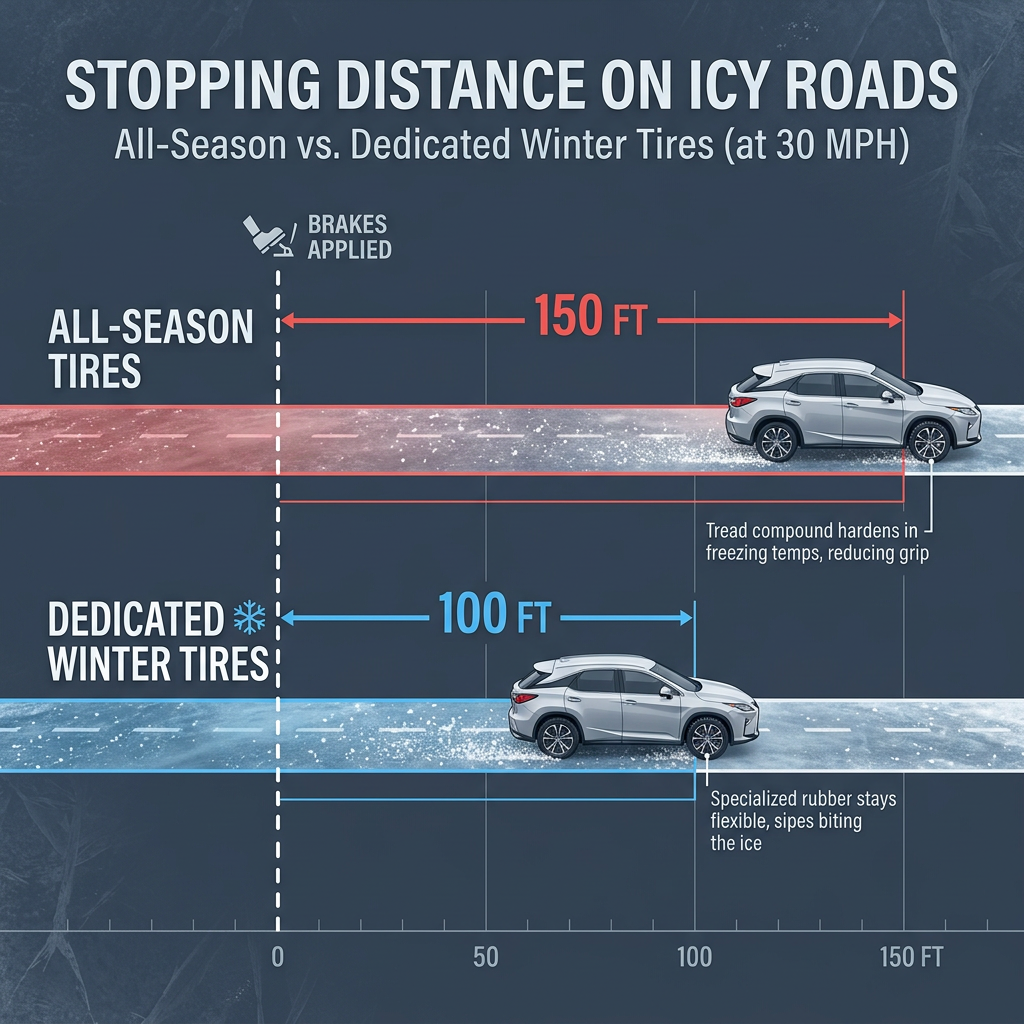
The Short Answer: No. One of the most widespread and dangerous winter driving myths is that All-Wheel Drive helps your car stop faster on snow and ice. In reality, all modern vehicles—whether Front-Wheel Drive, Rear-Wheel Drive, or All-Wheel Drive—already possess four-wheel braking systems. When you depress the brake pedal, all four wheels slow down regardless of which wheels receive engine drive torque.
All-Wheel Drive dramatically enhances acceleration grip and directional steering stability by preventing wheelspin when accelerating out of snowdrifts or maneuvering through slush. However, stopping distance depends almost entirely on the mechanical friction coefficient between your tires and the road surface. Standard all-season tire rubber turns rigid and glass-hard below 45°F, causing your anti-lock braking system (ABS) to kick in early and slide significantly farther. Dedicated winter tires feature specialized hydrophilic rubber compounds and thousands of microscopic siping edges that stay pliable in freezing weather, shortening icy stopping distances by up to 30 to 50 feet at highway speeds.
What is the Recommended Minimum Tread Depth for Winter Tires on Snowy Highways Like I-55 and I-80?
The 6/32-Inch Threshold for Snow & Slush: While the legal minimum tread depth for dry summer driving in Illinois is 2/32 of an inch, winter tires require significantly more tread depth to function safely. Tire engineers and safety experts recommend a minimum tread depth of 6/32 of an inch for driving in heavy snow, slush, and freezing rain. Once winter tire tread wears below 6/32", the sipes lose their bite and snow channels can no longer channel slush away from the tire contact patch.
Quick Coin Tests for Home Inspection: You can check your tread depth at home in Plainfield using standard spare coins: • The Lincoln Penny Test (2/32"): Insert a penny upside down. If the top of Lincoln's head is visible, your tires are legally worn out. • The Washington Quarter Test (4/32"): If the top of Washington's head shows, your tires have lost significant rain and slush hydroplaning resistance. • The Lincoln Memorial Penny Test (6/32"): Insert a penny tail-side up. If the top of the Lincoln Memorial building is exposed, it is time to replace your winter tires for safe snowy highway driving.
Can 3PMSF All-Weather Tires Be Driven Year-Round in Northern Illinois Without Changing Them in Spring?
3PMSF vs M+S Standard
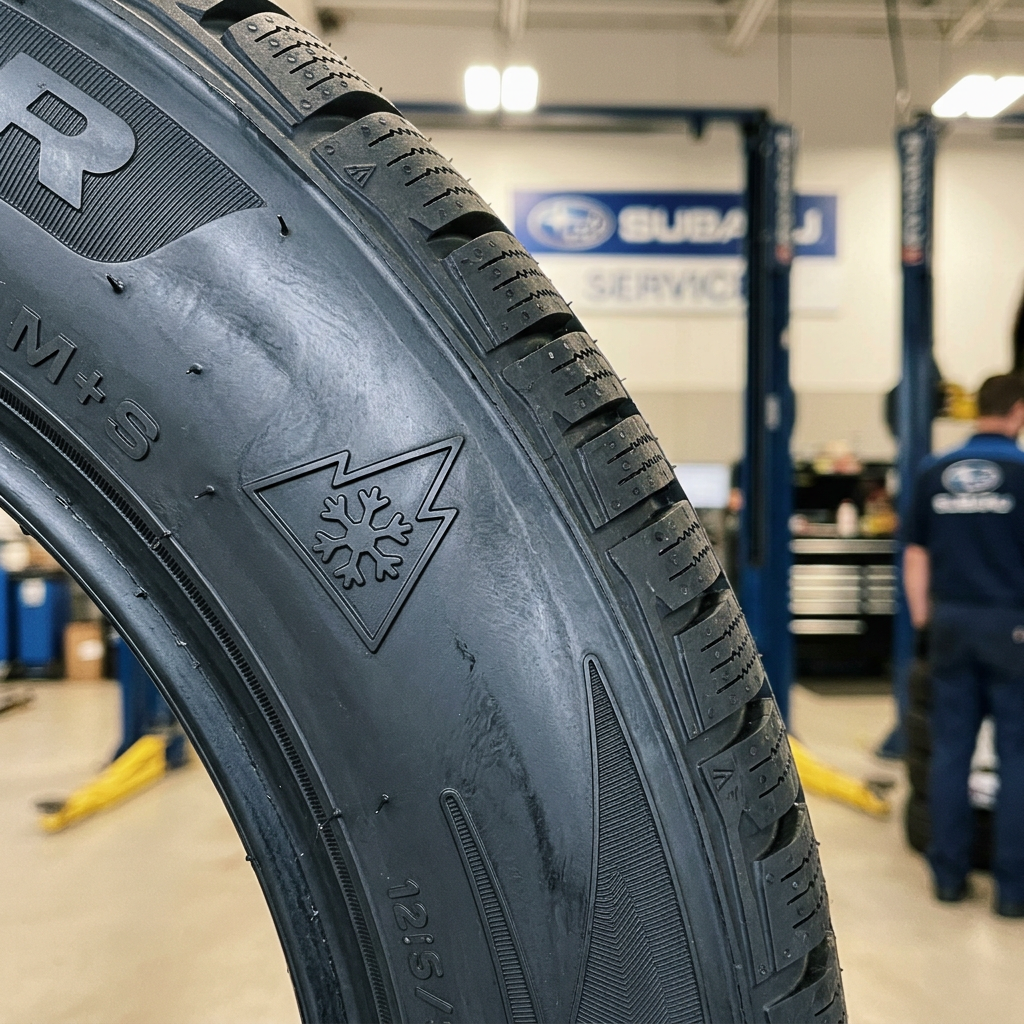
Standard All-Season tires carry an M+S (Mud + Snow) rating based strictly on tread geometry ratios, not actual cold-weather testing. In contrast, 3PMSF (3-Peak Mountain Snowflake) tires pass rigorous standardized acceleration tests on packed snow, delivering at least 10% greater winter traction.
True Year-Round Utility
Yes! Modern 3PMSF All-Weather tires (such as Michelin CrossClimate 2 or Goodyear Assurance WeatherReady) use advanced silica compounds that remain flexible in sub-zero cold without melting or wearing excessively during hot 90°F summer days in Naperville and Plainfield.
Cost & Convenience ROI
Choosing 3PMSF All-Weather tires eliminates biannual tire mounting, balancing, and storage fees ($200–$360 annual savings). They provide an ideal balance for Chicagoland drivers who want impressive snow traction without managing two separate wheel sets.
Do Winter Tires Extend the Overall Lifespan of Your Primary Summer or All-Season Tires?
The Mathematical ROI of Seasonal Rotation: Absolutely. Running dedicated winter tires for 4 to 5 months during the cold Chicagoland season directly extends the calendar lifespan of your primary summer or all-season tires. If you drive 12,000 miles per year, splitting that mileage evenly between two tire sets means each set only absorbs 6,000 miles annually. Instead of replacing all-season tires every 3 to 4 years, both sets can last 6 to 8 years before wearing down.
Furthermore, running summer performance tires in sub-freezing temperatures damages the tread compound, causing micro-fractures, tread chipping, and sidewall hardening. By storing your summer set indoors during winter, you preserve rubber elasticity and maximize highway safety. Visit our Parts Center to order OEM wheel packages and factory tire options.
Why Should You Check Tire Pressure When Tires Are Completely Cold?
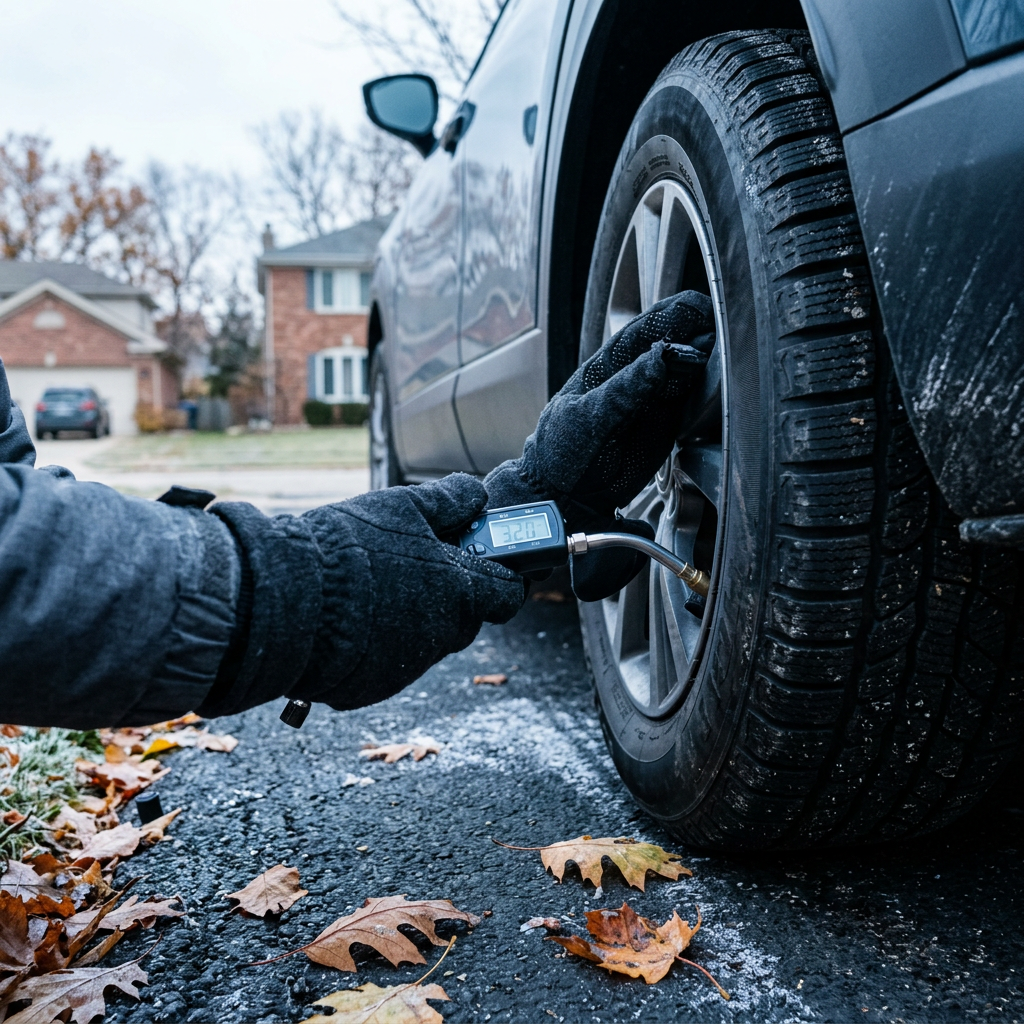
The Physics of Cold Air Inflation: Tire pressure fluctuates directly with ambient temperature changes according to Gay-Lussac's Law of thermodynamics. For every 10°F drop in outside temperature, tire pressure decreases by approximately 1 PSI. When overnight temperatures drop from 50°F down to a frosty 10°F in Plainfield, your tires instantly lose 4 PSI—triggering your TPMS dashboard warning light.
Checking tire pressure after driving expands internal air temperature through tire carcass friction, raising readings by 3 to 5 PSI. If you adjust pressure on warm tires, your cold static pressure will end up severely underinflated once the car sits overnight. Underinflated winter tires suffer flex wear along shoulder blocks, reduced vehicle payload capacity, lower fuel economy, and increased vulnerability to pothole rim damage along I-55.
What Complimentary Tire Checks Can Plainfield Drivers Get Before Winter, and How Should Tire Pressure Be Measured?
Complimentary Seasonal Inspections at Hawk Subaru: Drivers in Plainfield, Joliet, and Naperville can stop by Hawk Subaru for complimentary pre-winter tire checks. Our service drive offers: • Multi-point digital tread depth laser measurement across inner, center, and outer tread blocks. • Sidewall bulge, impact tear, and bead sealing integrity inspection. • Diagnostic battery load test and alternator charging output verification. • Visual inspection of front and rear Subaru Symmetrical AWD driveshaft boots.
Step-by-Step Home Pressure Measurement: 1. Let your vehicle sit parked in the shade or garage for at least 3 hours. 2. Locate the vehicle placard on the driver's side B-pillar door jamb for OEM recommended cold PSI (do NOT use maximum PSI listed on tire sidewall). 3. Press a reliable digital or dial pressure gauge firmly onto the valve stem. 4. Add air using a portable pump or gas station air line until target PSI is reached. 5. Recheck pressure and screw dust caps back tightly to prevent ice from jamming the internal Schrader valve.
Essential Pre-Winter Vehicle Maintenance Checklist for Naperville and Plainfield Drivers
1. Fluids & Battery
• Test engine coolant freeze protection down to -30°F. • Conduct battery conductance cold-cranking capacity test. • Flush brake fluid if moisture exceeds 3% concentration threshold. • Check front/rear differential fluid condition.
2. Visibility & Seals
• Replace worn wiper blades with beam-style winter wipers. • Fill reservoir with de-icing washer fluid (-20°F rating). • Treat rubber door weatherstripping with silicone spray. • Inspect headlight lenses for full clarity and aiming accuracy.
3. Emergency Trunk Kit
• Heavy-duty ice scraper and snow brush. • Collapsible shovel and bag of traction sand or cat litter. • Jumper cables or portable lithium jump starter pack. • Thermal blankets, gloves, flashlight, and tow strap.
Schedule Your Pre-Winter AWD Service and Winter Tire Fitting at Hawk Subaru
Don't wait for the first heavy snowstorm to freeze up local service bays! At Hawk Subaru in Plainfield, IL, our factory-trained master technicians specialize in Subaru Symmetrical AWD maintenance, winter tire mounting, laser alignment, and seasonal inspection services. We back our winter tire offerings with competitive price match guarantees and use only genuine OEM fluids and filters.